
Soil pH and Your Garden: What the Numbers Mean and Why Plants Care
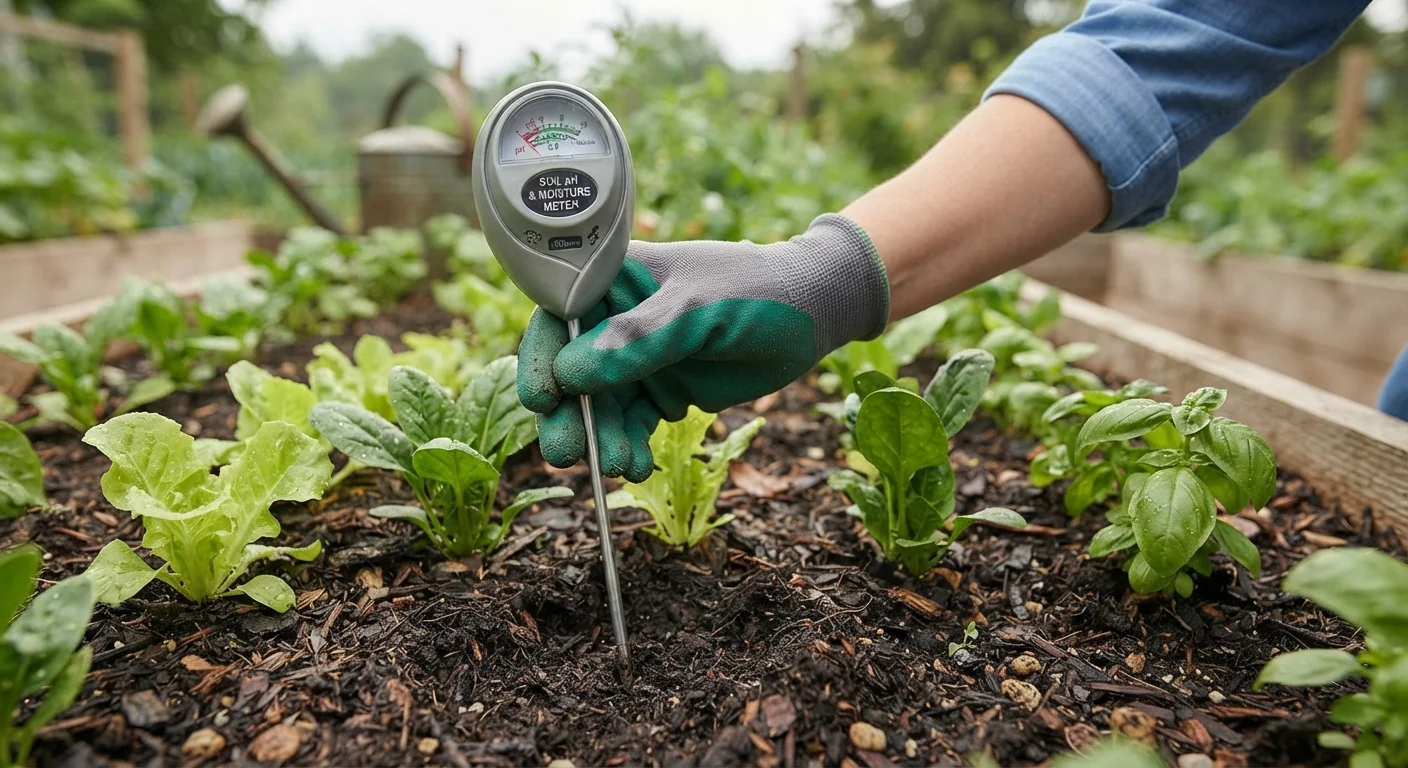
Photo credit: ResultsRover.com | Insights You Can Trust
In this article
Soil pH affects nutrient availability and plant health. Here's how to read a soil test, understand the scale, and adjust accordingly.
Key Takeaways
- Soil pH controls how well plant roots can absorb nutrients, regardless of how much fertilizer you apply.
- Most vegetables and lawn grasses prefer a slightly acidic pH between 6.0 and 7.0.
- A standard soil test — available through your local cooperative extension office — is the reliable starting point.
- Lime raises pH; sulfur lowers it — but both work gradually, not overnight.
- Some plants, like blueberries and azaleas, specifically need acidic soil below pH 5.5.
The pH Scale: What Those Numbers Actually Mean
The pH scale runs from 0 to 14. Pure water sits at 7 — perfectly neutral. Battery acid is near 0; household bleach hovers around 13. Garden soil rarely reaches either extreme, but even modest shifts within the 5.0–8.0 range make a dramatic difference for plants.
Because the scale is logarithmic, each whole-number step represents a tenfold change in acidity. Soil at pH 5 is not a little more acidic than pH 6 — it's ten times more acidic. That math matters when you're trying to correct soil that's only slightly off versus severely out of range.
In practical terms, most homeowners are working somewhere between pH 5.5 and 7.5. Rainfall-heavy regions like the Pacific Northwest and Southeast tend toward acidic soils; drier climates in the Midwest and Southwest more often trend alkaline. Understanding where your region naturally falls gives you a useful starting expectation before you ever open a test kit.
6.0–7.0
Optimal pH range for most garden plants
This range maximizes the availability of the broadest spectrum of essential nutrients, according to soil science principles widely published by university extension services.
10×
Acidity difference per pH unit step
The pH scale is logarithmic, meaning each whole-number decrease represents a tenfold increase in acidity — a fact that underscores why even small corrections matter.
3–6 months
Typical time for lime to shift soil pH
Ground limestone works slowly; cooperative extension guidelines generally recommend fall application to achieve results by the following spring planting season.
Why pH Determines What Your Plants Can Actually Use
Here's the key insight: nutrients don't disappear from acidic or alkaline soil — they just become chemically unavailable to roots. At pH extremes, elements like iron, manganese, phosphorus, and calcium bind to soil particles in forms plants cannot absorb. You could apply a full bag of fertilizer and still see deficiency symptoms if the pH is wrong.
At the sweet spot of 6.0–7.0, the widest range of nutrients stays soluble and accessible. Phosphorus — critical for root development and flowering — becomes most available around pH 6.5. Iron, needed for green leaf production, becomes scarce above pH 7.0, causing a yellowing condition called chlorosis (yellow leaves with green veins). This is exactly why reading your lawn's warning signs carefully can reveal a pH problem hiding beneath what looks like a simple color issue.
This also explains why a fertilizer's N-P-K ratios only tell part of the story — the soil's pH determines how much of those nutrients actually reach the plant.
Test Before You Amend — Always
Many gardeners apply lime or sulfur based on intuition, but blind amendments can overcorrect and create new nutrient problems. A soil test through your cooperative extension service gives you a precise starting number and a targeted recommendation — making every bag of amendment count.
Plants That Like It Acidic — and Plants That Don't
Most common garden vegetables and lawn grasses perform well in the 6.0–7.0 range. But some plants are notably particular:
- Acid-lovers (pH 4.5–6.0): Blueberries, azaleas, rhododendrons, camellias, and gardenias. These plants have evolved to absorb nutrients in conditions that would starve other species.
- Neutral to slightly acidic (pH 6.0–7.0): Tomatoes, peppers, squash, most turf grasses, roses, and the majority of annual flowers.
- Tolerant of alkaline conditions (pH 7.0–7.5): Asparagus, lilacs, and some ornamental grasses.
If you're planning a dedicated planting area — say, a raised bed for vegetables — you can dial in pH before you ever plant. See our raised bed gardening guide for how fill mixes and amendments interact from day one. For mixed plantings, grouping acid-lovers together in one zone makes management much simpler. Mixed-variety gardens featuring both perennials and annuals benefit from a zone-by-zone pH strategy.
How to Test Your Soil and What to Do With the Results
Start with a soil test — it's the only reliable way to know where you stand. Your state's cooperative extension service offers lab-based tests that report pH alongside nutrient levels and often include amendment recommendations for your specific goals. This is far more informative than a basic pH strip.
To collect a sample: use a clean trowel to dig 4–6 inches deep in several representative spots, combine the samples in a clean bucket, let it dry, and send a cup-sized portion to the lab. Avoid sampling right after fertilizing or liming.
Once you have results:
- To raise pH (make less acidic): Apply ground limestone — calcitic or dolomitic. Dolomitic also adds magnesium, useful if your soil is deficient. Work it into the top few inches and water in. Results take months.
- To lower pH (make more acidic): Apply elemental sulfur. Soil bacteria convert it to sulfuric acid over time. Aluminum sulfate works faster but can accumulate at high doses, so use it carefully.
Always follow soil test recommendations for application rates. Amending based on guesswork risks overcorrecting, which creates a new set of problems. Retest six months after amending to verify the shift. Good soil chemistry also supports better water uptake — consistent with deep, infrequent watering practices that push roots deeper into the adjusted zone.
pH Varies Across Your Yard
Soil pH isn't uniform across a property. Areas near a concrete foundation, driveways, or old construction debris may trend alkaline due to leached lime. Spots under dense leaf litter or pine trees may be significantly more acidic. If your yard has distinct planting zones, test each one separately rather than relying on a single reading.
Frequently Asked Questions

Author
Home & Garden Editorial Team
Home & Garden Editorial Team is the collective byline for our editorial team and contributor network. Articles published under this byline or an editorial pen name are researched, written, and reviewed according to our editorial standards for clarity, consistency, and independence before publication.
View all articles →