
DIY Oil Change vs. Shop Service: A Realistic Comparison
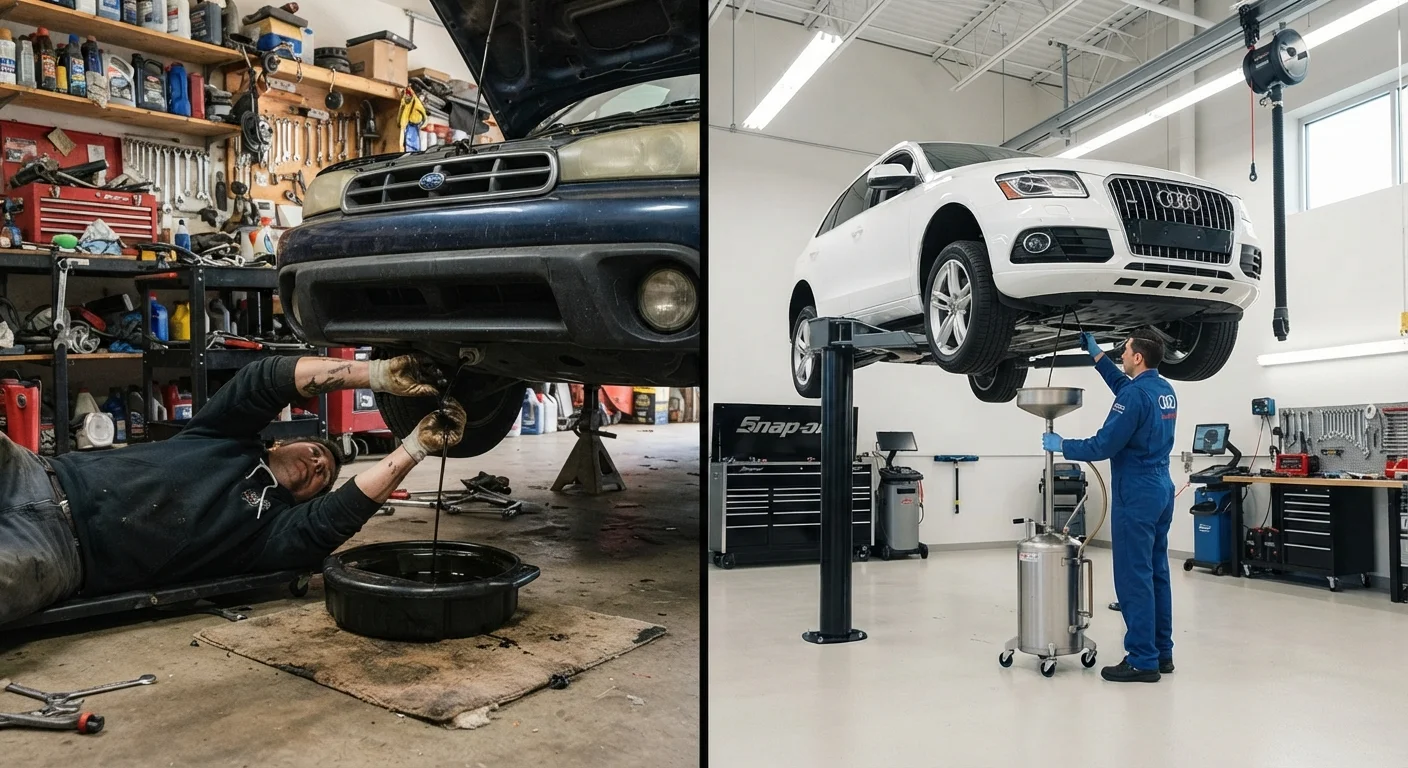
Photo credit: ResultsRover.com | Insights You Can Trust
In this article
Changing your own oil saves money but requires tools, time, and proper disposal. Weigh both approaches before you decide which fits your situation.
Key Takeaways
- DIY oil changes typically cost less in materials but require an upfront investment in tools and equipment.
- Shop service adds convenience and often includes a multi-point inspection at no extra charge.
- Used motor oil must be disposed of properly - pouring it down a drain is illegal in most states.
- Your owner's manual, not habit or marketing, should determine how often you change your oil.
- Either approach works well when done correctly and on schedule.
What You Actually Pay for Each Approach
The headline argument for DIY is cost savings, and it holds up - with an asterisk. A DIY oil change using conventional oil typically runs $25-$45 in materials (oil plus a new filter). Synthetic oil raises that to roughly $45-$75 depending on the grade your engine requires. Shop service for the same job generally costs $40-$80 for conventional and $70-$120 for full synthetic, though prices vary widely by region and shop type.
The asterisk: if you're starting from scratch, a floor jack, jack stands, drain pan, oil filter wrench, and funnel can easily add $80-$150 to your first DIY change. That upfront cost erases the savings for one or two changes. Drivers who stick with DIY over multiple intervals will eventually come out ahead, but it's not instant.
Shop service also frequently includes a complimentary multi-point inspection - a tire pressure check, fluid top-offs, and a visual scan of belts and hoses. That has real value even if you never see a line item for it. For a broader look at how routine service costs add up, see the Auto Costs & Insurance hub.
$80-$150
Typical starter tool cost for DIY
A basic floor jack, jack stands, drain pan, and filter wrench represent the minimum setup investment before a first DIY change.
250,000 gal
Groundwater a single quart of oil can contaminate
The U.S. Environmental Protection Agency cites used motor oil as one of the most common sources of water pollution from household sources.
Time, Convenience, and What Can Go Wrong
An experienced DIYer can complete an oil change in 30-45 minutes once the car is safely raised and supplies are ready. Factor in driving to buy supplies, waiting for the engine to cool, and a trip to dispose of used oil at a recycling center, and the real time commitment is closer to 90 minutes for most people.
Shop service takes 30-60 minutes for a straightforward appointment, though walk-in waits at busy quick-lube shops can push that higher. For drivers with tight schedules, the shop wins on convenience.
Never Run the Engine Before Confirming Oil Is In
Starting the engine before re-inserting the drain plug or adding fresh oil is the single most damaging DIY mistake possible - even a few seconds of dry running can score cylinder walls and bearings. Before turning the key, physically verify the drain plug is tight, the filter is secure, and the oil level reads correctly on the dipstick.
DIY errors are worth acknowledging honestly. The most common mistakes are overtightening the drain plug (which damages the oil pan threads), installing the filter incorrectly, and failing to check the oil level after filling. None of these are catastrophic if caught quickly, but a dry engine run - caused by forgetting to re-insert the drain plug before adding oil - can cause serious engine damage. Following a checklist your first few times reduces this risk substantially.
For a sense of where oil changes fit on the broader maintenance calendar, your vehicle's full maintenance schedule is worth reviewing before you set any DIY routine.
The Disposal Problem Most Guides Skip
Used motor oil is a regulated waste. Pouring it on the ground or into household trash is illegal under federal and most state environmental laws, and for good reason - one quart can contaminate up to 250,000 gallons of groundwater. DIYers are responsible for transporting used oil to an approved collection point, most commonly an auto parts retailer, a municipal recycling center, or a service station that accepts it.
This step is manageable but not trivial. You'll need a sealed container to transport the oil, and you'll need to make the trip - often a separate errand. Shops handle this automatically as part of the service, which is one less thing to track.
Make Oil Disposal Easy to Remember
Store your used oil in a clean, sealed container - the original motor oil jug works well - immediately after the change. Most national auto parts chains accept used oil for free recycling, no appointment needed. Treating disposal as part of the same errand, not an afterthought, keeps you compliant and prevents spills.
If you're unsure what oil type your engine actually requires - not just what's cheapest or most marketed - understanding the differences between synthetic and conventional oil will help you read your owner's manual more accurately.
Side-by-Side: Key Comparison Factors
Both approaches accomplish the same outcome when executed correctly. The decision comes down to your specific situation rather than a single right answer.
| DIY Oil Change | Shop Service | |
|---|---|---|
| Material cost per change | $25-$75 (oil + filter) | $40-$120 (all-in) |
| Upfront tool investment | $80-$150 to start | None required |
| Time commitment | 60-90 min (incl. errands) | 30-60 min at the shop |
| Disposal responsibility | Driver must arrange it | Shop handles it |
| Multi-point inspection included | No (unless you do it) | Often yes, at no charge |
| Risk of error | Present; avoidable with care | Low (professional oversight) |
| Long-term savings potential | Yes, after tools amortize | Less savings, more convenience |
One point that applies equally to both options: the interval matters as much as the method. Skipping or delaying an oil change degrades engine lubrication progressively. As deferred maintenance explains, one missed service rarely causes immediate failure - but the cumulative effect is real and expensive. And if you've heard that every car needs an oil change every 3,000 miles regardless of make or oil type, that's one of several persistent myths worth reconsidering.
For drivers curious about which other maintenance tasks are genuinely DIY-friendly versus better left to a qualified mechanic, knowing where the real DIY limits are is a useful next read.

Author
Auto Essentials Editorial Team
Auto Essentials Editorial Team is the collective byline for our editorial team and contributor network. Articles published under this byline or an editorial pen name are researched, written, and reviewed according to our editorial standards for clarity, consistency, and independence before publication.
View all articles →