
Car Maintenance Myths That Keep Costing Drivers Money
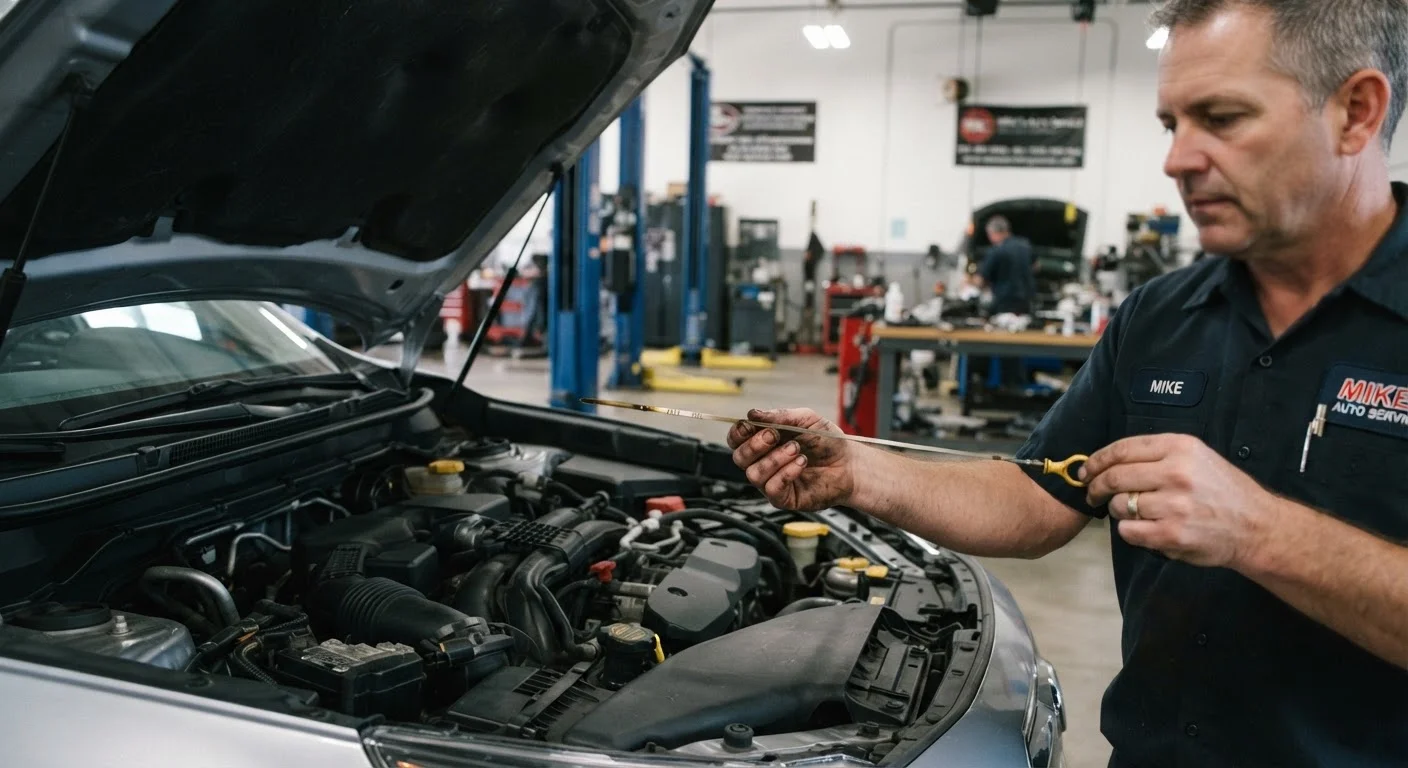
Photo credit: ResultsRover.com | Insights You Can Trust
Change your oil every 3,000 miles. Premium gas makes any engine run better. These persistent myths don't hold up — here's what the evidence actually shows.
Key Takeaways
- Most modern vehicles need oil changes every 5,000-10,000 miles, not every 3,000.
- Premium fuel only benefits engines specifically designed or required to use it.
- Warming up your engine for several minutes before driving is unnecessary in modern cars.
- Third-party maintenance does not automatically void your factory warranty under federal law.
- Your owner's manual - not a service shop's sticker - is the authoritative maintenance guide.
Why Car Maintenance Myths Persist
Automotive advice travels fast and ages slowly. A tip that made sense for a carbureted engine in 1985 circulates unchanged on social media decades later, costing drivers real money in unnecessary services or avoidable repairs. Some myths originate in legitimate old-school practice; others were never accurate to begin with. Either way, acting on bad information has a price tag.
The fix is straightforward: go to the source. Your vehicle's owner's manual reflects the engineering and testing behind your specific engine. For broader guidance, consult your car's maintenance schedule, explained - it breaks down what each service interval actually means. The myths below are among the most expensive ones to keep believing.
Myth
You need to change your oil every 3,000 miles.
Fact
Most modern vehicles with conventional oil are designed for 5,000-7,500-mile intervals; many using full synthetic oil can go 10,000-15,000 miles between changes.
The 3,000-mile rule was a reasonable guideline for older engines and lower-quality oils. Today's engine tolerances are tighter, and motor oil formulations - especially full synthetics - are dramatically more durable. The American Automobile Association (AAA) has noted that following outdated intervals wastes hundreds of dollars annually across a vehicle's life. Check your owner's manual for the manufacturer-recommended interval, and consider the difference between synthetic and conventional oil before your next change.
Myth
Premium gasoline makes any car run better.
Fact
Premium fuel only benefits engines that require or recommend it; putting it in a standard engine produces no measurable performance or efficiency gain.
Engine knock - the problem premium fuel is designed to prevent - is controlled in modern standard engines by knock sensors that automatically adjust ignition timing. Using premium in a car designed for regular-grade fuel adds cost with no engineering return. Your fuel cap or owner's manual will state whether your engine requires premium (meaning lower-octane fuel could cause damage) or simply recommends it (meaning regular is still acceptable). Unless the word "required" appears, regular-grade fuel is appropriate.
Myth
You should warm up your engine for several minutes before driving in winter.
Fact
Modern fuel-injected engines reach optimal operating temperature faster by being driven gently than by idling.
Extended idling made sense for carbureted engines, which needed time to stabilize fuel delivery. Electronic fuel injection, standard on virtually all vehicles sold in the past few decades, adjusts automatically at startup. Idling for more than 30-60 seconds wastes fuel, increases wear by running the engine in a low-oil-pressure state longer than necessary, and - in enclosed spaces - poses a carbon monoxide risk. A brief idle followed by moderate driving is the manufacturer-aligned approach.
Myth
Getting maintenance done outside the dealership voids your factory warranty.
Fact
The Magnuson-Moss Warranty Act generally prohibits manufacturers from voiding warranties solely because an owner used an independent shop or aftermarket parts.
This myth keeps many drivers paying dealership labor rates unnecessarily. Under federal law, a manufacturer must demonstrate that an independent shop's work or an aftermarket part actually caused a failure before denying a warranty claim on that basis. The key is documentation: keep receipts, use parts that meet OEM specifications, and follow the maintenance schedule in your owner's manual. For context on how warranty misunderstandings cost money more broadly, see warranty myths that cost shoppers money.
Myth
If the engine is running fine, you don't need to change the coolant or transmission fluid.
Fact
Both fluids degrade over time regardless of how the engine feels, and waiting until symptoms appear often means expensive damage has already occurred.
Coolant loses its corrosion inhibitors as it ages, which allows rust and scale to form inside the cooling system. Transmission fluid similarly oxidizes and loses viscosity, increasing friction and heat inside the transmission. Neither failure announces itself clearly in early stages - by the time a driver notices a problem, repair costs are substantially higher than the fluid service would have been. Follow the manufacturer's intervals, not a symptom-based approach. Every fluid under the hood has a specific role and a specific replacement window.
What the Evidence Actually Shows
Patterns emerge across these myths: they tend to err toward over-servicing (costing money) or toward skipping something that genuinely matters (costing even more later). Deferred maintenance compounds quietly - but so does paying for services your car doesn't need.
$0
Benefit of premium gas in a regular-grade engine
AAA testing found no meaningful fuel economy or performance improvement from using premium fuel in vehicles designed for regular grade.
5,000-15,000 mi
Realistic modern oil change intervals
Manufacturer-recommended intervals for current vehicles vary widely by engine type and oil grade; always verify in the owner's manual.
30-60 sec
Recommended idle time before driving in cold weather
Most automotive engineers and manufacturer guidelines suggest brief idling followed by gentle driving rather than prolonged warmup.
Owners of older vehicles should be especially methodical. A car past 100,000 miles has specific needs that differ from a newer model - see keeping a high-mileage vehicle on the road for a grounded look at where to focus attention. And if you want to understand everything that goes under the hood, fluids under the hood and what each one does is a practical reference.
Your Owner's Manual Overrides All of This
No article, service-shop reminder sticker, or well-meaning neighbor should override your vehicle's owner's manual. Manufacturer intervals are derived from engineering testing specific to your engine, climate range, and intended use. If your manual conflicts with advice you've read elsewhere - including here - follow the manual and, when in doubt, consult a qualified mechanic.
This article is for general informational purposes only. Always consult a qualified mechanic for diagnosis or repair decisions specific to your vehicle.

Author
Auto Essentials Editorial Team
Auto Essentials Editorial Team is the collective byline for our editorial team and contributor network. Articles published under this byline or an editorial pen name are researched, written, and reviewed according to our editorial standards for clarity, consistency, and independence before publication.
View all articles →