
Building a Balanced Plate Without Counting Every Calorie
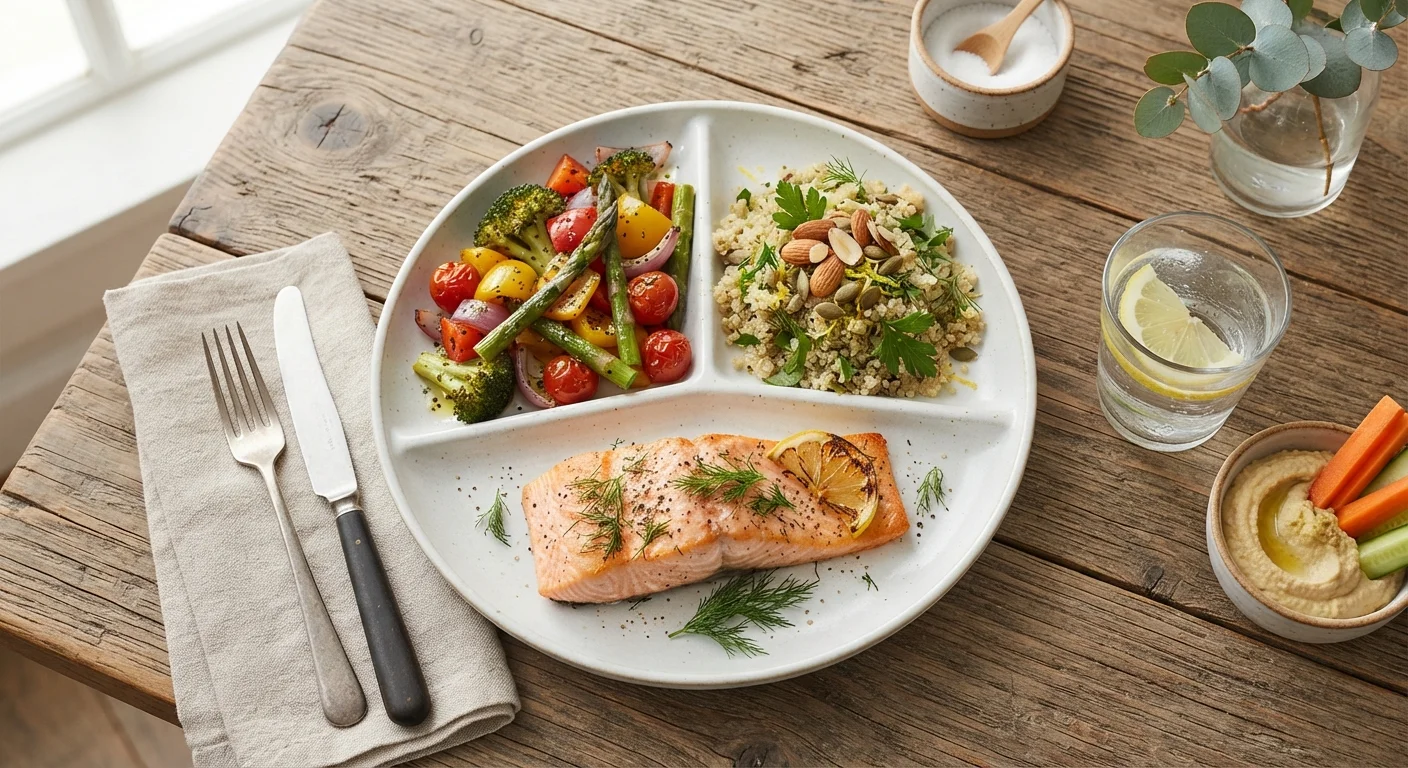
Photo credit: ResultsRover.com | Insights You Can Trust
In this article
Practical ways to portion meals using visual cues and food-group ratios so you eat well without tracking every gram.
Key Takeaways
- Half your plate filled with vegetables and fruit provides fiber, vitamins, and lasting fullness.
- Visual hand-size cues replace measuring cups for practical, on-the-go portioning.
- Protein and whole grains each occupy roughly one quarter of your plate.
- Healthy fats belong on your plate in modest amounts - small portions go a long way.
- Consistent plate-building habits matter more than perfection at any single meal.
Why Visual Portioning Works
Calorie-counting apps and kitchen scales can be useful tools, but they create friction that most people cannot sustain long-term. Research in behavioral nutrition suggests that environmental cues - plate size, food arrangement, and visual ratios - influence how much people eat as reliably as explicit tracking does. The plate method, sometimes called the MyPlate framework in public health guidance, translates these insights into a practical habit that travels with you anywhere food is served.
The method works because it shifts your focus from numbers to proportions. You are not measuring grams of carbohydrate; you are building a visual pattern that naturally limits energy-dense foods while crowding your plate with fiber and nutrient-rich options. Over time, this pattern becomes intuitive. Before you start, gather the simple items listed below.
What you will need
Once you have a plate and an awareness of the basic food groups, you are ready to build balanced meals without any apps or tracking tools.
A standard 9-inch dinner plate
Provides a natural visual boundary for portioning food groups without measuring tools.
Your hand
Acts as a personalized, portable measuring guide scaled to your own body size.
A sectioned meal-prep container
Reinforces plate ratios when packing meals for work or travel.
Putting It into Practice
The six steps below apply at breakfast, lunch, and dinner - and can be adapted for snacks by thinking in smaller proportions. They are not rigid rules but a flexible framework you can adjust to cultural food traditions, personal preferences, and whatever is actually in your kitchen.
Fill half your plate with non-starchy vegetables and fruit
Cover the largest portion of your plate - roughly half - with non-starchy vegetables such as leafy greens, broccoli, peppers, zucchini, carrots, or tomatoes. A small portion of whole fruit can also occupy this space at breakfast or lunch. This half-plate approach aligns with dietary guidelines widely supported by nutrition researchers and public health organizations, delivering fiber, water content, and micronutrients that support satiety and overall health.
Reserve one quarter for quality protein
Dedicate approximately one quarter of your plate to a protein source. Options include fish, poultry, eggs, legumes (beans and lentils), tofu, tempeh, or lean cuts of meat. Protein supports muscle maintenance, immune function, and helps regulate hunger signals. If you are exploring more plant-forward eating, see our overview of plant-based protein trade-offs for practical guidance on meeting your needs.
Fill the remaining quarter with whole grains or starchy vegetables
Use the final quarter of your plate for energy-dense carbohydrates: brown rice, quinoa, whole-wheat pasta, oats, sweet potato, corn, or whole-grain bread. Whole grains provide fiber and B vitamins that refined grains largely lack. A cupped hand is a useful visual reference for a single cooked grain serving for most adults.
Add a small amount of healthy fat
Healthy fats - from olive oil, avocado, nuts, seeds, or nut butter - support nutrient absorption and hormonal function, but are calorie-dense. A thumb-sized portion of oil or nut butter, or roughly one-third of an avocado, is a practical reference. Fat does not need its own plate section; it typically comes through cooking methods or as a small topping or side.
Choose water or low-sugar beverages as your default drink
What you drink alongside meals affects overall nutritional balance. Water, unsweetened sparkling water, plain coffee, and tea add no sugar load. Sugary drinks - including fruit juice - can add significant calories without contributing meaningful fullness. Milk and fortified plant milks can complement meals, particularly if your calcium needs are not otherwise met through food.
Apply the same framework to meals away from home
Restaurant portions are often two to three times standard serving sizes. When eating out, mentally divide your plate using the same half-vegetable, quarter-protein, quarter-grain ratios. You can request extra salad or steamed vegetables to balance a protein-heavy entrée. For more strategies when time or environment limits your choices, our article on eating well on a tight schedule covers practical adaptations that hold up in real life.
Consistency Beats Perfection
No single meal defines your overall nutrition. If one meal is unbalanced, simply return to the plate framework at your next eating occasion. Research consistently shows that dietary patterns over days and weeks - not individual meals - drive meaningful health outcomes.
If you want to extend this approach to how you shop, our weekly grocery list audit can help you identify gaps in your food-group coverage before they become ingrained habits. Over time, a well-stocked kitchen makes building a balanced plate far easier than any willpower-based approach.
This Is General Nutrition Information
The guidance in this article is for general educational purposes and is not a substitute for personalized medical or dietary advice. Individual nutritional needs vary based on age, health status, activity level, and medical conditions. Please consult a registered dietitian or qualified healthcare professional before making significant changes to your diet, especially if you have a chronic health condition.
This article provides general nutrition information for educational purposes only and is not a substitute for advice from a registered dietitian or qualified healthcare professional. Always consult a healthcare provider before making significant dietary changes, particularly if you have a medical condition or specific nutritional needs.

Author
Health & Wellness Editorial Team
Health & Wellness Editorial Team is the collective byline for our editorial team and contributor network. Articles published under this byline or an editorial pen name are researched, written, and reviewed according to our editorial standards for clarity, consistency, and independence before publication.
View all articles →