
Reading Your Lawn's Warning Signs: What Patches, Color Changes, and Bare Spots Are Telling You
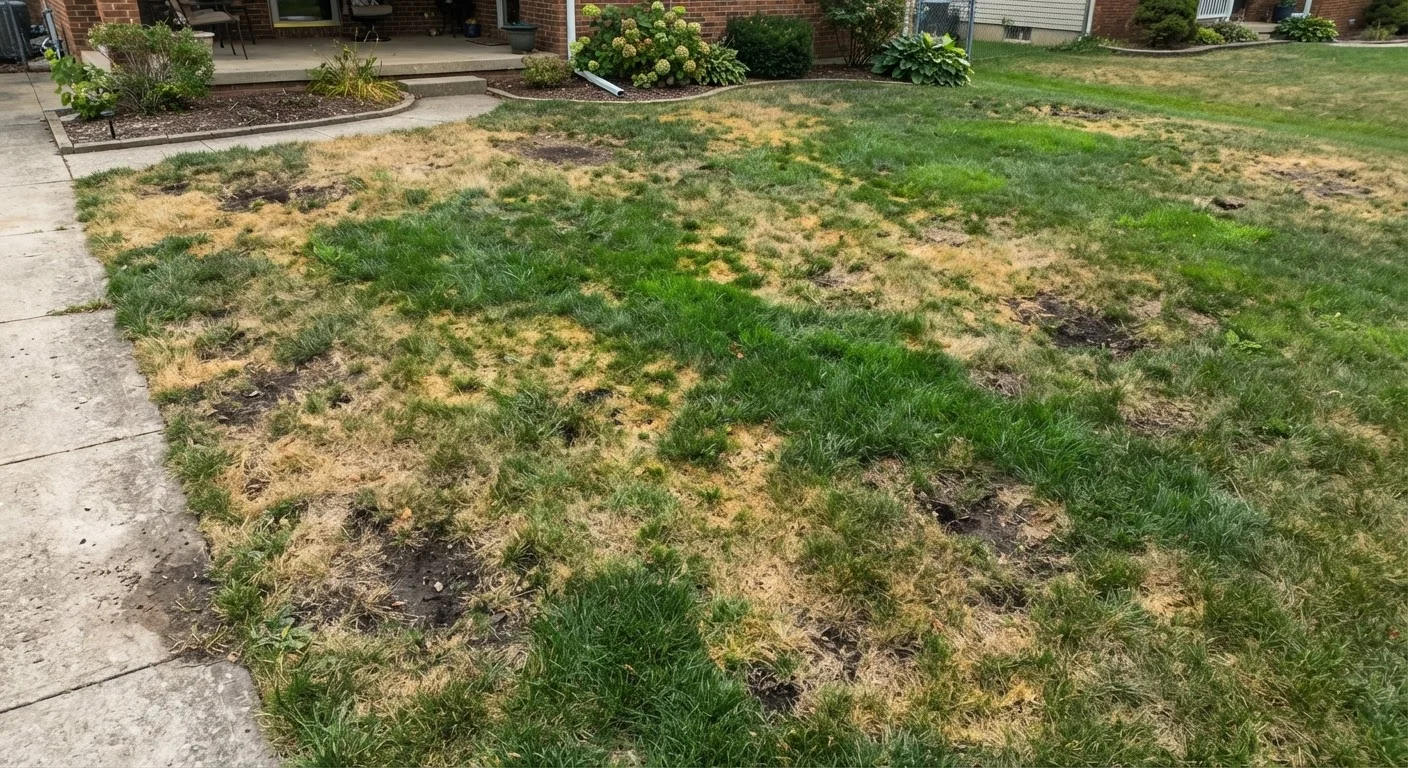
Photo credit: ResultsRover.com | Insights You Can Trust
In this article
Yellow patches, brown rings, and thin spots each point to different problems. Learn to identify common lawn issues before they spread.
Key Takeaways
- Yellow patches usually point to nitrogen deficiency, overwatering, or compacted soil - not always drought.
- Perfect brown circles or rings are a hallmark of fungal diseases like brown patch or dollar spot.
- Bare spots can result from heavy foot traffic, pet urine, grubs, or shaded areas where turf can't thrive.
- The shape and pattern of damage is one of the most reliable clues to identifying the root cause.
- Many lawn problems worsen if treated with the wrong remedy - diagnosis before action saves time and money.
- A basic soil test can uncover pH and nutrient imbalances that explain chronic, hard-to-fix discoloration.
Why Lawn Patterns Matter More Than Color Alone
Most homeowners notice something is wrong when their lawn turns an off color - but color alone tells only half the story. The shape, size, and location of damaged areas are what separate one problem from another. A random scatter of yellow blades means something very different from a crisp brown ring or a concentrated dead patch near the sidewalk.
Think of your lawn the way you'd think of warning lights on a car dashboard - the symptom points toward a system that needs attention. Understanding what each warning signal means is the first step toward an effective fix, whether you're dealing with a vehicle or a yard. Acting on the right diagnosis prevents you from spending money on treatments that won't help - or that make things worse.
~40%
Lawn problems caused by watering mistakes
Turf management research suggests that improper irrigation - both overwatering and underwatering - accounts for a substantial share of common lawn problems in residential settings.
½ inch
Maximum healthy thatch depth
Turfgrass specialists generally recommend dethatching when the organic layer between soil and grass blades exceeds about half an inch, as thicker layers restrict water and nutrient penetration.
1/3 rule
Max grass height removed per mowing
Cooperative extension turfgrass programs widely recommend never removing more than one-third of the grass blade in a single mow to prevent stress-related thinning and discoloration.
Decoding Yellow and Off-Color Patches
Yellowing grass is the most common complaint, and it has a long list of potential causes. Identifying the pattern narrows it down quickly:
- Uniform pale yellow across a large area: Often a nitrogen deficiency. Grass needs nitrogen to produce chlorophyll - the pigment that keeps it green. A simple fertilizer adjustment can reverse this, but confirm with a soil test first. See our guide to reading fertilizer labels and N-P-K ratios before applying anything.
- Yellowing in low spots or shaded areas: May indicate overwatering or poor drainage. Roots sitting in saturated soil suffocate and can't absorb nutrients even when they're present.
- Streaky yellow lines: A classic sign of iron chlorosis or uneven fertilizer application. If you applied a granular product unevenly, the pattern will often follow your spreader path.
One important note: soil pH affects nutrient availability. A lawn with adequate nitrogen but a pH that's too high or too low may still look yellow because the grass can't access what's in the soil. A soil test resolves this uncertainty.
Test Before You Treat
Before applying fertilizer, lime, or any corrective product, consider a soil test through your local cooperative extension service - often available for a modest fee. Results show your soil's pH and nutrient levels, so you treat the actual problem rather than guessing. Applying the wrong amendment can make discoloration worse, not better.
Brown Rings, Dollar Spots, and Fungal Disease
Geometric shapes - circles, crescents, and rings - almost always signal fungal activity. Fungi spread outward from a central infection point, which is why the damage looks so deliberate.
- Brown patch: Large, irregular-edged circles of tan or brown grass, often with a darker "smoke ring" border. It thrives in hot, humid weather when nighttime temperatures stay above 70°F.
- Dollar spot: Small, silver-dollar-sized bleached spots scattered across the lawn. Each spot may show an hourglass-shaped lesion on individual blades. It's common when lawns are nitrogen-deficient and stressed by drought.
- Fairy ring: A ring of dark green, fast-growing grass - sometimes with mushrooms appearing along the arc. The fungi decompose organic matter underground, releasing nitrogen that briefly supercharges surrounding grass.
Fungal diseases are often worsened by watering in the evening (leaving blades wet overnight), excessive thatch buildup, and poor air circulation. Improving these conditions is often as effective as any chemical treatment.
“Most lawn diseases are really management diseases - they take hold when cultural conditions like mowing height, irrigation timing, and thatch levels are off. Fix the conditions, and the grass often recovers on its own.”
— Turfgrass Extension Specialist, University Cooperative Extension Program
Bare Spots: Traffic, Pests, and Shade Problems
A bare patch with no grass at all usually means something is either physically removing the turf or preventing regrowth. The most common causes include:
- Foot traffic and compaction: High-traffic paths compress soil so tightly that roots can't penetrate. The fix involves aerating the area and, where possible, redirecting foot traffic.
- Pet urine: Creates small, concentrated dead zones - often with a ring of dark green at the outer edge where the diluted nitrogen acted as fertilizer. Regular watering of the affected area after pets use it reduces damage.
- Grub damage: White grub larvae feed on grass roots just below the soil surface. The turf feels spongy and rolls back like a loose carpet. Check by cutting a small section and inspecting the top 2 inches of soil.
- Shade: Most common turf grasses need at least 4-6 hours of direct sunlight. Chronic bare spots under trees often mean the grass variety isn't suited to the conditions. Shade-tolerant alternatives or ground covers may be a better long-term solution.
Once you've addressed the cause, bare areas can usually be repaired with overseeding or sod patches. Timing matters - cool-season grasses repair best in fall, while warm-season grasses do better in late spring. Our fall yard prep checklist walks through the right sequence for late-season lawn repairs.
Thin, Weak Growth Across the Whole Lawn
When the entire lawn looks sparse rather than patchy, the problem is usually systemic - affecting roots, soil structure, or ongoing maintenance habits. Mowing too short (scalping) is one of the most common mistakes homeowners make. Cutting more than one-third of the blade height at once stresses the grass and reduces its ability to photosynthesize and build strong roots.
Compacted soil throughout the lawn prevents water and air from reaching root zones. Annual or biennial core aeration - where small plugs of soil are removed to open up the surface - is one of the most impactful things a homeowner can do for a chronically thin lawn. Thatch buildup, a layer of dead organic matter between the soil and grass blades, can also block water and nutrients when it exceeds about half an inch thick.
A healthy lawn is also a competitive one - dense, well-rooted turf naturally suppresses weeds. Thin grass is an open invitation for opportunistic plants to fill the gaps. Addressing the underlying weakness, rather than just treating the weeds, produces more durable results.
This article is for general informational and educational purposes. Lawn care results vary based on grass variety, climate, soil type, and local conditions. Consult your local cooperative extension service for region-specific guidance.
Frequently Asked Questions

Author
Home & Garden Editorial Team
Home & Garden Editorial Team is the collective byline for our editorial team and contributor network. Articles published under this byline or an editorial pen name are researched, written, and reviewed according to our editorial standards for clarity, consistency, and independence before publication.
View all articles →