
Watering Your Garden Deeply vs. Frequently: The Case for Infrequent Soakings
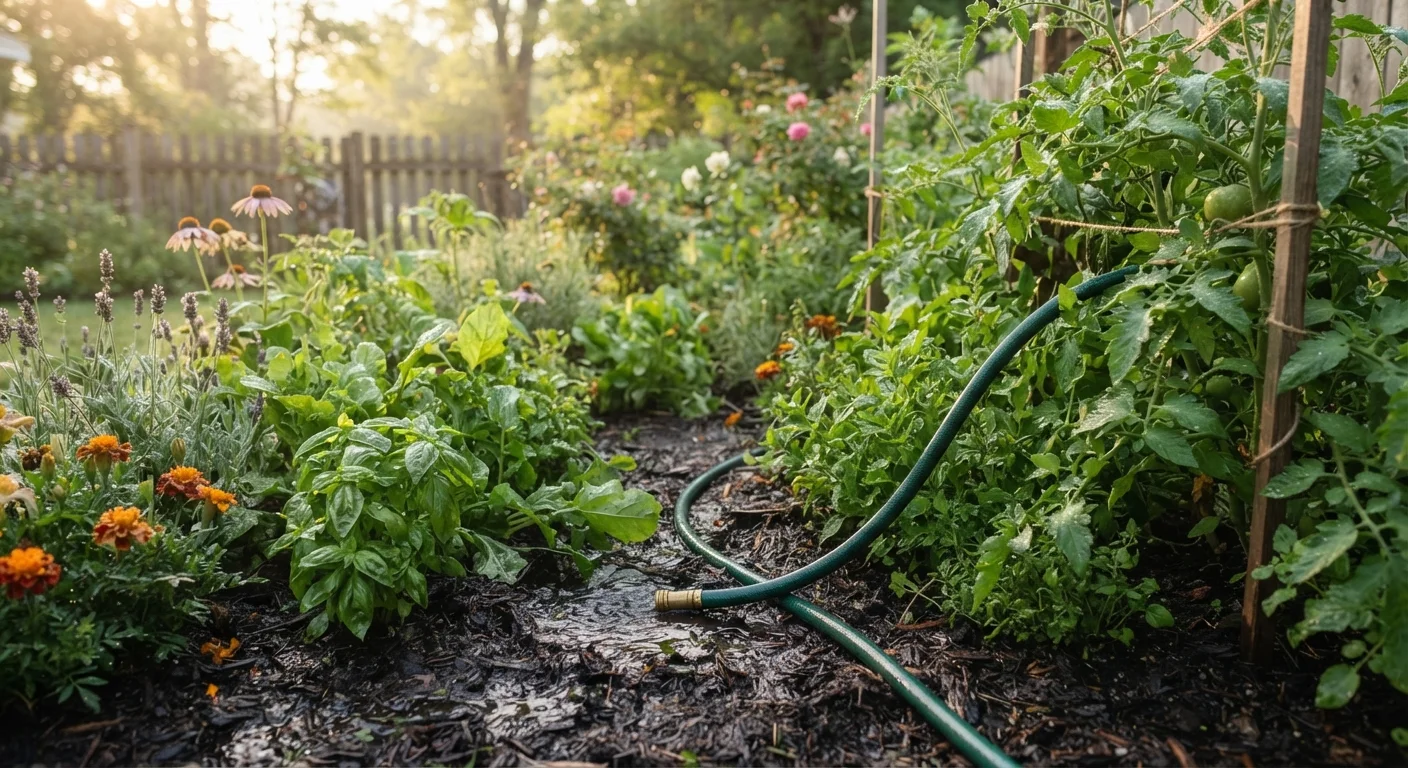
Photo credit: ResultsRover.com | Insights You Can Trust
In this article
Frequent shallow watering trains shallow roots. Learn why deep, infrequent watering produces stronger, more drought-tolerant plants.
Key Takeaways
- Frequent shallow watering keeps roots near the surface, making plants dependent on you and vulnerable to heat stress.
- Watering deeply and infrequently — typically 1–2 times per week — trains roots to grow deeper and access stored soil moisture.
- Letting the top inch or two of soil dry between waterings is a sign of healthy root behavior, not neglect.
- Mulching and morning watering schedules dramatically reduce how much water your garden actually needs.
- Most established plants need far less water than homeowners assume — overwatering is one of the most common garden mistakes.
Why Watering Frequency Shapes Root Behavior
Roots grow where water is available. That's not a metaphor — it's plant physiology. When you water a little every day, moisture stays concentrated in the top few inches of soil. Roots have no reason to push deeper, so they don't. The result is a shallow root system that dries out fast, wilts in summer heat, and keeps you tied to a watering schedule every single day.
Deep, infrequent watering changes that equation. By soaking the soil to a depth of 6–8 inches and then letting the surface dry out before watering again, you create a moisture gradient that draws roots downward. Deeper roots tap cooler, more stable soil moisture — the kind that persists even when the top of the ground is bone dry. Plants become genuinely resilient rather than dependent.
This principle applies to lawns, vegetable beds, perennial borders, and shrubs alike. It's one of the garden habits that saves both water and effort once it becomes routine. For more on how common watering assumptions can cost you, see our look at home maintenance myths that quietly cost homeowners money.
Water slowly and deeply to saturate the root zone, not just the surface.
A quick sprinkle wets only the top inch or two of soil, which evaporates within hours. Sustained, slow watering — using a soaker hose, drip system, or a hose left at low flow — allows water to percolate 6–8 inches down where roots can actually access it.
Allow the soil surface to dry out between waterings.
A damp surface that never dries out signals roots to stay shallow. Letting the top 1–2 inches dry encourages downward root growth and also discourages fungal disease and weed germination, both of which thrive in consistently moist conditions near the surface.
Water in the early morning to reduce evaporation loss.
Midday watering can lose a significant portion of water to evaporation before it reaches roots, especially in summer heat. Morning watering allows moisture to soak in before temperatures rise and also gives foliage time to dry, reducing disease pressure.
Apply 2–3 inches of mulch over the root zone to slow moisture loss.
Mulch acts as a blanket over the soil, dramatically slowing evaporation and keeping the root zone cooler on hot days. This extends the time between necessary waterings and reinforces deep-root habits by maintaining subsurface moisture. See our guide on mulch myths that can harm garden beds to avoid common mistakes.
Adjust your watering schedule seasonally, not on a fixed calendar.
A schedule set in July is wrong for September. Rainfall, temperature, day length, and plant growth stage all change through the season. Treating watering like a fixed weekly chore leads to both overwatering in cool, wet periods and underwatering during heat waves.
Best Practices for Deep, Infrequent Watering
Applying these practices consistently is what separates a garden that thrives on its own from one that demands constant attention.
Reading Your Soil and Knowing When to Water
The single most useful tool for better watering isn't a timer or a smart controller — it's your finger. Push it about two inches into the soil near the root zone. If it comes out dry, it's time to water. If it's still cool and damp, wait another day. This simple check overrides generic schedules that don't account for recent rain, temperature swings, or your specific soil type.
Newly Planted vs. Established Plants
Deep, infrequent watering is the goal for established plants — but newly transplanted seedlings and recently installed plants need more frequent moisture while their root systems develop. Plan to water new plantings more often for the first four to six weeks, then gradually extend intervals to encourage deeper rooting. Established perennials and shrubs are far more drought-tolerant than their younger counterparts.
Clay soils hold water longer and can become waterlogged with frequent watering, while sandy soils drain fast and may need slightly more frequent deep sessions. Loamy soil — the dark, crumbly kind — holds moisture well and is the sweet spot most gardeners aim for over time. Improving your soil structure with compost works in tandem with smart watering. You might also want to explore how soil pH affects plant health and nutrient availability for a fuller picture of what's happening underground.
If you're considering upgrading how you deliver water, a comparison of drip irrigation vs. sprinkler systems can help you choose a setup that supports deep watering automatically. And if you're growing a mix of perennials and annuals, note that established perennials generally need far less supplemental water than annuals once their roots are set.
50%
Outdoor water use lost to inefficient practices
The U.S. Environmental Protection Agency estimates that roughly half of outdoor residential water use is wasted due to evaporation, runoff, and overwatering.
6–8 inches
Target soil depth for deep watering
Most cooperative extension programs recommend saturating the root zone to 6–8 inches for established vegetable and ornamental gardens to encourage deep root development.

Author
Home & Garden Editorial Team
Home & Garden Editorial Team is the collective byline for our editorial team and contributor network. Articles published under this byline or an editorial pen name are researched, written, and reviewed according to our editorial standards for clarity, consistency, and independence before publication.
View all articles →