
Perennials vs. Annuals: Planning a Garden That Balances Longevity and Color
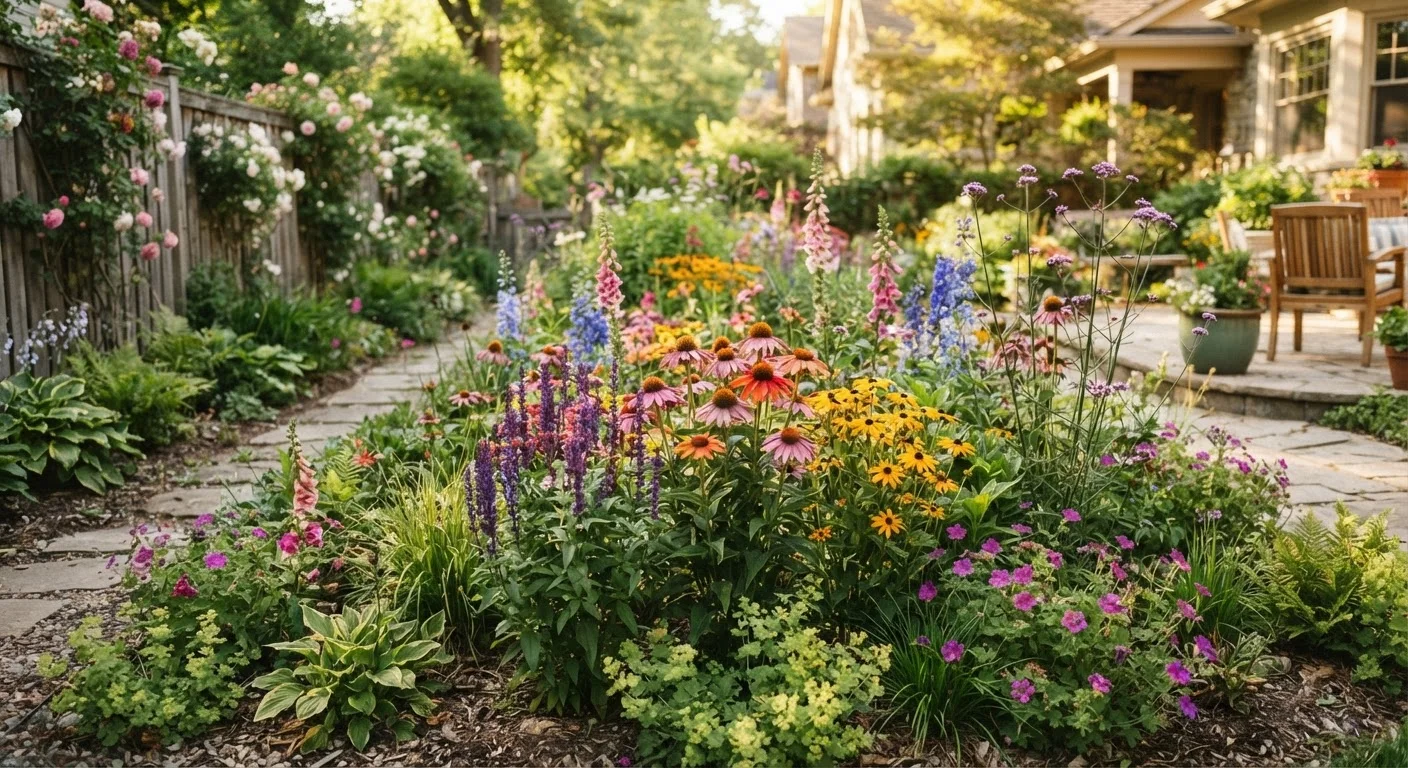
Photo credit: ResultsRover.com | Insights You Can Trust
In this article
Annuals deliver season-long color; perennials return year after year. Learn how to mix both for a yard that looks good without constant replanting.
Key Takeaways
- Perennials return each year from established roots, reducing replanting labor and cost over time.
- Annuals bloom all season long but must be replanted each year, offering more color flexibility.
- Combining both types fills bloom gaps and creates a garden that looks good from spring through fall.
- Perennials typically have shorter individual bloom windows than annuals planted for the same spot.
- Start with a perennial backbone, then use annuals to fill gaps and add continuous color.
What Actually Separates Perennials from Annuals
The difference comes down to lifespan. Annuals complete their entire life cycle - germinating, flowering, setting seed, and dying - within a single growing season. You plant them each year. Perennials die back to the ground in winter but regrow from their root system the following spring, returning for three or more years in most cases.
That distinction has real consequences for your wallet and your weekends. Annuals demand a fresh investment of time and money each spring. Perennials ask for patience up front - they often bloom modestly their first year while establishing roots - but reward you with less work over the long haul. A common gardening phrase captures this well: "First year sleeps, second year creeps, third year leaps."
Neither type is universally better. They solve different problems, which is exactly why experienced gardeners use both. For further context on how planting choices intersect with garden design, see our guide to native plants vs. traditional landscaping.
| Criterion | Perennials | Annuals |
|---|---|---|
| Lifespan | Returns 3+ years from roots | One growing season only |
| Bloom duration | 3-6 weeks per plant | Spring to frost continuously |
| Upfront cost | Higher per plant | Lower per plant or pack |
| Long-term cost | Lower - no yearly repurchase | Higher - replanted annually |
| Establishment time | 1-2 seasons to fill in | Blooms within weeks of planting |
| Design flexibility | Fixed placement over years | Change layout every season |
| Weed suppression | Good once established | Minimal - bare soil between plants |
| Best use | Structural garden backbone | Gap-filling and containers |
The Case for Building a Perennial Backbone
Think of perennials as your garden's structural foundation. Plants like coneflower (echinacea), black-eyed Susan, daylilies, and hostas come back reliably, gradually spreading to fill space and crowd out weeds. Over several years, that ground coverage means less bare soil for weeds to colonize - and less mulching for you.
The trade-off is bloom window. Most perennials flower for three to six weeks, not the entire season. A bed planted exclusively with perennials will look spectacular in June, then fade. The solution is layering perennials that bloom at different times: spring bulbs like tulips, early-summer perennials like salvia, midsummer standouts like coneflower, and late-season performers like asters and sedums. Planning these bloom windows is the core skill of perennial gardening.
3-5 years
Typical payback period for perennials vs. annuals
Horticulture educators generally note that perennials recoup their higher upfront cost within a few seasons by eliminating annual repurchasing.
3-6 weeks
Average bloom window per perennial variety
University extension programs commonly cite this range, underscoring why staggered planting across bloom times matters for season-long color.
60-70%
Estimated garden labor reduction after perennial establishment
Established perennial beds generally require significantly less prep and replanting work compared to beds replanted with annuals each season, though exact figures vary by garden size and plant selection.
Perennials also tend to pair well with low-maintenance design strategies. Low-maintenance ground covers can be planted alongside perennials to suppress weeds between clumps, reducing upkeep further. And if you're enriching beds annually, homemade compost is a cost-effective soil amendment that perennials respond to well.
Where Annuals Earn Their Keep
Annuals solve the bloom-gap problem that perennials create. While your coneflowers rest after their peak, impatiens, zinnias, marigolds, and petunias keep the color going. They also give you a design reset every year - a practical advantage if you're still figuring out what you want from your garden or simply enjoy changing things up.
Annuals shine in specific situations:
- Containers and window boxes - they thrive without deep root space and bloom prolifically all season.
- Filling first-year gaps - new perennial beds look sparse while plants establish. Annuals fill those gaps cheaply and immediately.
- High-visibility spots - front walkways and entry beds benefit from the uninterrupted color annuals provide.
- New homeowners experimenting with design - annuals let you try color combinations without committing permanently to any layout.
For beds where annuals will be replanted each season, deep, infrequent watering helps young transplants develop stronger root systems than shallow daily watering does.
A Note on Hardiness Zones
Whether a perennial truly comes back each year depends on your USDA Plant Hardiness Zone. A plant labeled a perennial in the South may behave as an annual in colder Northern climates. Always check the hardiness zone range on plant tags or seed packets before assuming a plant will overwinter in your area. Your local cooperative extension office is a reliable, free resource for zone-specific plant recommendations.
How to Mix Both for a Garden That Works Year-Round
The most practical approach for most homeowners: plant perennials as your primary structure and use annuals as seasonal fill. Here's a simple framework to follow:
- Map your bloom windows first. Choose three to four perennials that collectively cover spring, early summer, midsummer, and fall. Sketch where each goes based on mature height - tall plants to the back or center, shorter ones to the edges.
- Leave intentional gaps. Space perennials at their mature spread width. The empty space in year one is your annual zone.
- Fill gaps with annuals that complement your perennial palette. Match or contrast colors deliberately rather than planting whatever is on sale.
- Reassess each fall. Note which perennials need dividing (a free way to multiply your plants), which spots stayed bare, and whether your annual choices performed well.
This layered strategy also translates well to raised beds. Our raised bed gardening guide covers how to structure planting schedules across seasons - the same principles apply when mixing ornamental perennials and annuals in a dedicated bed.
With a little planning upfront, you can build a yard that delivers color from the last frost through the first freeze - without starting from scratch every spring.

Author
Home & Garden Editorial Team
Home & Garden Editorial Team is the collective byline for our editorial team and contributor network. Articles published under this byline or an editorial pen name are researched, written, and reviewed according to our editorial standards for clarity, consistency, and independence before publication.
View all articles →