
Lawn Fertilizer Labels Decoded: N-P-K Ratios and When Each Nutrient Matters
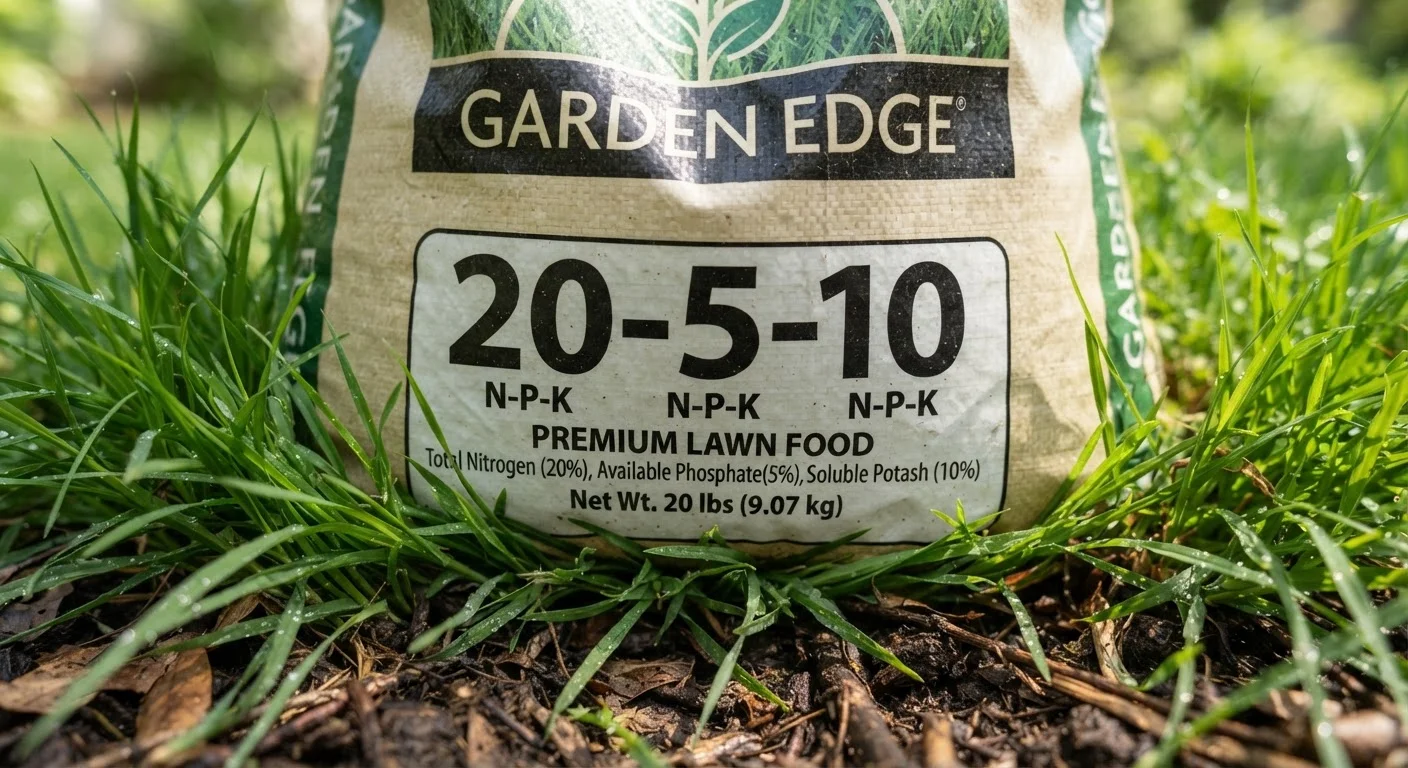
Photo credit: ResultsRover.com | Insights You Can Trust
In this article
Those three numbers on every fertilizer bag have real meaning. Learn what nitrogen, phosphorus, and potassium each do for your lawn.
What Those Three Numbers Actually Mean
Every bag of lawn fertilizer carries three numbers separated by dashes - something like 28-0-10 or 10-10-10. These are the N-P-K values, and they represent the percentage by weight of the three primary nutrients inside: nitrogen (N), phosphorus (P), and potassium (K). A 50-pound bag labeled 28-0-10, for example, contains 14 pounds of nitrogen, zero phosphorus, and 5 pounds of potassium - the rest is filler material that helps distribute the nutrients evenly.
Understanding these ratios lets you match the product to your lawn's actual needs rather than guessing at the garden center. Applying the wrong nutrient at the wrong time can waste money, damage your grass, or pollute nearby waterways through runoff.
| N stands for | Nitrogen - promotes leaf growth and green color |
| P stands for | Phosphorus - supports root development and germination |
| K stands for | Potassium - improves stress tolerance and durability |
| What the numbers represent | Percentage by weight of each nutrient in the bag |
| Slow-release nitrogen | Feeds lawn gradually over weeks; less runoff risk |
| Best way to choose a ratio | Get a soil test from your local cooperative extension service |
Nitrogen (N): The Green-Up Driver
Nitrogen is the nutrient most directly tied to the lush, dark-green color homeowners associate with a healthy lawn. It fuels leaf and blade growth by supporting chlorophyll production - the green pigment that powers photosynthesis. When nitrogen is deficient, grass typically turns pale yellow or lime green and growth slows noticeably. If you notice these signs, our guide on reading your lawn's warning signs can help you confirm the cause before you treat.
Nitrogen is also the nutrient most easily lost - through leaching, volatilization (evaporating into the air), or runoff after rain. That's why many fertilizers use slow-release nitrogen forms (look for words like "sulfur-coated" or "polymer-coated" on the bag), which feed the lawn steadily over weeks instead of delivering a short burst followed by rapid fading.
When to prioritize it: Spring and early fall for cool-season grasses (fescue, bluegrass, ryegrass); late spring through summer for warm-season grasses (Bermuda, zoysia, St. Augustine).
Phosphorus (P): Root Builder and Establishment Aid
Phosphorus supports root development, seed germination, and the energy transfer that helps young plants establish themselves. The middle number on the label reflects its percentage. A zero in that position - increasingly common in maintenance fertilizers - simply means no phosphorus was added, not that something is wrong with the product.
Many established lawns on average suburban soils already have adequate or even excess phosphorus. Overapplying it contributes to waterway pollution, which is why several states have restricted or banned phosphorus-containing lawn fertilizers except for new lawn establishment or when a soil test confirms a deficiency.
When to prioritize it: Seeding or sodding a new lawn, or when a soil test shows a confirmed phosphorus deficiency. For existing, healthy lawns, a zero in the middle position is often perfectly appropriate. Speaking of soil tests, our article on soil pH and your garden explains how nutrient availability is also shaped by your soil's pH level.
N-P-K ratio
The three-number code on every fertilizer label showing the percentage by weight of nitrogen, phosphorus, and potassium, in that order. It tells you the nutrient concentration inside the bag.
Slow-release nitrogen
A form of nitrogen coated or structured to break down gradually in the soil, delivering a steady nutrient supply over weeks or months rather than all at once. It reduces the risk of burning grass or leaching into groundwater.
Soil test
A laboratory analysis of a soil sample that measures existing nutrient levels and pH. Results guide exactly which nutrients - and how much - your lawn actually needs, removing guesswork from fertilizer selection.
Winterizer fertilizer
A fall-applied fertilizer formulated with lower nitrogen and higher potassium to harden grass before cold weather, improving winter survival and spring recovery.
Leaching
The process by which water-soluble nutrients - especially nitrogen and potassium - dissolve in rainwater or irrigation and move downward through the soil, eventually out of reach of grass roots or into groundwater.
Potassium (K): Stress Defense and Durability
Potassium - the third number - is sometimes called the "hardening" nutrient. It doesn't make grass visibly greener the way nitrogen does, but it strengthens cell walls, improves drought tolerance, enhances disease resistance, and helps grass recover from foot traffic and heat stress. Think of it as the nutrient that helps your lawn endure the summer rather than just look good in spring.
Potassium leaches from sandy soils fairly readily but tends to stay put in heavier clay soils. A soil test is the only reliable way to know whether your lawn genuinely needs more of it.
When to prioritize it: Late summer or early fall applications - often called "winterizer" fertilizers - typically carry higher potassium ratios to prepare grass for cold-weather stress. Lawns on sandy or drought-prone soils may benefit from supplemental potassium more regularly than lawns on clay-rich ground.
Check Your State's Phosphorus Rules First
A growing number of U.S. states - including Minnesota, Michigan, and New York - restrict the use of phosphorus-containing lawn fertilizers except when a soil test confirms a deficiency or when establishing a new lawn. Before purchasing a fertilizer with a non-zero middle number for routine maintenance, check your state's current regulations. Your local cooperative extension office is a reliable, free source for this information.
Choosing the Right Ratio for the Right Moment
There is no single universal N-P-K ratio that works for every lawn at every time of year. The right choice depends on your grass type, the season, and what a soil test reveals about nutrient levels already present. As a general framework:
- Spring green-up: Higher nitrogen, low or zero phosphorus (unless establishing), moderate potassium - e.g., 30-0-6 or similar.
- New lawn seeding or overseeding: A balanced or phosphorus-forward formula to support root establishment - e.g., 10-18-6.
- Late summer / fall winterizer: Lower nitrogen, higher potassium - e.g., 24-0-12 or 13-0-46 blends diluted in product.
- General maintenance: A balanced formula if no specific deficiency has been identified - e.g., 10-10-10.
Always read application rate instructions carefully. More fertilizer is not better - excess nitrogen, in particular, can burn grass and contribute to thatch buildup. When in doubt, start with a soil test from your local cooperative extension service before buying anything. It takes the guesswork out of label reading entirely.

Author
Home & Garden Editorial Team
Home & Garden Editorial Team is the collective byline for our editorial team and contributor network. Articles published under this byline or an editorial pen name are researched, written, and reviewed according to our editorial standards for clarity, consistency, and independence before publication.
View all articles →