
Caulk vs. Weatherstripping: Choosing the Right Draft Seal for Each Spot
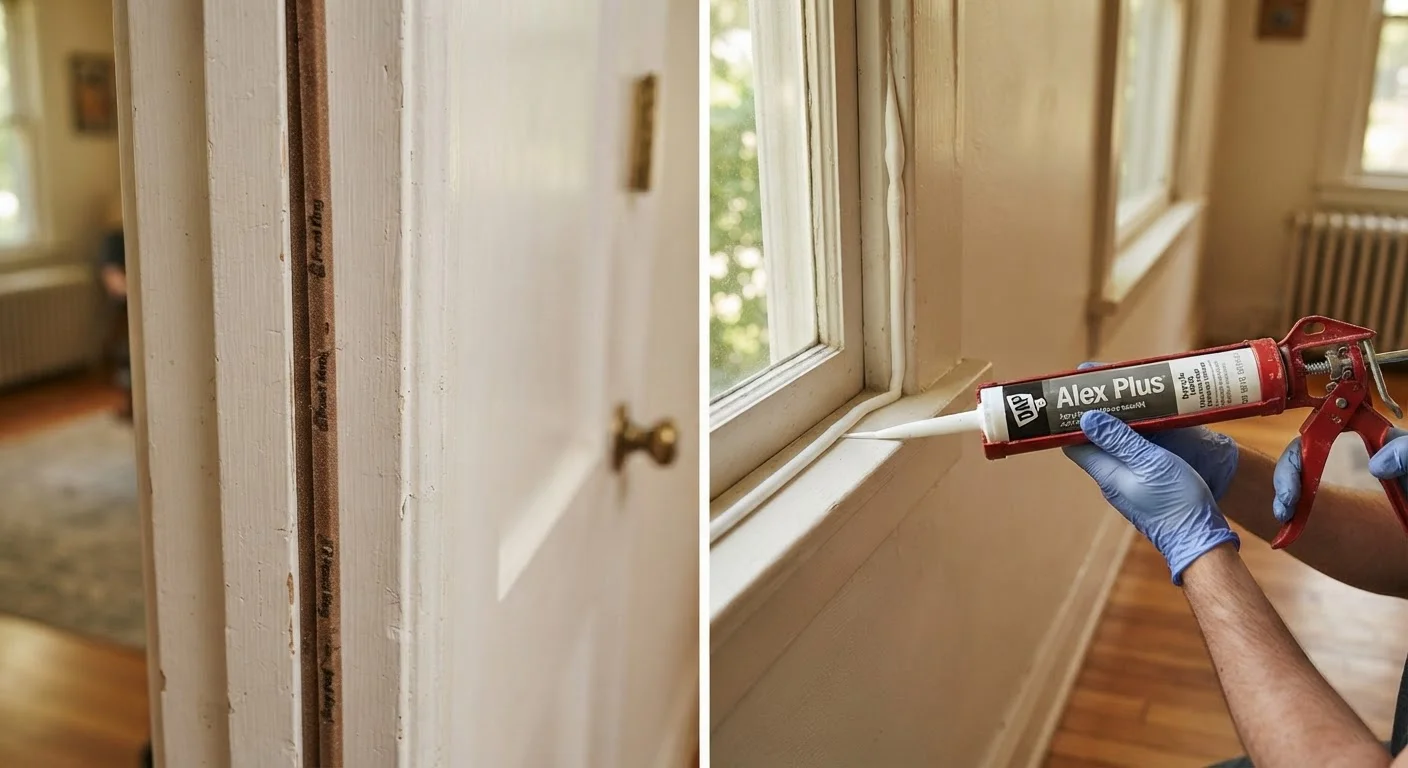
Photo credit: ResultsRover.com | Insights You Can Trust
In this article
Not every gap needs the same fix. Learn where caulk works best, where weatherstripping wins, and how to apply both correctly.
Key Takeaways
- Caulk is for stationary gaps; weatherstripping is for moving parts like doors and operable windows.
- Using the wrong product in the wrong location leads to premature failure and wasted effort.
- Both materials are inexpensive and DIY-friendly, making them high-value upkeep investments.
- Inspect and replace weatherstripping annually; recaulk fixed joints every 5-10 years as needed.
- Air sealing with both products together covers the full range of draft sources in most homes.
Why the Distinction Matters
A drafty home isn't just uncomfortable - it's quietly expensive. The U.S. Department of Energy estimates that air leaks can account for 25-40% of the energy used for heating and cooling in a typical home. The good news: caulk and weatherstripping together address the vast majority of those leaks, and neither requires professional installation for most applications.
The problem most homeowners run into is using the wrong product in the wrong place. Caulk applied around a door frame where weatherstripping belongs will crack within months from the constant movement. Weatherstripping pressed into a fixed gap between framing materials won't bond and will fall away quickly. Getting the location right is the entire battle. See how air sealing fits into a broader efficiency upgrade plan for a fuller picture of where these fixes rank.
A Quick Safety Note on Attic and Basement Air Sealing
Sealing gaps around electrical junction boxes, recessed lights, or combustion appliances (furnaces, water heaters) in unconditioned spaces involves fire-safety and code considerations beyond standard caulk application. For those locations, consult a licensed contractor or energy auditor rather than DIYing. Most visible draft sources around windows, doors, and baseboards are safe and straightforward for homeowners to address on their own.
Where Caulk Belongs - and What Type to Use
Caulk is the right tool anywhere two stationary surfaces meet and leave a gap. Common locations include:
- The perimeter of window and door frames where they meet the interior wall or exterior siding
- Baseboards and crown molding meeting walls or floors
- Gaps around plumbing pipes, electrical conduits, or ductwork where they pass through walls or floors
- Joints between the house foundation and framing (rim joist area)
For interior applications, a paintable latex caulk is usually sufficient. For exterior use or anywhere moisture is a concern, choose a silicone or siliconized acrylic caulk - these resist weathering and won't shrink as dramatically over time. Bathrooms and kitchens call specifically for mold-resistant formulas. The right caulk choice for bathroom surfaces deserves its own attention given the moisture demands.
Application tip: always clean and dry the surface before applying, cut the tube at a shallow 45-degree angle for better control, and smooth the bead with a damp fingertip or a dedicated caulk tool before it skins over.
| Criterion | Caulk | Weatherstripping |
|---|---|---|
| Best application | Fixed, stationary joints | Moving parts (doors, operable windows) |
| Typical lifespan | 5-10 years (exterior); longer interior | 1-5 years depending on material and use |
| DIY difficulty | Low - tube and caulk gun | Low - peel-and-stick or tack-in strips |
| Handles movement | No - cracks under repeated flex | Yes - designed to compress and rebound |
| Moisture resistance | High (silicone or mold-resistant types) | Moderate - varies by material |
| Where NOT to use | Door stops, operable window sashes | Fixed wall-to-frame joints, plumbing gaps |
Where Weatherstripping Belongs - and Which Style Works
Weatherstripping belongs on any surface that moves. The most common candidates are exterior doors (including the door stop, threshold, and the gap under the door) and operable windows - double-hung, casement, or sliding types.
There are several weatherstripping materials, each suited to a specific location:
- Foam tape: Self-adhesive and inexpensive, best for low-friction spots like window channels where there's minimal abrasion.
- V-strip (tension seal): A durable folded strip that fits into door or window channels and springs open to fill gaps. Works well in high-use doors.
- Door sweeps: Attached to the bottom edge of exterior doors to seal the gap at the threshold - one of the most noticeable draft sources in a home.
- Compression bulb or Q-lon strip: Durable foam or rubber profiles fitted to door stops; compress on closing and rebound reliably over time.
Weatherstripping should be checked at least once a year. If it's flattened, torn, or no longer springs back when pressed, it's no longer sealing effectively. Deferred replacement is a common source of energy waste - a point explored in depth in why small maintenance delays add up.
Side-by-Side: Making the Call Quickly
When standing in front of a gap, ask one question: Does this surface move? If yes, weatherstripping. If no, caulk. That single test resolves nearly every situation correctly.
25-40%
Home energy lost to air leaks
The U.S. Department of Energy estimates that air infiltration through gaps and cracks accounts for roughly a quarter to nearly half of heating and cooling energy use in typical homes.
$200-$600
Typical annual savings from air sealing
The DOE notes that homeowners who comprehensively air-seal and add insulation can reduce heating and cooling costs by 10-20%, though actual savings vary widely by home size and climate.
For windows specifically, many homeowners need both: caulk around the fixed frame where it meets the wall, and weatherstripping on the operable sash. The full window maintenance picture includes both elements as part of a seasonal inspection routine.
One common mistake worth avoiding: caulking a door frame shut. It happens when homeowners caulk the door stop rather than the frame-to-wall joint. Reserve caulk for the joint between the frame and the surrounding wall surface - never apply it where the door contacts any surface on closing.

Author
Home & Garden Editorial Team
Home & Garden Editorial Team is the collective byline for our editorial team and contributor network. Articles published under this byline or an editorial pen name are researched, written, and reviewed according to our editorial standards for clarity, consistency, and independence before publication.
View all articles →