
Low-Maintenance Ground Covers That Actually Suppress Weeds
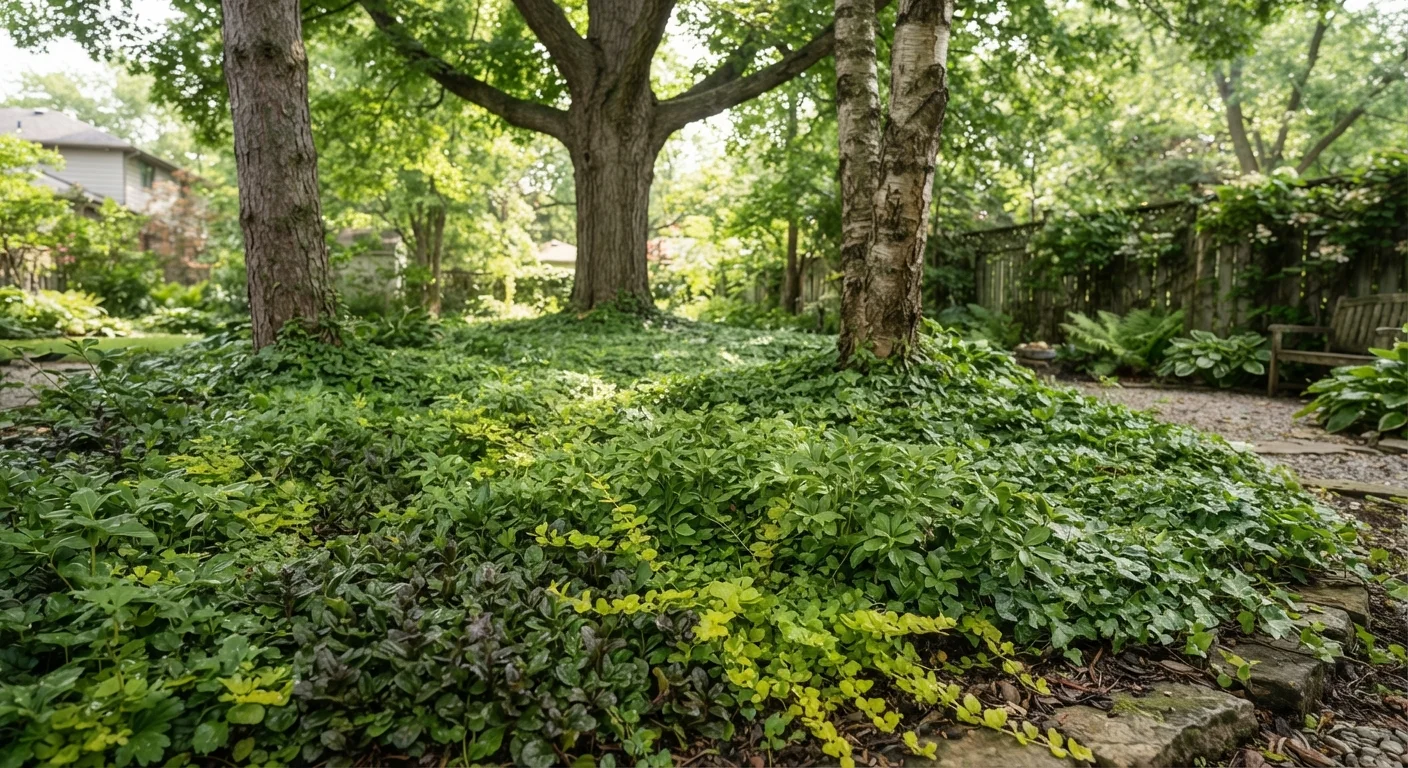
Photo credit: ResultsRover.com | Insights You Can Trust
Ground covers can replace high-effort turf and choke out weeds. Explore durable, spreading options suited to sun, shade, and slopes.
Key Takeaways
- The right ground cover forms a dense canopy that starves weeds of light and space.
- Matching a plant to your site conditions - sun, shade, slope, or moisture - is the key to low maintenance.
- Most ground covers need little more than one establishment season before they largely care for themselves.
- Pairing ground covers with a layer of mulch accelerates weed suppression during the first year.
- Some spreading plants can become invasive; always check your region's restricted species list before planting.
Why Ground Covers Beat Bare Mulch and Struggling Grass
Turf grass is one of the most demanding plants in the American yard - it needs regular mowing, fertilizing, and watering just to stay presentable. In areas where grass struggles, such as dense shade, steep slopes, or compacted dry soil, the typical fallback is a thick layer of mulch. Mulch helps, but it breaks down, needs annual topping-off, and never actually closes the door on weeds the way a thriving plant canopy can.
Ground covers - low-growing, spreading plants that form a continuous mat - take a different approach. Once established, they shade the soil surface so thoroughly that weed seeds can't get enough light to germinate. They also reduce erosion, require far less water than turf, and add genuine texture and seasonal interest to the yard.
If you're weighing whether to go a different route entirely, our guide to grass seed, sod, and plugs can help you decide whether turf makes sense in that spot at all. For areas where it doesn't, the ground covers below are a practical next step. You may also want to pair any planting with good mulch practice - check our article on common mulching mistakes to avoid undermining your new plants from day one.
Creeping Phlox (Sun-Loving and Slope-Ready)
Creeping phlox is a flowering, mat-forming perennial that excels on sunny slopes and banks where grass is nearly impossible to establish. It spreads by sending out stems that root as they travel, eventually forming a dense carpet 4-6 inches tall. In spring it produces a vivid flush of pink, white, or lavender blooms; the rest of the season it holds its evergreen foliage tightly to the ground, denying weeds the space and sunlight they need.
Plant creeping phlox in well-drained soil - it handles drought well once established but dislikes wet feet. A light trim after bloom keeps it tidy and encourages denser growth. No mowing required.
Creeping phlox roots as it spreads, locking slopes in place while locking weeds out.
Pachysandra (The Shade Workhorse)
Pachysandra terminalis is one of the most reliable ground covers for deep shade - the kind found under large trees where little else will grow. Its broad, glossy leaves form overlapping whorls that create an almost impenetrable canopy at ground level. Once a bed is filled in, typically by the second or third season, weeds rarely find a foothold.
It spreads slowly by underground stems, so initial spacing of 6-12 inches apart is typical. Water during dry spells in the first year; after that, established plants are notably drought-tolerant in shaded conditions. Avoid planting in full sun, where leaves yellow and thin out.
Pachysandra's overlapping leaf canopy is one of the most effective natural weed barriers available.
Creeping Juniper (Tough, Drought-Tolerant Evergreen)
For large open areas, roadside banks, or any spot that bakes in full sun and gets little irrigation, creeping juniper is hard to beat. Low-spreading varieties stay under 2 feet tall while spreading 6-8 feet wide over several years. The dense, needle-like foliage creates a physical barrier that is genuinely inhospitable to most weed species.
Creeping juniper tolerates poor, sandy, or rocky soil - the kind of conditions that would defeat almost any other planting. It requires essentially no maintenance once established beyond removing any dead wood. Note that deer occasionally browse it in regions with high deer pressure.
Creeping juniper thrives in the same poor, dry conditions that discourage most competing plants.
Ajuga (Fast-Spreading Color for Part Shade)
Ajuga (also called bugleweed) is one of the fastest-spreading ground covers available, which makes it effective at colonizing bare soil quickly and excellent at crowding out weeds. It produces attractive spikes of blue-purple flowers in spring and maintains its colorful, bronze-to-green foliage through the growing season. It performs best in part shade to full shade but tolerates more sun in cooler climates.
Because ajuga spreads aggressively via surface runners, it is worth checking whether it is considered invasive in your specific state before planting. In most of the continental U.S. it is well-behaved, but local conditions vary. Edging beds once a year keeps it contained.
Ajuga spreads fast enough to close gaps before weeds get a chance to move in.
Creeping Thyme (Walkable and Fragrant)
Creeping thyme is one of the few ground covers that can withstand light foot traffic, making it a strong candidate for planting between stepping stones or along narrow paths. It stays very low - under 3 inches - and fills gaps tightly enough to block weed germination. In early summer it blooms with tiny pink or purple flowers that attract pollinators.
It thrives in full sun and lean, well-drained soil. Overly rich or wet soil actually weakens it. This is a plant that rewards benign neglect: skip the fertilizer, water sparingly after establishment, and let it do its work.
Creeping thyme handles light foot traffic while forming a weed-blocking mat that needs almost nothing from you.
Wild Ginger (Native Option for Moist Shade)
Wild ginger (Asarum canadense) is a native woodland perennial that forms broad, heart-shaped leaves and spreads steadily in moist, shaded conditions - exactly the environment that frustrates most gardeners. It is a slower spreader than some options here, but its large leaves do an excellent job shading out weed seedlings once coverage is established. Its native status means it supports local soil ecology and generally needs no supplemental feeding.
For more perspective on how native plants compare to conventional choices in terms of effort and outcome, see our article on native versus traditional landscaping. Wild ginger is not edible - it is unrelated to culinary ginger despite the name.
Wild ginger is a patient, low-demand native that steadily closes off moist shaded areas to weeds.
Putting It All Together
No single ground cover is right for every yard, but the principle is consistent: choose a plant suited to your actual conditions, prepare the soil properly at planting time, and give it one full season of modest attention. After that, the plant does most of the work for you.
Suppress Weeds Faster in Year One
Even the best ground cover takes a full growing season to knit together into a solid mat. In the meantime, apply 2-3 inches of mulch between newly planted starts to block weed establishment early. As the plants spread and fill in, the mulch can be scaled back in subsequent years. Avoid piling mulch against plant stems - keep an inch of clearance around each crown to prevent rot.
If your landscape includes slopes, dry strips along driveways, or awkward shaded zones under trees, ground covers are often a smarter long-term investment than repeatedly fighting failing grass or hauling in fresh mulch each spring. For a broader look at how plant choices affect your maintenance load, see our comparison of native plants versus traditional landscaping. And if you want to add structure alongside your planting, budget-friendly hardscaping ideas can complement a ground cover beautifully.

Author
Home & Garden Editorial Team
Home & Garden Editorial Team is the collective byline for our editorial team and contributor network. Articles published under this byline or an editorial pen name are researched, written, and reviewed according to our editorial standards for clarity, consistency, and independence before publication.
View all articles →