
Native Plants vs. Traditional Landscaping: Maintenance, Ecology, and Curb Appeal
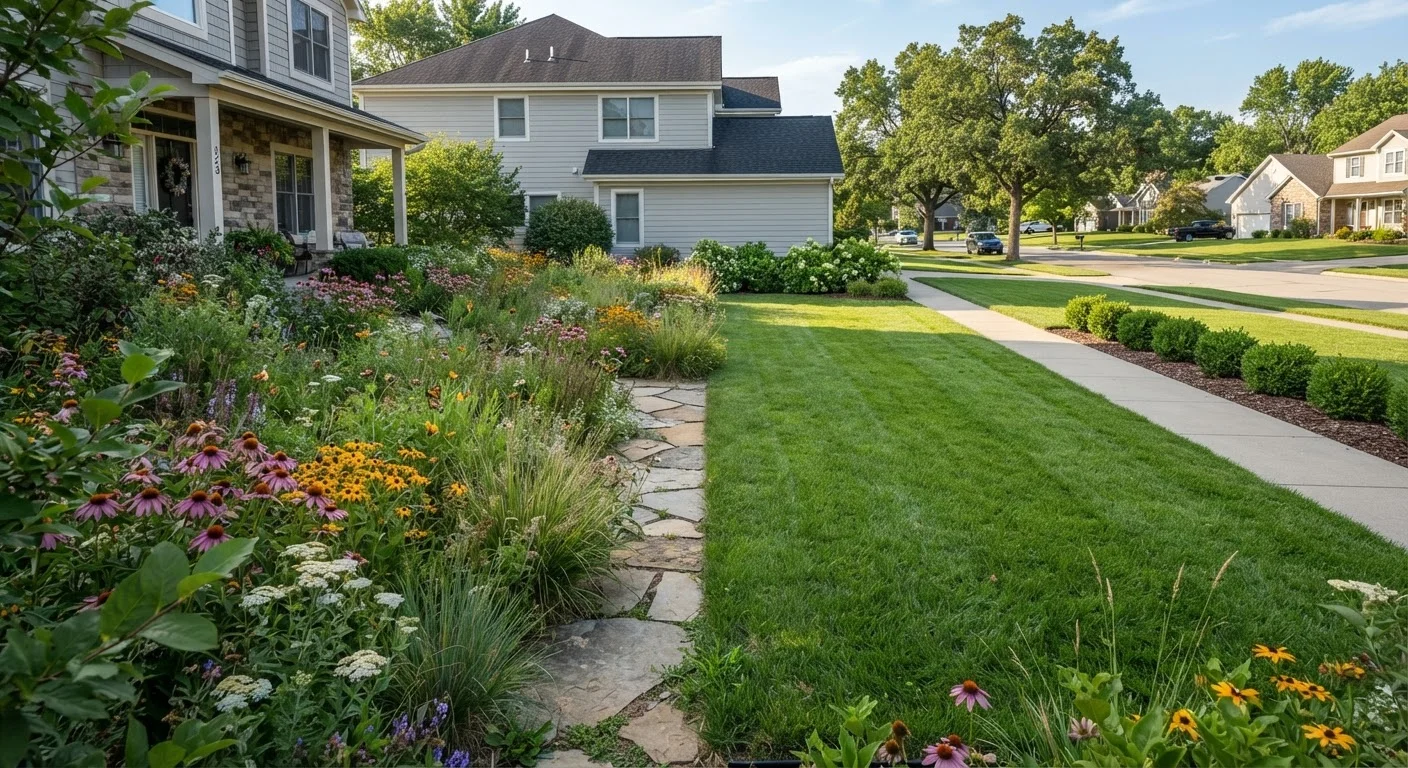
Photo credit: ResultsRover.com | Insights You Can Trust
In this article
Native plantings often need less water and care than conventional landscapes, but the trade-offs are real. Here's a balanced look at both.
Key Takeaways
- Native plants typically require less watering and fertilizing once established, reducing long-term maintenance effort.
- Traditional landscaping offers predictable, uniform appearance that often aligns with neighborhood expectations.
- Native plantings support local pollinators and wildlife in ways that conventional turf and exotic shrubs generally do not.
- The first year or two of a native garden requires active weeding and watering until plants take hold.
- A hybrid approach - mixing native and traditional plants - can balance ecology, curb appeal, and upkeep.
Lower water demand after establishment
Native plants evolved to survive on regional rainfall, so most require little to no supplemental irrigation once their root systems are established - typically after one to two growing seasons.
Minimal fertilizer and pesticide needs
Because native species are adapted to local soils, they generally thrive without synthetic inputs, reducing both ongoing costs and chemical runoff into waterways.
Supports local pollinators and wildlife
Native flowering plants and grasses provide food and habitat for native bees, butterflies, birds, and other wildlife that conventional ornamentals often cannot sustain.
Reduced mowing and pruning over time
Many native plantings are designed to look intentional at their natural size and shape, reducing the frequency of trimming compared to formal hedges or turfgrass.
Better soil health and erosion control
Deep native root systems - some extending several feet - improve soil structure, increase water absorption, and stabilize slopes more effectively than shallow-rooted turf.
Slow and demanding establishment period
Native plants typically need regular watering and active weed management for the first one to two years before they can fend for themselves, requiring more effort upfront than plugging in nursery-grown ornamentals.
Naturalistic look may not suit all neighborhoods
A native meadow or prairie planting can appear "unkempt" to neighbors or HOA boards accustomed to manicured lawns, and some municipalities have ordinances restricting unmowed vegetation height.
Limited availability at mainstream garden centers
True regional natives may only be available at specialty nurseries or native plant sales, making sourcing more time-consuming than purchasing widely stocked conventional plants.
Requires regional knowledge to plan well
Choosing the right native species depends on your specific hardiness zone, soil type, and sun exposure - a mismatch can result in plants that struggle just as much as non-natives.
Seasonal appearance can be stark
Many native plantings go dormant, dry out, or look sparse in winter or drought periods, which may be jarring if you are used to evergreen or reliably tidy conventional landscapes.
What Separates Native from Traditional Landscaping?
Native plants are species that evolved in a specific region over thousands of years. They are adapted to local soils, rainfall patterns, and climate extremes without human intervention. Traditional - or conventional - landscaping typically relies on non-native ornamentals, turfgrass cultivars, and exotic shrubs selected for appearance rather than regional fit.
The practical difference shows up in ongoing care. Native plants have deep root systems tuned to local conditions; many conventional lawn grasses and ornamental plants require supplemental irrigation, synthetic fertilizers, and regular pruning to survive where they were not naturally selected to grow.
Understanding this distinction matters before you invest in either approach. For a broader look at how water strategy affects plant health in either system, see deep vs. frequent watering.
Pros of Native Plantings
Native gardens deliver several advantages that compound over time, particularly for water use, wildlife, and maintenance hours.
Lower water demand after establishment
Native plants evolved to survive on regional rainfall, so most require little to no supplemental irrigation once their root systems are established - typically after one to two growing seasons.
Minimal fertilizer and pesticide needs
Because native species are adapted to local soils, they generally thrive without synthetic inputs, reducing both ongoing costs and chemical runoff into waterways.
Supports local pollinators and wildlife
Native flowering plants and grasses provide food and habitat for native bees, butterflies, birds, and other wildlife that conventional ornamentals often cannot sustain.
Reduced mowing and pruning over time
Many native plantings are designed to look intentional at their natural size and shape, reducing the frequency of trimming compared to formal hedges or turfgrass.
Better soil health and erosion control
Deep native root systems - some extending several feet - improve soil structure, increase water absorption, and stabilize slopes more effectively than shallow-rooted turf.
If ground coverage between plantings is a concern, native ground covers can also fill gaps while suppressing weeds - see low-maintenance ground cover options for regionally adaptable choices.
Cons of Native Plantings
Native landscaping is not maintenance-free, and it comes with trade-offs that are worth understanding before committing.
Slow and demanding establishment period
Native plants typically need regular watering and active weed management for the first one to two years before they can fend for themselves, requiring more effort upfront than plugging in nursery-grown ornamentals.
Naturalistic look may not suit all neighborhoods
A native meadow or prairie planting can appear "unkempt" to neighbors or HOA boards accustomed to manicured lawns, and some municipalities have ordinances restricting unmowed vegetation height.
Limited availability at mainstream garden centers
True regional natives may only be available at specialty nurseries or native plant sales, making sourcing more time-consuming than purchasing widely stocked conventional plants.
Requires regional knowledge to plan well
Choosing the right native species depends on your specific hardiness zone, soil type, and sun exposure - a mismatch can result in plants that struggle just as much as non-natives.
Seasonal appearance can be stark
Many native plantings go dormant, dry out, or look sparse in winter or drought periods, which may be jarring if you are used to evergreen or reliably tidy conventional landscapes.
HOA and Local Ordinance Considerations
Before converting a lawn to native plantings, check your homeowners association rules and local municipal codes. Some communities regulate vegetation height, require mowed buffers near sidewalks, or have specific definitions of "noxious weeds" that could encompass native grasses. Many municipalities have begun updating ordinances to accommodate native gardens, but it is worth verifying before you plant.
For homeowners who want ecological benefits but prefer a more structured look, combining native perennials with clean hardscaping borders can soften the naturalistic appearance. Simple paths and edging can define planting beds without undermining the low-maintenance goal.
How Traditional Landscaping Compares
Conventional landscaping - manicured turf, clipped hedges, annual flower beds - has a well-understood appeal: it looks intentional, it matches most neighborhood norms, and the results are highly predictable. Garden centers stock the plants, and most lawn care services are set up to maintain exactly this type of yard.
~30-60%
Outdoor water use attributed to landscape irrigation
The U.S. Environmental Protection Agency estimates that landscape irrigation accounts for roughly 30-60% of residential water use in many parts of the country.
4-7×
Deeper root depth of many native prairie plants vs. turf
Some native prairie species develop root systems four to seven times deeper than conventional turfgrass, improving water infiltration and drought resilience.
The trade-off is ongoing resource consumption. Conventional turfgrass, particularly in arid or semi-arid climates, needs consistent irrigation. Synthetic fertilizers maintain the lush look but can run off into storm drains. Frequent mowing, edging, and replanting annuals each season add up in both time and money.
For homeowners weighing irrigation infrastructure costs, drip vs. sprinkler systems breaks down the efficiency and cost differences that apply to either landscape type.
Curb appeal is also a genuine consideration. Research on first impressions suggests that a well-kept front yard - whatever its style - influences how a home is perceived by neighbors and prospective buyers alike. Traditional landscaping tends to read as "cared for" more quickly to an untrained eye.
Building a Hybrid Approach
Most homeowners land somewhere between a fully native garden and a conventional lawn. A practical middle path is to replace the highest-effort, highest-water areas - typically the lawn strip between sidewalk and street, or a shaded side yard - with native plantings, while keeping a smaller turf area for recreational use.
Mixing native perennials with some conventional annuals for seasonal color is another workable strategy. Balancing perennials and annuals gives a useful framework for planning beds that stay interesting without constant replanting.
The key is to be intentional about where each approach is used, rather than defaulting to a full lawn out of habit or converting everything at once without a plan.

Author
Home & Garden Editorial Team
Home & Garden Editorial Team is the collective byline for our editorial team and contributor network. Articles published under this byline or an editorial pen name are researched, written, and reviewed according to our editorial standards for clarity, consistency, and independence before publication.
View all articles →