
Drip Irrigation vs. Sprinkler Systems: Water Efficiency, Cost, and Effort Compared
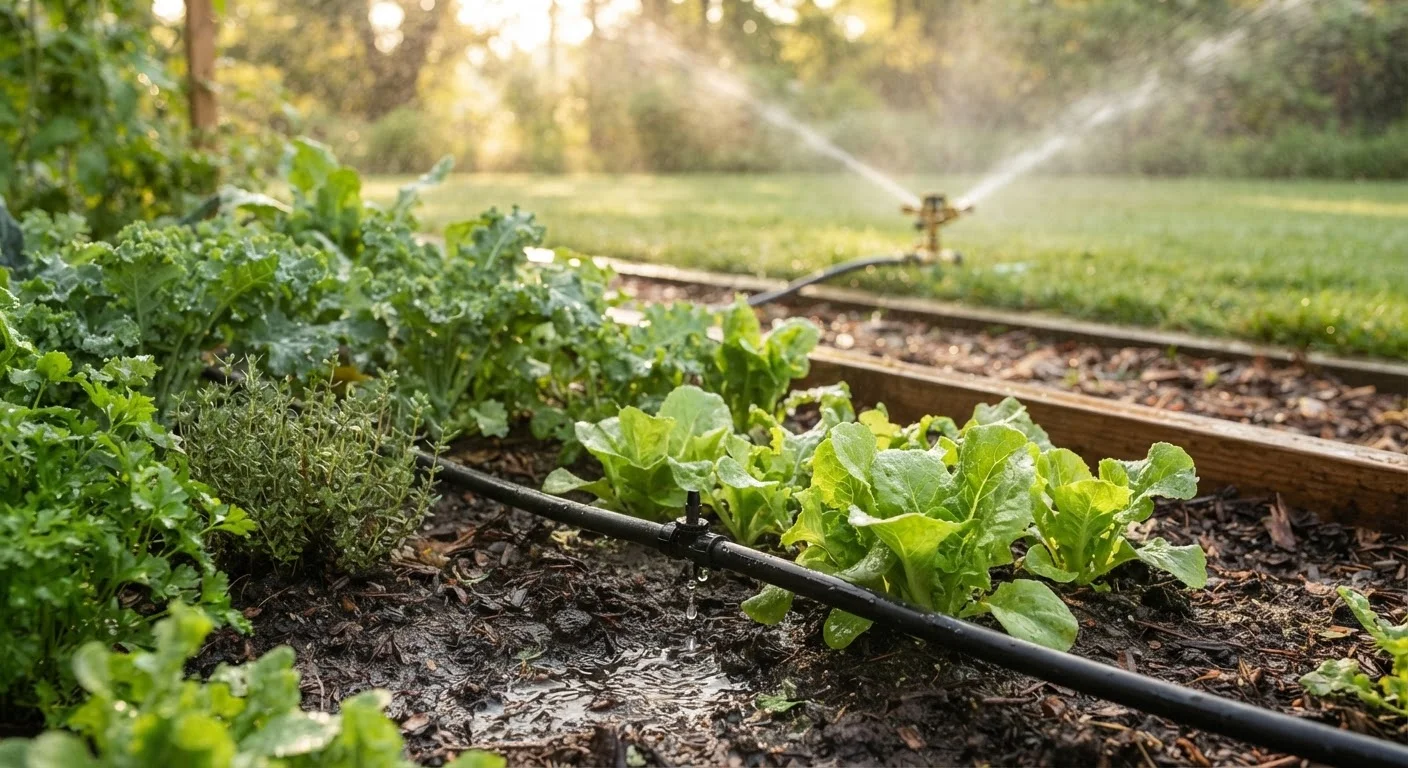
Photo credit: ResultsRover.com | Insights You Can Trust
In this article
Drip and sprinkler systems each excel in different situations. Compare water use, installation complexity, and long-term maintenance.
Key Takeaways
- Drip irrigation delivers water directly to plant roots, reducing evaporation and weed growth significantly.
- Sprinkler systems cover large, uniform areas quickly but lose more water to evaporation and wind drift.
- Drip systems generally cost less upfront for small areas; in-ground sprinklers require higher installation investment.
- Drip lines need periodic inspection for clogs; sprinkler heads require seasonal winterization in cold climates.
- The right choice depends on your plant types, yard layout, and how much hands-on maintenance you prefer.
How Each System Works
Understanding the basic mechanics of each system makes the tradeoffs easier to evaluate before you spend any money.
Drip irrigation uses a network of flexible tubing and small emitters placed at or just below the soil surface. Water drips slowly and directly into the root zone of individual plants - typically at a rate of 0.5 to 2 gallons per hour per emitter. Because water never leaves the ground level, very little is lost to evaporation or wind. Drip systems can run on standard household water pressure and are compatible with timers and smart controllers.
Sprinkler systems distribute water overhead through rotating heads, fixed spray heads, or pop-up nozzles installed in the ground or mounted above turf. Water is broadcast across a defined radius, making sprinklers well-suited to covering large, open spaces uniformly. In-ground systems are connected to your main water supply and are typically zoned so different areas can run on different schedules.
The core difference is delivery method: drip goes to the root, sprinklers go to the canopy and soil surface. That distinction drives almost every other comparison - water use, cost, and effort included.
| Criterion | Drip Irrigation | Sprinkler Systems |
|---|---|---|
| Water efficiency | High - minimal evaporation loss | Moderate - some evaporation and drift |
| Best plant type | Shrubs, vegetables, garden beds | Lawns and large ground covers |
| DIY installation | Straightforward for most homeowners | Usually requires a professional |
| Upfront cost (small yard) | Low to moderate | Moderate to high |
| Winterization required | Simple - drain and store lines | Yes - professional blowout advised |
| Foliage wetting | None - root-zone only | Yes - can encourage leaf disease |
| Coverage flexibility | High - place emitters as needed | Fixed radius per head |
Water Efficiency: Where the Numbers Matter
Water efficiency is often the deciding factor for homeowners in water-restricted areas or those trying to lower their utility bills. Drip irrigation has a clear advantage here. Because water is applied slowly and at the root zone, little is lost to evaporation - and none is wasted on pathways, mulch, or bare soil between plants.
Sprinkler systems, by contrast, apply water to the full surface area within their radius, including spaces between plants. Overhead spray is also subject to wind drift and higher evaporation rates, especially when run midday. Running sprinklers in the early morning is a widely recommended practice that helps reduce these losses, but the inherent physics of overhead application mean some inefficiency remains.
Up to 50%
Water saved with drip vs. overhead irrigation
The U.S. Environmental Protection Agency (EPA) notes that drip irrigation can be up to 90% efficient, compared to roughly 50-70% for conventional sprinklers.
50%
Of U.S. residential water used outdoors
According to the EPA's WaterSense program, about half of residential water use goes to landscaping and outdoor irrigation, much of which is lost to inefficient practices.
30%+
Outdoor water wasted by inefficient systems
The EPA estimates that more than 30% of water applied through conventional irrigation is lost to runoff, evaporation, or wind before reaching plant roots.
If you're interested in how watering timing and technique affect plant health more broadly, our guide to deep vs. frequent watering explains why root depth matters as much as the delivery method you choose.
Cost and Installation: Upfront vs. Long-Term
Installation cost varies considerably depending on yard size, system complexity, and whether you hire a professional or install the system yourself.
Drip irrigation kits for small-to-medium garden beds are widely available at hardware stores and can often be installed by a homeowner with basic tools in a few hours. Starter kits for a single garden bed typically range from $30 to $100, though larger or more complex layouts cost more. Adding a timer or smart controller raises the price but also reduces ongoing effort.
In-ground sprinkler systems require trenching, pipe connections to your water main, and zone controllers - work that almost always benefits from a licensed irrigation professional. Installation for an average residential lawn can range from several hundred to several thousand dollars depending on yard size and regional labor rates. That said, once installed, in-ground systems are largely invisible and durable, often lasting decades with routine maintenance.
Keep in mind that lower water consumption from a drip system can offset its cost over time, though actual savings depend on your local water rates and how you previously watered. No specific savings figures can be guaranteed for any individual household.
Maintenance: What to Expect Over Time
Neither system is completely maintenance-free, but the type of upkeep differs in ways that may matter depending on how much time you want to spend.
Drip systems require periodic inspection of emitters, which can clog with mineral deposits or debris - especially in areas with hard water. Flushing the lines and checking for leaks or rodent damage a few times per growing season is the main ongoing task. Drip lines on the soil surface are also more vulnerable to accidental damage from garden tools or foot traffic.
Sprinkler systems need their heads checked and adjusted seasonally to maintain proper coverage and avoid overspray onto hardscapes. In climates with freezing winters, the system must be blown out with compressed air before the first hard freeze - a step that typically requires a professional with the right equipment. Heads can sink, tilt, or be damaged by lawnmowers over time, requiring occasional replacement.
Choosing drought-adapted or native plants can also reduce how hard any irrigation system has to work. Our comparison of native vs. traditional landscaping covers how plant selection directly affects water demand and maintenance load.
Smart Controllers Work With Both Systems
Both drip and sprinkler systems can be paired with smart irrigation controllers that adjust watering schedules based on local weather data and soil moisture. These devices can prevent unnecessary watering after rainfall and are available at most hardware stores. If water conservation is a priority, a smart controller is often a worthwhile addition regardless of which delivery method you choose.

Author
Home & Garden Editorial Team
Home & Garden Editorial Team is the collective byline for our editorial team and contributor network. Articles published under this byline or an editorial pen name are researched, written, and reviewed according to our editorial standards for clarity, consistency, and independence before publication.
View all articles →