
Online Purchase Returns: How the Rules Differ from Buying In-Store
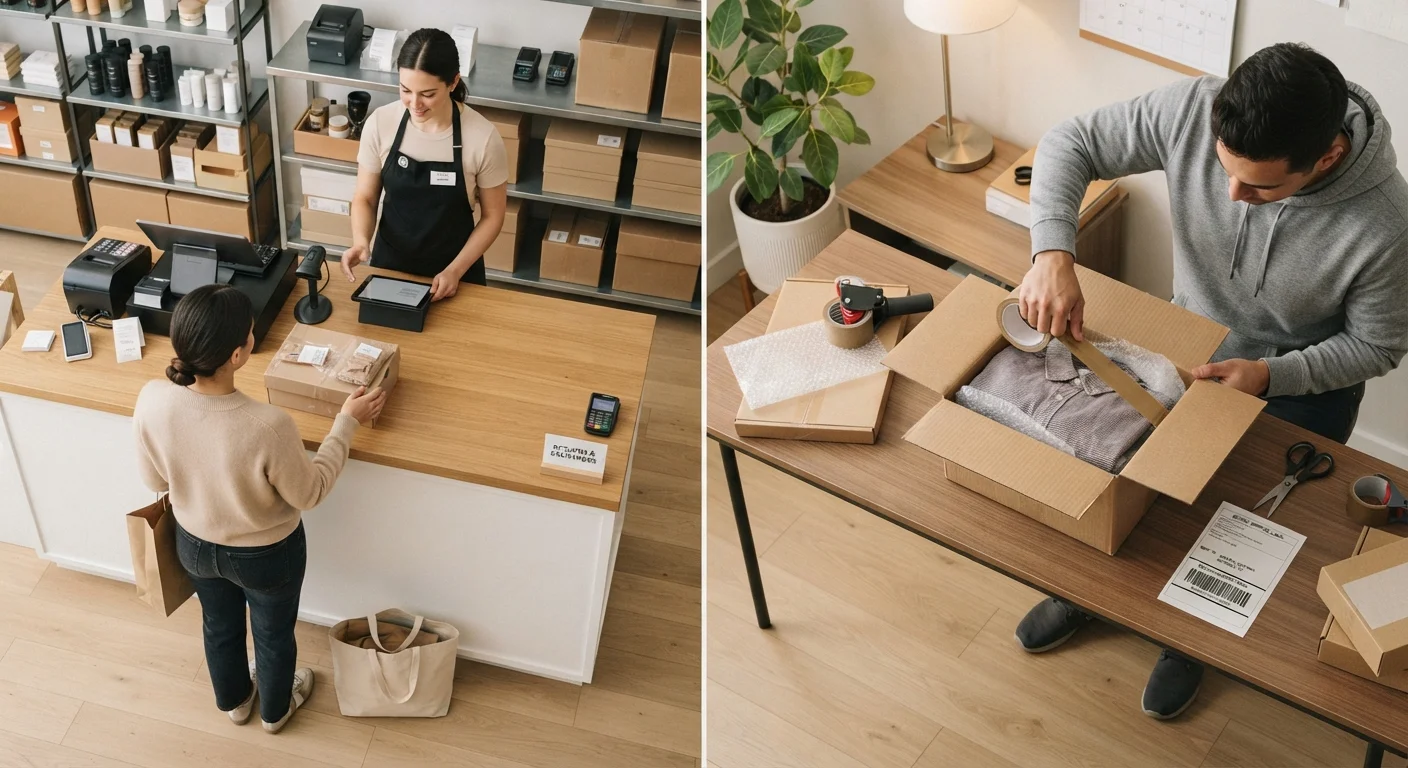
Photo credit: ResultsRover.com | Insights You Can Trust
In this article
Return logistics, timelines, and costs often differ significantly for online orders. Here's what to expect and how to protect yourself.
Key Takeaways
- Online returns often involve return shipping costs that in-store returns avoid entirely.
- Return windows for online purchases may be shorter or longer depending on the retailer's policy.
- Proof of purchase requirements are stricter online, and condition standards are more rigorously enforced.
- Refund timelines for online returns typically run 5–10 business days longer than in-store exchanges.
- Some retailers offer hybrid options like 'buy online, return in-store' — but not all do.
Why the Return Channel Matters More Than You Think
Most shoppers assume that a retailer's return policy applies uniformly regardless of where the purchase was made. That assumption is often wrong — and it can cost you. Many retailers maintain separate return procedures for online orders versus in-store purchases, and the differences affect everything from who pays for shipping to how quickly your refund posts.
Before diving into the specifics, it's worth understanding that return policies are set entirely at the retailer's discretion. There is no federal law in the U.S. requiring retailers to accept returns at all. The rules you encounter are contractual, not legal entitlements — which means reading them before you buy matters considerably. For a broader look at how return policies interact with other protections, see what return policies, extended warranties, and manufacturer guarantees each cover.
Key Differences: Online vs. In-Store Returns
The table below captures the most consequential differences across common retail scenarios. Individual retailer policies vary, so always verify before initiating a return.
| In-Store Returns | Online / Mail-In Returns | Buy Online, Return In-Store (BORIS) | |
|---|---|---|---|
| Return shipping cost | None | Often $5–$10 or free depending on retailer | None |
| Refund speed | Immediate to same day | 5–14 business days after receipt | Immediate to same day |
| Condition inspection | Associate judgment, often flexible | Warehouse inspection, more rigid | Associate judgment, often flexible |
| Proof of purchase needed | Receipt or card lookup | Order confirmation email required | Order confirmation email required |
| Availability | Universal for in-store purchases | Universal for online purchases | Select retailers only |
| Marketplace seller items | Usually not accepted | Depends on seller policy | Usually not accepted |
A few of these differences deserve closer attention:
- Return shipping costs: Many retailers offer free return shipping as a perk, but a significant number charge a flat fee — commonly $5–$10 — deducted directly from your refund. This isn't always disclosed prominently at purchase.
- Condition standards: Online returns are often inspected more rigorously at the warehouse level. An item a floor associate might have accepted in-store could be flagged and refused when returned by mail.
- Refund timing: In-store returns are frequently processed on the spot. Mail-in returns must clear transit, warehouse inspection, and processing queues — a cycle that can easily stretch to two weeks.
Check the Policy Before You Buy, Not After
The best time to read a retailer's online return policy is before you complete the transaction. Look specifically for return shipping fees, condition requirements, and any category-specific windows. A 30-second check can prevent a costly surprise when the item doesn't work out.
The 'Buy Online, Return In-Store' Option
Some major retailers offer what's commonly called BORIS — Buy Online, Return In-Store. When available, this hybrid approach gives you the convenience of online shopping without the friction of mail-in returns. You get an immediate refund or exchange, skip return shipping fees, and interact with a human being who can resolve edge cases on the spot.
However, BORIS isn't universal. Third-party marketplace sellers operating through a retailer's platform often cannot accept in-store returns because the inventory was never held by that store. Likewise, items purchased during special online-only promotions may be excluded. Always confirm eligibility before driving to a location.
If a return gets denied — whether online or in-store — you have more options than most consumers realize. Learn what to do when a return gets rejected, including how to escalate effectively.
Fine Print That Frequently Trips Up Online Shoppers
Online return policies often contain exclusions that are easier to overlook when shopping digitally. The most common gotchas:
- Shortened windows for certain categories: Electronics, swimwear, and personal care items frequently carry 15-day return windows even when the general policy says 30 or 60 days.
- Original packaging requirements: Some retailers require the manufacturer's box to be unopened or intact for a full refund. Opened items may only qualify for exchanges or store credit.
- Restocking fees: These are more common on online returns than in-store ones, particularly for large appliances, furniture, and electronics. Understand restocking fees and other return policy fine print before it affects your refund.
- Marketplace seller policies: When buying from a third-party seller on a major platform, that seller's return policy governs — not the platform's — unless the platform offers an explicit buyer guarantee.
Marketplace Purchases Follow Different Rules
When you buy from a third-party seller on a major retail platform, the platform's standard return policy may not apply. Each seller can set their own return terms, including no-returns policies on certain items. Always check the seller's individual return terms on the product listing page before purchasing.
Understanding the boundary between a return policy and a product warranty also matters here. Once a return window closes, your only remaining recourse may be a warranty claim — a different process entirely. See how the handoff from return policy to warranty works.
How to Protect Yourself Before and After Purchase
A few practical habits substantially reduce return friction for online orders:
- Screenshot the return policy at checkout. Policies can change, and having a dated record of what was in effect when you ordered strengthens your position if a dispute arises.
- Keep all original packaging until you're certain you're keeping the item. This is especially important for online purchases where packaging requirements are enforced at the warehouse, not the discretion of a floor associate.
- Use a credit card that offers purchase protection. Many cards extend return windows or provide coverage if a retailer refuses a return. Check your card's benefits guide — this is general information and not a guarantee of coverage in your specific situation.
- Document condition before shipping back. Photograph the item and its packaging before sealing the return box. If a warehouse claims the item arrived damaged, you have evidence of its condition when it left you.
For a deeper comparison of the protections available to you after a purchase, see how warranties and return policies differ in what they actually protect.

Author
Smart Shopping Editorial Team
Smart Shopping Editorial Team is the collective byline for our editorial team and contributor network. Articles published under this byline or an editorial pen name are researched, written, and reviewed according to our editorial standards for clarity, consistency, and independence before publication.
View all articles →