
Restocking Fees, Final Sale Items, and Other Return Policy Fine Print Worth Reading
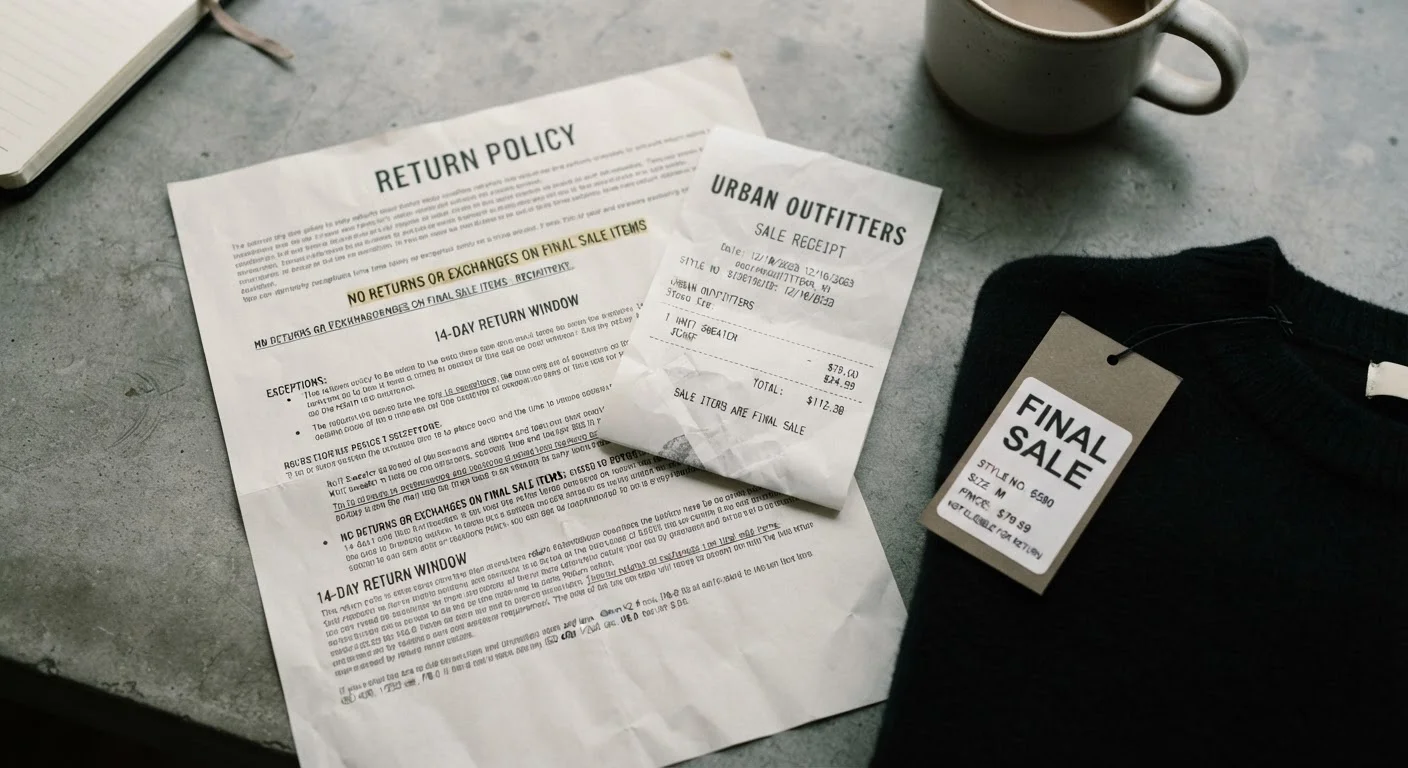
Photo credit: ResultsRover.com | Insights You Can Trust
In this article
Not all returns are free or unconditional. Here's what the fine print in common retail return policies actually says and what it means for you.
Why Return Policy Fine Print Matters More Than the Headline
Most retailers advertise their return policies with a simple number — "30-day returns" or "free returns" — but those headlines rarely tell the whole story. The conditions buried in the fine print can significantly change what you're actually entitled to. Understanding the common restrictions before you buy is one of the most practical ways to avoid an unpleasant surprise after the fact.
| Typical restocking fee range | 10%–25% of purchase price (Common range across major U.S. retailers; individual policies vary) |
| Electronics return window | Often 15–30 days, even when standard window is longer (Category-specific sub-windows are common in retail policy fine print) |
| Final sale items | Non-returnable, no exceptions (Applies once purchase is completed; labeling varies by retailer) |
| Without receipt | Refund may be limited to lowest sale price or store credit (Policy varies; some retailers track via loyalty account) |
| Online vs. in-store returns | Rules, costs, and timelines often differ (Even at the same retailer, channels can have separate return policies) |
For a broader look at how return policies interact with other protections you may have, see our guide on what return policies, extended warranties, and manufacturer guarantees each cover.
Restocking Fees: When Returning Something Costs You
A restocking fee is a charge deducted from your refund when you return certain items. Retailers typically justify these fees by citing the cost of inspecting, repackaging, or reselling returned goods. Common categories where restocking fees appear include electronics, appliances, furniture, mattresses, and special-order merchandise.
Restocking fees are usually expressed as a percentage of the purchase price and commonly range from 10% to 25%, though some retailers charge flat dollar amounts. A few key things to know:
- They are not always disclosed upfront. Fees may be listed on the receipt, in an online checkout screen, or only in the full written policy — not at the point of sale.
- Opened packaging often triggers the fee, even if the product is undamaged. This is especially common with electronics and software.
- Some retailers waive restocking fees for exchanges or store credit, as opposed to cash/card refunds. Ask before completing the return.
- Credit card purchase protections sometimes reimburse restocking fees — worth checking your card's benefits before paying out of pocket.
Restocking Fee
A charge deducted from a refund when a customer returns certain items. It is intended to cover the retailer's cost of inspecting, repackaging, or reselling the returned product, and is commonly expressed as a percentage of the purchase price.
Final Sale
A designation indicating that a purchased item cannot be returned or exchanged under any circumstances. Final sale items are typically clearance or heavily discounted goods, and the restriction applies regardless of the reason for return.
Return Window
The period of time after purchase during which a retailer will accept a return. Windows vary by store and by product category; some high-value or seasonal items carry shorter windows than a store's standard policy.
Store Credit
A refund issued in the form of credit redeemable only at the issuing retailer, rather than returned to the original payment method. Retailers may offer store credit as the only option in cases where cash refunds are restricted.
Non-Returnable Item
A product explicitly excluded from a retailer's return policy. Common examples include opened software, digital downloads, personalized goods, intimate apparel, and certain hazardous materials.
Original Packaging Requirement
A return policy condition requiring that an item be returned in its original box with all included accessories and documentation. Failure to meet this requirement can result in a reduced refund, store credit only, or rejection of the return.
If your return is ultimately rejected rather than just reduced, our article on why returns get rejected and what to do next walks through your escalation options.
Final Sale, Non-Returnable, and Other Exclusion Categories
Certain items are explicitly excluded from return policies — sometimes store-wide, sometimes category-specific. Retailers are generally not required to accept returns at all (outside of defective merchandise protections under applicable law), so understanding which items fall into these exclusion buckets matters.
Common non-returnable categories
- Final sale items: Typically clearance or deeply discounted merchandise marked explicitly as non-returnable. Once purchased, these sales are final regardless of reason.
- Perishables and consumables: Food, opened personal care products, and similar goods are generally excluded for health and safety reasons.
- Intimate apparel and swimwear: Many retailers exclude these for hygiene reasons, even with tags attached.
- Digital downloads and software: Once a download code is revealed or activated, most retailers consider the sale final.
- Hazardous materials: Items like certain batteries, fuel canisters, or chemicals are frequently excluded.
- Custom or personalized items: Products made to order are almost universally non-returnable unless they arrive defective.
"Final sale" labeling is not always prominent. On e-commerce sites, it can appear as small text on the product page or only in the cart. For in-store purchases, look for shelf tags or check the back of the receipt before leaving the store. Once you've made the purchase, your options narrow considerably.
When "Final Sale" Might Not Be Final
If a final sale item arrives damaged, defective, or materially different from what was described, most retailers and all states' consumer protection laws provide some recourse — regardless of how the item was labeled. Document the condition immediately with photos, retain all packaging, and contact the retailer in writing. If the retailer refuses, your credit card's dispute process may be an option. The "final sale" label applies to change-of-mind returns, not to products that are defective or misrepresented.
Other Fine Print Clauses That Frequently Catch Shoppers Off Guard
Beyond restocking fees and final sale exclusions, several other policy clauses can affect your return rights in ways that aren't immediately obvious:
Return windows shorter than you expect
A store's general return window — say, 90 days — often has carve-outs. Electronics, holiday purchases, and high-value items frequently carry shorter windows (15 or 30 days) embedded within the same policy. Missing that sub-window means you're held to a stricter timeline even if the broader policy is more generous.
Original packaging requirements
Some retailers require original packaging, all included accessories, and the original receipt for a full refund. Missing components — even a power cable or a box insert — can result in a partial refund, store credit only, or outright rejection.
Return method restrictions for online orders
Online and in-store purchases may be governed by entirely different return rules, even at the same retailer. Shipping costs, timelines, and refund methods can all differ. For more on this, see how online purchase returns differ from in-store returns.
Proof of purchase rules
Without a receipt, many retailers will offer only the lowest recent sale price as a refund — not what you paid. Others may issue store credit rather than a refund to the original payment method. Some track purchases through loyalty accounts, which can serve as a fallback, but this isn't guaranteed.
When the return window closes entirely, you may still have options through manufacturer warranties. Our article on the handoff between store return policies and product warranties explains how that transition works.
This article is for general informational purposes only. Return policies are set by individual retailers and may change at any time. Always verify the current policy directly with the retailer before making a purchase or initiating a return.

Author
Smart Shopping Editorial Team
Smart Shopping Editorial Team is the collective byline for our editorial team and contributor network. Articles published under this byline or an editorial pen name are researched, written, and reviewed according to our editorial standards for clarity, consistency, and independence before publication.
View all articles →