
Building a Pet Care Routine That Works for a Busy Household
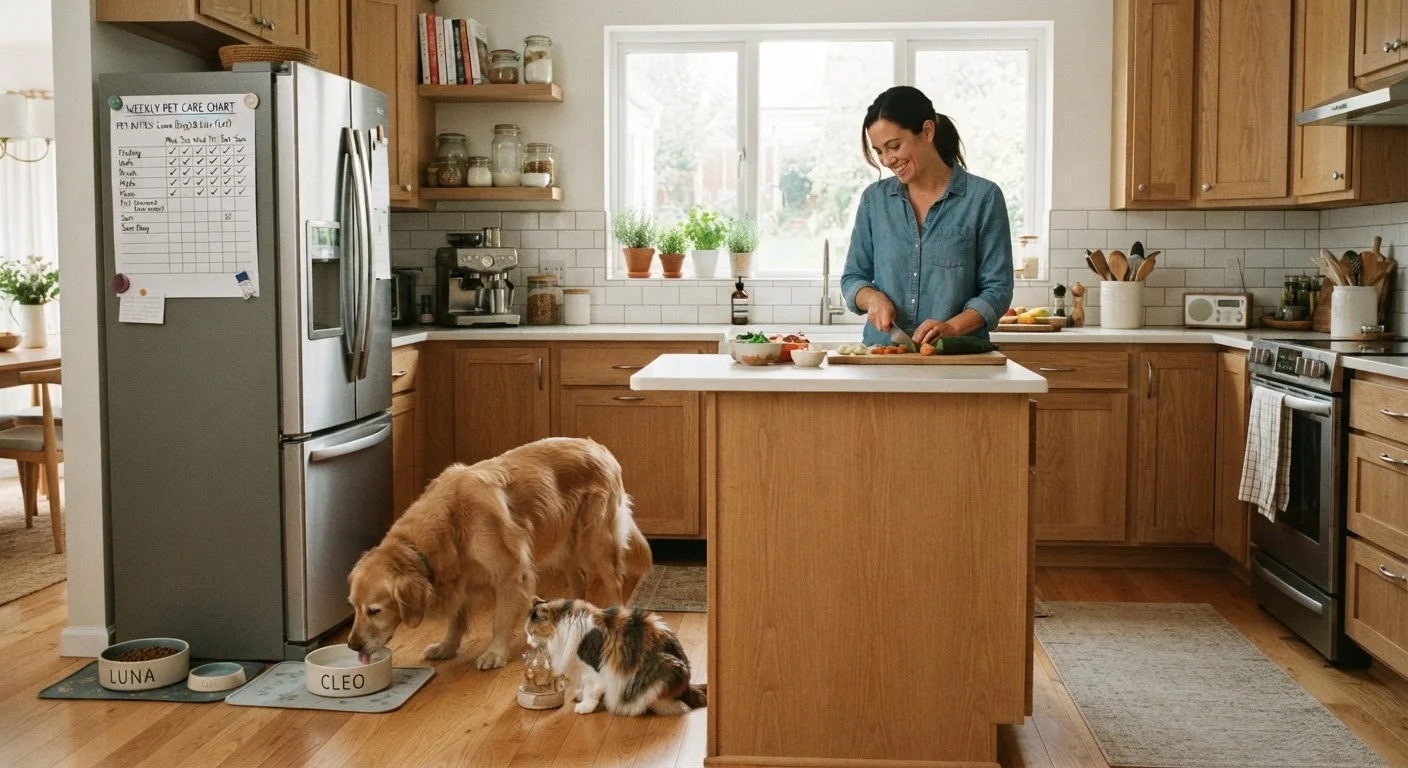
Photo credit: ResultsRover.com | Insights You Can Trust
In this article
Feeding schedules, delegation strategies, and time-saving habits that help working families keep up with consistent, quality pet care.
Key Takeaways
- Predictable feeding and exercise times reduce pet anxiety and behavior problems.
- Delegating specific tasks to family members prevents care gaps on hectic days.
- Automated feeders, grooming routines, and prep batching save real time each week.
- Preventive vet visits, parasite prevention, and grooming belong on a recurring calendar.
- Even small pets have daily needs that require consistent attention from the whole household.
Why Routine Matters More Than Effort
Pets don't need elaborate enrichment every day — they need predictability. Dogs and cats regulate their stress responses around consistent timing. When feeding, walks, and rest happen at roughly the same time daily, animals are less likely to develop anxious behaviors like destructive chewing, excessive vocalization, or house-soiling. The goal isn't perfection; it's a repeatable structure your pet can anticipate.
For busy families, the best pet care routine is the one that actually gets done. That means designing around your real schedule — not an idealized one. See what a consistent daily dog care routine looks like in practice as a useful baseline before customizing for your household.
Start with Just Two Anchor Points
If building a full daily routine feels overwhelming, start by locking in just two consistent times: morning feeding and evening feeding. Everything else — walks, playtime, grooming — can be layered in once those anchors are solid. Small, consistent steps build lasting habits faster than ambitious plans that collapse under pressure.
Building Your Pet's Daily Schedule
Start by anchoring care tasks to existing household events — morning coffee, the school drop-off, or bedtime. This makes new habits stick without requiring extra mental effort.
A Practical Framework
- Morning: Feeding, a brief outdoor bathroom break or play session, and a quick visual health check (coat, eyes, energy level).
- Midday (if possible): A potty break or enrichment activity. If no one is home, consider a dog walker or automated enrichment toys.
- Evening: Main exercise window, second feeding for dogs, fresh water refill, and brief interaction time.
Cats generally tolerate more flexibility, but keeping meal times consistent reduces food-guarding and midnight-yowling behavior. If you have multiple pets, see our guide on managing training and routines with more than one pet to keep things fair and structured.
67%
U.S. households that own a pet
According to the American Pet Products Association's National Pet Owners Survey, roughly two-thirds of American households include at least one pet.
~$350
Average annual routine vet spending per dog
The American Pet Products Association estimates owners spend several hundred dollars annually on routine veterinary care, not including emergencies.
15 min
Daily exercise minimum for indoor cats
Veterinary behaviorists generally recommend at least two short interactive play sessions per day to support feline physical and mental health.
Delegating Care Across the Household
One person shouldering all pet care is a reliable path to burnout. Distributing tasks by age-appropriateness and availability keeps care consistent even on unpredictable days.
Assign Specific Roles, Not Vague Responsibilities
Rather than saying "everyone helps," assign concrete tasks with names attached. A posted weekly chart on the refrigerator works better than verbal agreements. Example breakdown:
- Adults: Medication administration, vet scheduling, purchasing supplies.
- Older children (10+): Evening feeding, fresh water, brushing sessions.
- Younger children (5–9): Refilling water bowls, collecting toys, sitting calmly with the pet.
For families with young children and pets sharing space, building safe habits around pets and kids is essential reading alongside any task delegation plan.
Post a laminated task chart at pet-height on the refrigerator so children can check off completed care tasks independently. Visibility drives accountability without nagging.
Externalizing the system removes the mental burden from one person and builds genuine responsibility in children — a win for the whole household.
When building a new care habit, attach it to something you already do every single day — like making coffee — rather than trying to remember it in isolation.
Habit stacking, linking a new behavior to an existing one, is one of the most evidence-supported strategies for making routines stick long-term.
Time-Saving Tools and Habits
Efficiency in pet care comes from reducing the number of individual decisions you make each day. Batch tasks, automate where sensible, and build short grooming habits into existing routines.
Practical Time-Savers
- Automatic feeders: Timed dispensers handle consistent portioning without daily effort, useful for households with irregular work hours.
- Grooming micro-sessions: Two-minute daily brushing beats an hour-long battle once a month. For cats especially, regular at-home grooming tasks reduce shedding, hairballs, and professional grooming costs.
- Pre-portioned supplies: Measure out a week's worth of dry food into daily containers on Sundays. This cuts prep time to seconds each morning.
- Exercise stacking: Combine a dog walk with your own outdoor time or a child's after-school outdoor play. Match your dog's needs to your lifestyle — exercise requirements vary significantly by breed.
Don't Over-Rely on Automation
Automatic feeders and water fountains are useful tools, but they can mask early signs of illness. Changes in appetite or water consumption are key health indicators. Make sure someone in the household is still observing and interacting with the pet daily — automation should support care, not replace attentive ownership.
Keeping Health and Preventive Care on Track
Reactive care — treating problems after they appear — is more expensive and stressful than preventive care. Building health maintenance into your routine calendar keeps it from falling through the cracks during busy periods.
What to Schedule in Advance
- Annual and semi-annual vet visits: Book the next appointment before leaving the current one. Understand how your pet's age affects visit frequency.
- Parasite prevention: Flea, tick, and heartworm prevention requires year-round consistency. A year-round parasite prevention plan prevents gaps that leave pets vulnerable.
- Senior pet adjustments: As pets age, their care needs shift. Senior pet health changes may require more frequent vet visits and modified exercise.
Set phone reminders for monthly preventive treatments and mark annual checkups on a shared family calendar. Preventive care is far easier to maintain as a scheduled habit than to remember ad hoc.
This article provides general pet care information for educational purposes. Always consult a licensed veterinarian for guidance specific to your pet's health, age, and medical history.

Author
Pets & Animals Editorial Team
Pets & Animals Editorial Team is the collective byline for our editorial team and contributor network. Articles published under this byline or an editorial pen name are researched, written, and reviewed according to our editorial standards for clarity, consistency, and independence before publication.
View all articles →