
Training Multiple Pets in the Same Household
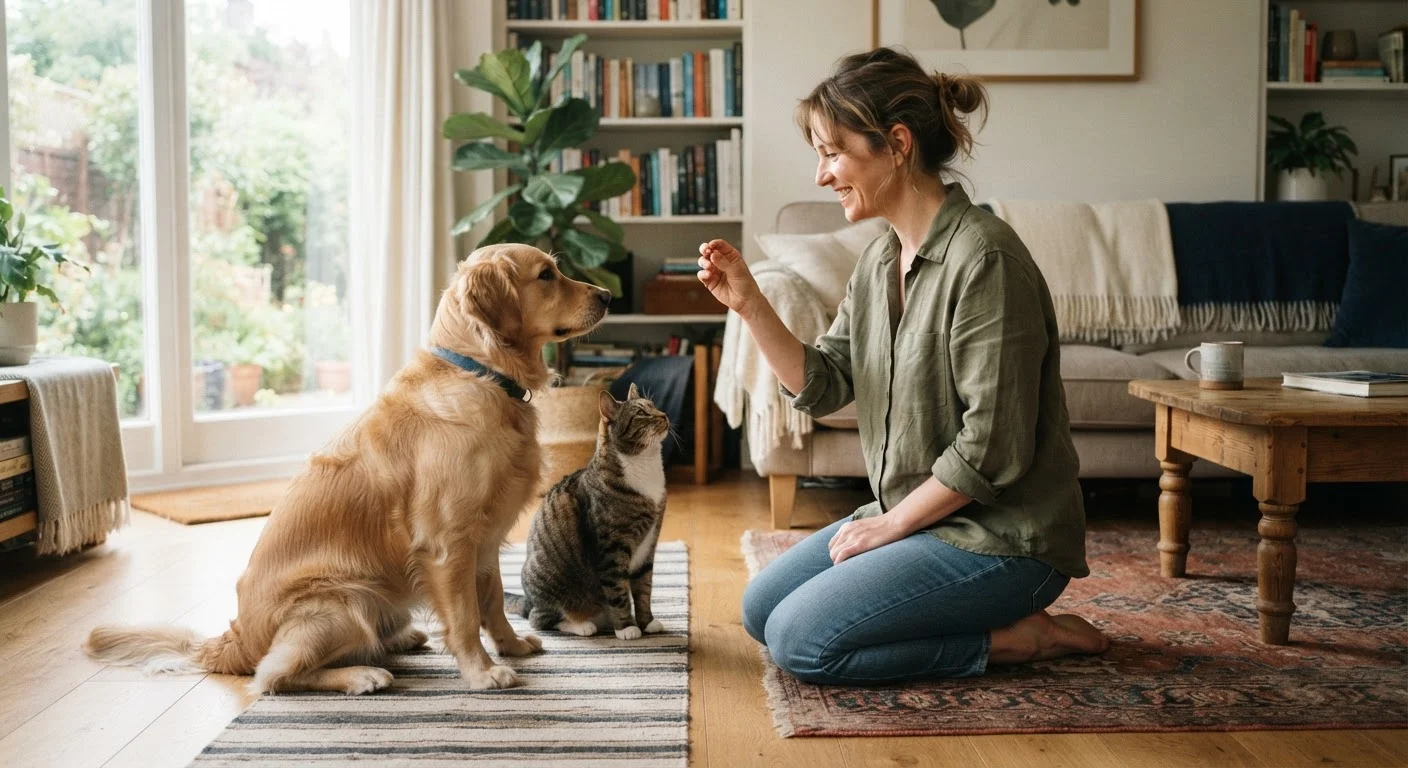
Photo credit: ResultsRover.com | Insights You Can Trust
Managing training sessions when you have more than one pet adds real complexity. Here are practical strategies for keeping progress fair and consistent.
Key Takeaways
- Separate individual sessions come first — never skip solo training before group work.
- Consistent cues and rules across all pets prevent confusion and uneven progress.
- Managing the physical environment is just as important as the training technique itself.
- Each pet's learning pace deserves respect — comparison between animals undermines progress.
- Positive reinforcement principles apply equally when training multiple species together.
Why Training Multiple Pets Is a Different Challenge
Adding a second — or third — pet to a household doesn't just multiply the workload; it changes the dynamics of every interaction, including training. Pets notice each other, compete for attention, and often pick up each other's habits, both good and bad. Without a deliberate plan, training sessions can devolve into chaos that reinforces exactly the behaviors you're trying to correct.
The good news is that the core principles behind humane, effective training don't change. What changes is your structure, your sequencing, and your awareness of how animals in the same space influence one another. Whether you're working with two dogs, a dog and a cat, or a more eclectic household mix, the strategies below give you a practical framework to move forward. For a grounding in the techniques themselves, our guide to force-free training methods is a useful starting point.
Train each pet individually before combining sessions
Group training only works once every animal has a reliable foundation built in solo practice. When pets are together, they divide their attention between you and each other — that divided focus makes it much harder for them to consolidate a new behavior. Schedule short, separate sessions (five to ten minutes is enough for most pets) before you ever attempt joint practice.
This sequencing also gives you an accurate read on each animal's actual skill level. A behavior that looks solid in a group setting may be fragile — the pet may be responding to the other animal's cues rather than yours. Solo sessions expose that gap early.
Solo foundations before group sessions — this single rule prevents most multi-pet training problems.
Use consistent cues and rules across all pets
If one pet is allowed on the couch and another isn't, or if you use "down" for one dog and "lie down" for another, you're creating confusion that spills over when they're together. Standardizing your verbal cues and household rules — to the extent each species can realistically follow the same expectations — dramatically reduces mixed signals.
This is especially relevant if multiple family members are involved in training. A quick household agreement on which words mean what, and which behaviors are or aren't permitted, takes minutes to establish and saves weeks of backtracking. Our overview of clicker versus verbal marker training can help your household settle on a consistent marking system.
Standardized cues prevent pets from learning to rely on each other's reactions instead of your signals.
Manage the environment to reduce competition and distraction
Physical setup is an underestimated training tool. Baby gates, separate rooms, crates, and leashes let you control which animals are present at any given moment. Start joint sessions with pets at a distance from each other where both can remain calm and focused, then gradually reduce that distance as reliability improves.
Feeding treats from opposite sides of a space, or using a mat or station that each pet learns as their own spot, reduces resource-guarding tension and gives every animal a clear place to be. This is the same spatial logic behind building a reliable stay command — distance and distraction are variables you control, not problems you simply endure.
Controlling who is in the room and where each pet stands is itself a training decision.
Reward each animal at the right moment for their behavior
In a multi-pet household, timing your rewards precisely becomes even more critical. If you mark and treat one pet, a nearby animal may associate the reward with whatever it happened to be doing at that moment — which could be barking, jumping, or pawing for attention. Deliver each pet's reward calmly and clearly, ideally in their designated spot.
Consider the specific reward that works best for each animal individually. Not every pet is equally motivated by the same treat, and matching the reward to the learner keeps engagement high. For a balanced look at how food rewards function in practice, see our article on the trade-offs of food reward training.
A misplaced reward in a group session can inadvertently reinforce exactly the wrong behavior.
Respect each pet's individual learning pace
One dog may learn a new cue in two sessions; the other may need twenty. One cat may take to a recall; another may show no interest in structured training at all. Expecting uniform progress across different animals — or even the same species — leads to frustration and risks rushing a pet past skills they haven't genuinely mastered.
Track each pet's progress separately and resist the urge to let a more advanced animal set the pace for a less confident one. If one pet is consistently struggling in joint sessions, step back to more individual work before reintroducing them to the group context. This is basic good practice, not a sign of failure.
Comparing pets to each other creates pressure that slows every animal in the household down.
Build structured group practice gradually and purposefully
Once each pet has a solid individual foundation, introduce structured group sessions in small increments. Begin with simple, well-known behaviors — a sit or a stay — in a controlled environment with low distraction. Reward calm coexistence as much as you reward the behavior itself; being near another animal without reacting is a genuine skill worth reinforcing.
If you're considering outside support, group classes versus private training sessions breaks down which format suits different situations — useful context if your household pets need very different levels of professional guidance.
Calm coexistence during group sessions is a behavior worth reinforcing in its own right.
Putting It All Together
Training multiple pets in the same household asks more of you as an owner — more planning, more patience, and more awareness of each animal as an individual. The biggest mistake most households make is rushing to group practice before each pet has a reliable foundation built in solo sessions. Resist that temptation.
Consistency across everyone in the household matters too. If you're juggling pets and kids, our article on keeping pets and kids safe together covers how to build shared habits that protect everyone. And if you're feeling stretched for time, building a pet care routine for a busy household offers realistic scheduling strategies that hold up in real family life.
Keep Sessions Short and End on a Win
Multi-pet sessions drain your attention faster than solo work. Aim for five to eight minutes of structured group practice at most, and always finish when every animal has successfully completed something — even a simple sit. Ending on a positive note keeps all pets (and you) motivated for the next session.
Progress with multiple pets is rarely linear, and that's normal. Celebrate small wins, adjust when something isn't working, and avoid comparing one pet's pace to another's. Every animal learns on its own timeline.

Author
Pets & Animals Editorial Team
Pets & Animals Editorial Team is the collective byline for our editorial team and contributor network. Articles published under this byline or an editorial pen name are researched, written, and reviewed according to our editorial standards for clarity, consistency, and independence before publication.
View all articles →