
Keeping Pets and Kids Safe Together: What Every Family Should Understand
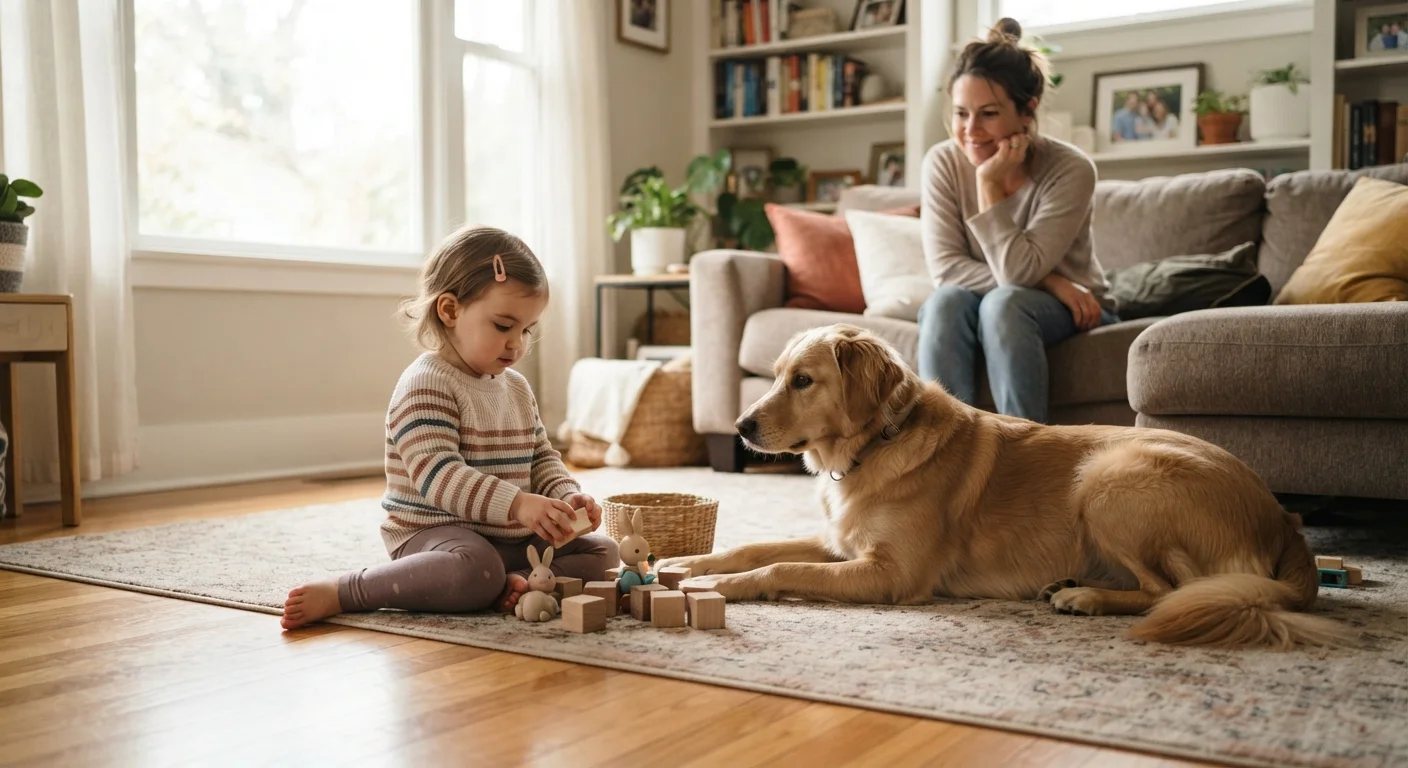
Photo credit: ResultsRover.com | Insights You Can Trust
In this article
Age-appropriate interactions, supervision guidelines, and warning signs — a practical overview of how families can build safe habits around pets.
Key Takeaways
- Children under 10 should always be supervised during pet interactions, regardless of how gentle the animal seems.
- Pets need a designated safe space where children are taught not to follow or disturb them.
- Recognizing early stress signals in pets — like yawning, lip licking, or stiffening — can prevent bites or scratches.
- Teaching kids consistent, respectful interaction habits is as important as training the pet itself.
- Routine hygiene practices after pet contact significantly reduce the risk of illness in children.
Why Pet-Child Safety Requires Active Management
Many families assume that a gentle, well-loved pet is automatically safe around children. In reality, even the most even-tempered dog or cat can react unpredictably when startled, hurt, or cornered — especially by the fast, loud, and unpredictable movements that are completely normal for young kids.
According to the American Veterinary Medical Association, children are the most common victims of dog bites, and the majority of incidents occur with familiar animals in familiar settings. This isn't a reason to fear pets — it's a reason to take safety habits seriously. The good news is that most incidents are preventable through consistent boundaries, early education, and attentive supervision.
Building a safe environment means working both sides of the equation: teaching your pet how to behave around children, and teaching your children how to behave around pets. See our pet behavior and training hub for a broader foundation on humane, effective animal communication.
Warning Signs Every Parent Should Recognize
Many bites and scratches happen because adults missed — or didn't know to look for — early signals that a pet was uncomfortable. Animals rarely escalate from calm to aggressive without intermediate warning signs. Learning to read those signals is one of the most valuable safety skills a family can develop.
Stress Signals Are Communication, Not Misbehavior
When a pet shows stress signals, it's asking for relief — not acting out. Responding by moving the child calmly away teaches both the pet and the child that the system works, which actually increases the pet's tolerance over time. Punishing a pet for signaling discomfort can suppress warnings and make escalation more likely without advance notice.
Common stress indicators in dogs include yawning out of context, lip licking, whale eye (showing the whites of the eyes), stiffening of the body, a low tucked tail, or turning away. In cats, watch for flattened ears, a lashing tail, dilated pupils, or a crouched posture. Any of these signals should prompt a calm redirection — gently moving the child away, not scolding the pet.
If your dog shows signs of resource guarding around food, toys, or resting spots, that warrants specific management strategies before unsupervised child contact.
Age-Appropriate Roles and Hygiene Habits
What's safe and developmentally appropriate changes as children grow. Toddlers (under 4) should have all pet interactions directly guided by an adult hand. Children ages 4–7 can begin learning to approach pets calmly and practice gentle touch, but still need close supervision. By ages 8–10, kids can start taking on small supervised pet care tasks — refilling water, helping with grooming — which builds both responsibility and respectful familiarity.
Hygiene is a parallel habit that should be established early. Children should wash hands with soap and water after touching pets, before eating, and after handling pet food or waste. This simple routine meaningfully reduces exposure to zoonotic organisms. Our article on infections that can pass between pets and people covers which ones are most relevant for families.
Integrating these habits into a broader household routine takes planning. Our guide on building a pet care routine for busy households can help you delegate age-appropriate tasks without adding overwhelm.
Make Hygiene Feel Like a Habit, Not a Chore
Children are more likely to follow hygiene routines consistently when they're framed as a normal part of the pet interaction — not an afterthought or a punishment. Try pairing handwashing immediately with another enjoyable post-pet activity, like a snack or a show, so the sequence becomes automatic rather than resisted.
Setting Up Your Home for Success
Physical setup matters as much as rules and training. Every pet should have at least one clearly designated retreat space — a crate, a raised perch, a gated room — where children are consistently taught not to enter or disturb the animal. This space gives pets a reliable way to self-regulate, which reduces the likelihood they'll feel trapped and reactive.
If you've recently introduced a new animal to the household, the first week is critical for establishing patterns. Our first-week behavior checklist for new pets provides structured steps to set healthy expectations from day one. For households with multiple pets, the complexity increases — training multiple pets fairly and consistently requires deliberate management to prevent inter-pet tension that can spill over around children.
Finally, keep feeding areas and pet resting spots out of high-traffic child zones where possible. A dog eating or a cat sleeping is a dog or cat that's more likely to react if approached suddenly. Creating physical buffers between these moments and child activity is a simple structural fix with meaningful impact.
This article is for general informational purposes only and does not substitute for professional veterinary or behavioral guidance. If you have concerns about your pet's behavior around children, consult a licensed veterinarian or a certified applied animal behaviorist.

Author
Pets & Animals Editorial Team
Pets & Animals Editorial Team is the collective byline for our editorial team and contributor network. Articles published under this byline or an editorial pen name are researched, written, and reviewed according to our editorial standards for clarity, consistency, and independence before publication.
View all articles →