
Cat Grooming at Home: What You Need to Do and How Often
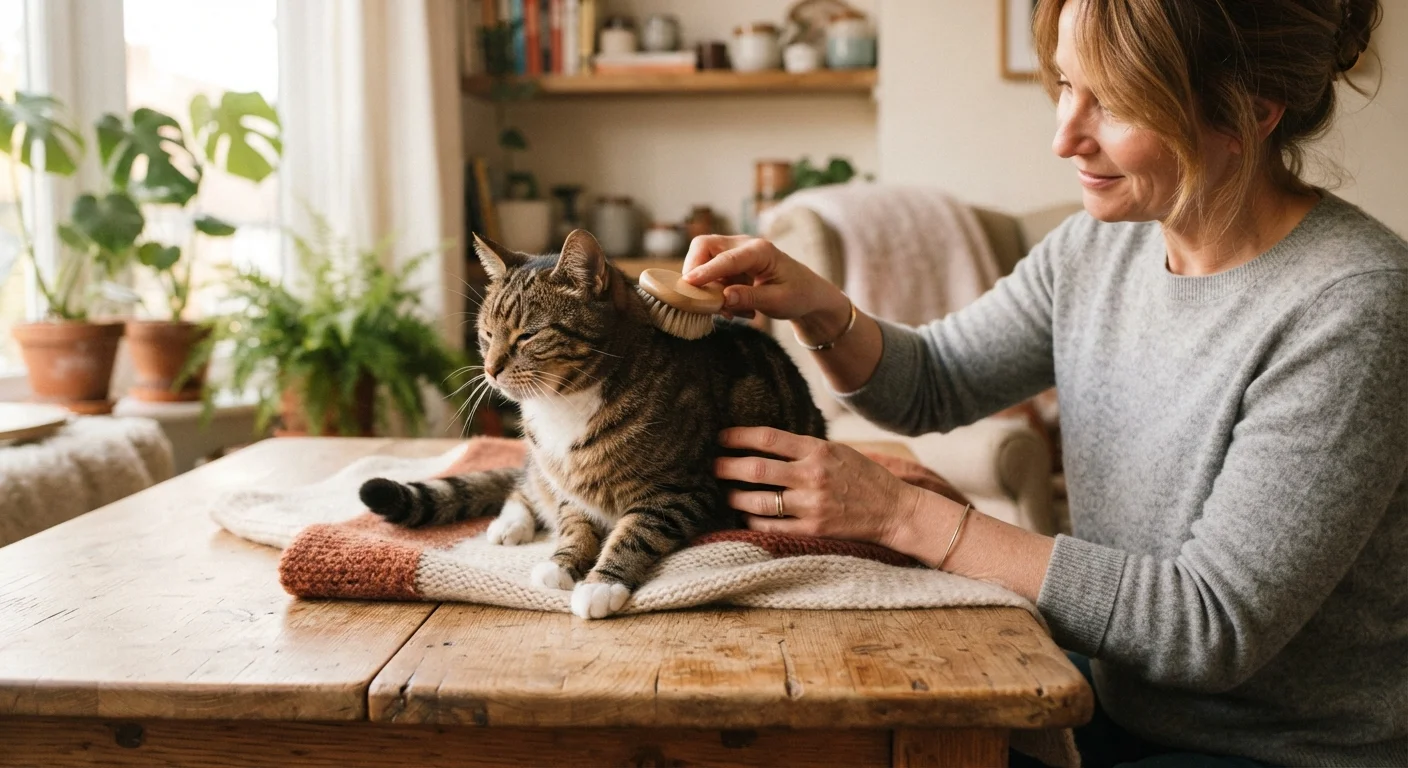
Photo credit: ResultsRover.com | Insights You Can Trust
In this article
Brushing, nail trims, ear checks — a practical breakdown of which cat grooming tasks you can handle yourself and on what schedule.
Key Takeaways
- Short-haired cats need brushing weekly; long-haired cats need it several times a week.
- Nail trims every 2–4 weeks prevent overgrowth, snagging, and accidental scratches.
- Ear checks should happen monthly — look for odor, discharge, or redness.
- Most healthy cats don't need baths, but occasional washing is safe with cat-formulated products.
- Grooming sessions double as health checks — you'll notice lumps, skin changes, or parasites early.
- Building a calm, consistent routine makes grooming easier for both you and your cat.
Why At-Home Grooming Matters Beyond Appearances
Regular grooming is not simply about keeping your cat looking tidy. It serves real health functions: reducing hairball formation, preventing painful coat matting, catching skin conditions early, and maintaining claw health. Cats that are groomed consistently at home also tend to be more cooperative during veterinary exams — a practical benefit that saves stress for everyone involved.
For families managing busy schedules, the good news is that a cat grooming routine does not need to be time-consuming. Most at-home tasks take under 15 minutes and can be folded into an existing daily or weekly rhythm. For broader ideas on integrating pet care into a household schedule, see building a pet care routine that works for a busy household.
One often-overlooked benefit: grooming sessions double as hands-on health monitoring. You are far more likely to notice a new lump, a developing skin irritation, or early signs of a parasitic infestation when you are regularly running your hands through your cat's coat than when you only see your cat in passing. This is especially important for senior cats, whose grooming needs and health vulnerabilities shift with age.
What you will need
What You Need and How to Get Started
You don't need a large toolkit to groom a cat at home. A brush suited to your cat's coat length and a pair of cat-specific nail clippers cover the majority of at-home grooming tasks. The tools below represent a practical baseline — not everything is required for every cat.
Slicker brush or soft bristle brush
Removes loose fur, detangles coat, and distributes natural oils during brushing sessions.
Stainless steel grooming comb
Works through mats and tangles in medium to long-haired cats more precisely than a brush alone.
Cat-specific nail clippers
Cleanly trims claw tips without cracking — scissors-style or guillotine-style both work well.
Styptic powder
Stops minor bleeding quickly if you accidentally clip the quick during a nail trim.
Cat-formulated ear cleaner
Used sparingly with cotton balls to gently remove surface debris from the outer ear canal.
Cat-formulated shampoo
Cleans the coat safely during occasional baths without stripping natural oils or causing skin irritation.
Once you have your tools, introduce them gradually. Leave a new brush near your cat's resting spot for a day or two before using it. The goal is a calm association before any contact begins. This is particularly worth prioritizing with cats that are already showing stress-related behaviors — for context on reading those signals, see cat behavior decoded.
Skip Human Products — Always
Never use shampoos, nail clippers, or ear cleaners designed for humans or dogs on your cat. Cats have sensitive skin and different physiology; human products can cause chemical burns, irritation, or toxicity. Always use products specifically formulated for cats, and consult your veterinarian before introducing anything new.
Step-by-Step: Your At-Home Grooming Routine
Follow these steps in any order that suits your cat's tolerance. You do not need to complete every task in one session — especially when starting out, breaking grooming into short focused sessions per task often works better than one long sitting.
Brush the coat on a regular schedule
Brushing is the cornerstone of cat grooming. For short-haired cats, once a week is generally sufficient to remove loose fur and reduce hairballs. Medium- and long-haired cats need brushing two to four times per week — daily during heavy shedding seasons — to prevent painful mats from forming.
Work in the direction of hair growth using a slicker or soft bristle brush. Follow up with a steel comb on longer coats to catch any tangles the brush missed. Spend extra time on behind the ears, under the chin, and around the collar area where mats develop fastest.
Trim nails every 2–4 weeks
Overgrown nails curve back toward the paw pad and can cause pain or injury. Hold your cat securely in your lap or on a stable surface. Gently press the paw pad to extend the claw. You'll see a pink area inside the nail called the quick — this contains blood vessels and nerves. Clip only the clear, hooked tip, staying a few millimeters away from the quick.
Clip one or two nails per session if your cat is resistant at first, gradually working up to all nails in one sitting as they become comfortable.
Check and clean ears monthly
Healthy cat ears are pale pink inside, with little to no visible debris and no odor. Once a month, fold back the ear flap gently and take a look. A small amount of light-colored wax is normal.
If cleaning is needed, apply a small amount of cat-formulated ear cleaner to a cotton ball — never a cotton swab deep inside the canal — and wipe the outer visible surface only. Do not force anything into the ear canal.
Bathe your cat only when genuinely necessary
Most cats are effective self-groomers and rarely need baths. Situations that may call for one include: exposure to something toxic on the coat, significant soiling, or a cat that is unable to groom itself due to age, illness, or obesity.
Use lukewarm water and a cat-formulated shampoo. Wet the coat gradually, avoiding the face and ears. Rinse thoroughly — residue left in the coat can cause skin irritation. Towel dry in a warm room and keep your cat indoors until fully dry.
Use grooming time as a whole-body health check
Every grooming session is an opportunity to scan for changes. Run your hands along the body and check for: lumps or bumps beneath the skin, areas of tenderness or flinching, changes in coat quality (dullness, thinning, greasy texture), signs of fleas or ticks, and any new scratches or wounds.
Catching changes early — before a routine vet wellness visit — often leads to faster, less costly treatment. Note anything unusual and mention it to your veterinarian at your next appointment.
Pair Grooming With Positive Reinforcement
End every grooming session with a treat, play session, or affectionate petting your cat enjoys. Over several weeks, most cats become noticeably more tolerant — and some even enjoy — the routine. Starting kittens young makes the process far easier long-term.
Dental Care: The Grooming Task Most Owners Miss
Tooth and gum health is technically part of a complete grooming routine, but it often goes unaddressed until a problem develops. Dental disease is one of the most common health conditions in cats, and early home care can meaningfully reduce its progression.
For a thorough breakdown of what dental neglect actually leads to and how to build an oral care habit, see why pets need dental care and what skipping it actually costs. Dental care uses its own set of cat-specific tools and deserves dedicated attention outside of your standard grooming session.
Know When to Call Your Vet
If you notice persistent ear odor, dark debris resembling coffee grounds, inflamed skin, bald patches, or a cat that suddenly resists grooming in a new way, don't attempt to treat these at home. These can signal infections, ear mites, allergies, or pain that require professional diagnosis. Grooming is a care habit — it is not a substitute for veterinary attention.
This article is for general informational purposes only and is not a substitute for professional veterinary advice. Always consult a licensed veterinarian for guidance specific to your cat's health needs.

Author
Pets & Animals Editorial Team
Pets & Animals Editorial Team is the collective byline for our editorial team and contributor network. Articles published under this byline or an editorial pen name are researched, written, and reviewed according to our editorial standards for clarity, consistency, and independence before publication.
View all articles →