
Exercise Needs Across Dog Breeds: Matching Activity Level to Your Lifestyle
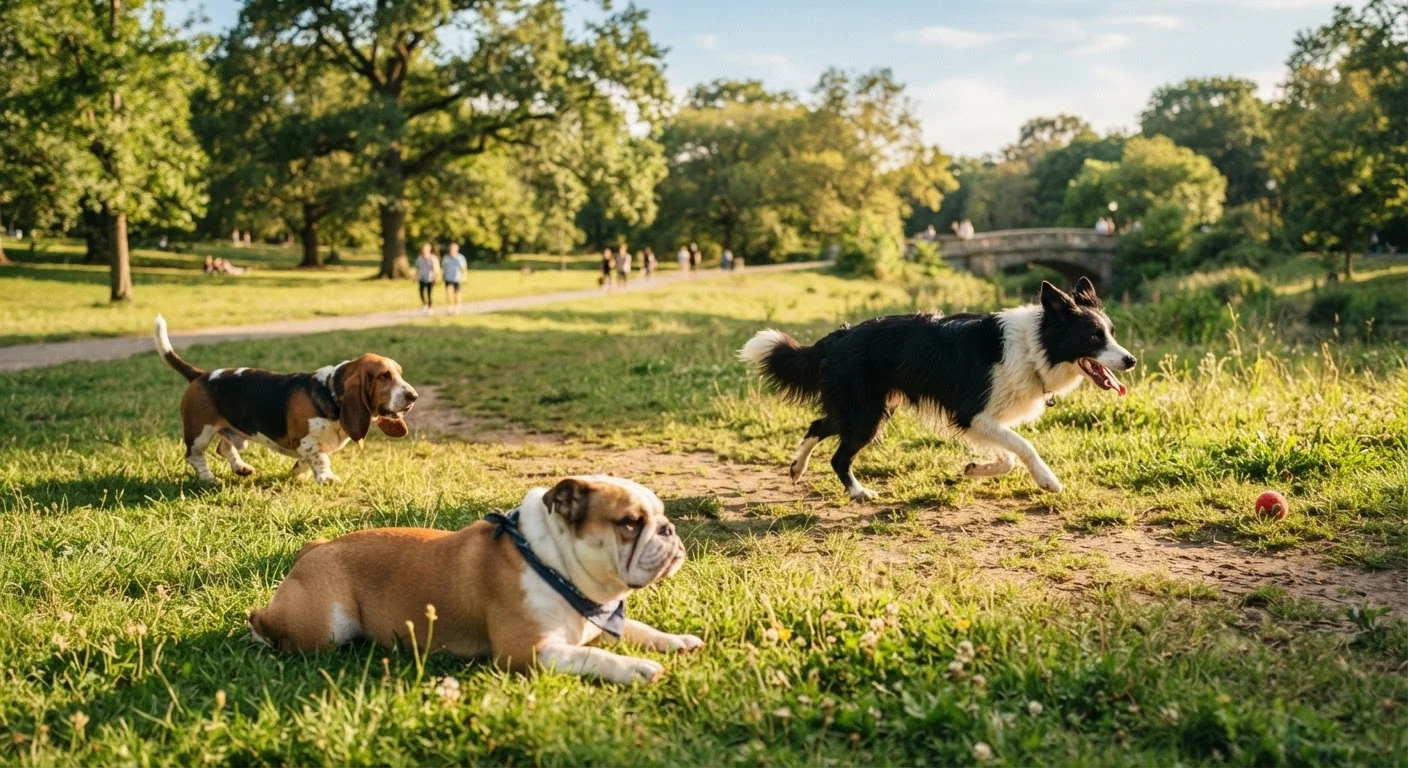
Photo credit: ResultsRover.com | Insights You Can Trust
In this article
High-energy working breeds, low-key companions, and everything in between — a practical look at how breed background shapes daily exercise requirements.
Key Takeaways
- A dog's breed background — herding, hunting, guarding, or companion — directly shapes its daily exercise requirements.
- Mismatching a dog's energy level to your lifestyle is a leading cause of behavioral problems at home.
- High-energy breeds generally need 60–120 minutes of vigorous activity daily; low-energy breeds may need 20–30 minutes.
- Mental stimulation through training and puzzle activities counts as exercise for many working breeds.
- Age and individual health also modify breed-typical exercise needs — consult your vet for personalized guidance.
Why Breed Background Determines Exercise Needs
Dogs were selectively bred for centuries to perform specific jobs — herding livestock, retrieving game, pulling sleds, or simply sitting companionably beside a family. Those functional origins didn't disappear when dogs became household pets. The drive, stamina, and instincts bred into a Border Collie or a Siberian Husky remain active whether or not those dogs ever see a field or a sled trail.
Understanding a dog's breed group is the fastest shortcut to predicting its daily activity requirements. The American Kennel Club recognizes seven broad groups — Herding, Sporting, Hound, Working, Terrier, Toy, and Non-Sporting — and each carries a general energy profile. See how breed energy fits into a daily care routine for a fuller picture of structuring your dog's day.
| High-Energy Breeds | Medium-Energy Breeds | Low-Energy Breeds | |
|---|---|---|---|
| Typical daily exercise | 60–120 minutes vigorous activity | 30–60 minutes moderate activity | 20–30 minutes light activity |
| Example breeds | Border Collie, Vizsla, Husky | Golden Retriever, Beagle, Boxer | Basset Hound, Shih Tzu, Pug |
| Primary breed origin | Herding, sporting, working | Hound, some sporting | Toy, companion |
| Risk if under-exercised | Destructive behavior, anxiety | Mild restlessness, weight gain | Weight gain, low-grade boredom |
| Mental stimulation need | Very high — essential daily | Moderate — beneficial | Low to moderate |
| Best lifestyle match | Active individuals or families | Moderately active households | Busy or lower-activity owners |
High-Energy Breeds: What They Need and Why
Sporting and herding breeds — think Labrador Retrievers, Australian Shepherds, Vizslas, and Weimaraners — were built for sustained physical work. Veterinary behavioral guidelines generally suggest these dogs benefit from 60 to 120 minutes of vigorous daily activity, often split across two or more sessions. A single short walk rarely meets their threshold.
Unmet physical needs in these breeds often surface as destructive chewing, excessive barking, hyperactivity indoors, or compulsive behaviors. Recognizing this pattern early is far easier than correcting entrenched problem behaviors. Structured training sessions can help redirect excess energy constructively while also building obedience.
Double Up: Combine Physical and Mental Exercise
For high-energy breeds, combining movement with cognitive challenges is especially efficient. A 20-minute scent-tracking session or a structured off-leash training drill can satisfy mental and physical needs simultaneously. This approach is particularly useful on days when a full outdoor run isn't possible due to weather or schedule constraints.
Mental stimulation matters just as much as physical activity for working breeds. Scent games, puzzle feeders, and obedience drills engage a dog's cognitive drive and can meaningfully reduce restlessness when outdoor time is limited.
Low-Energy Breeds: Less Activity, Not No Activity
Companion and toy breeds — Cavalier King Charles Spaniels, Shih Tzus, Pugs, and Basset Hounds among them — have markedly lower exercise demands. Most do well with 20 to 30 minutes of moderate daily activity, which can include a leisurely walk and some indoor play. For flat-faced (brachycephalic) breeds like Bulldogs and Pugs, even moderate exertion can stress the respiratory system, particularly in heat and humidity.
Low-energy doesn't mean maintenance-free. These breeds still need daily movement to support healthy weight, joint function, and mental engagement. Busy families managing multiple pets may find time-saving pet care routines helpful for keeping consistent without adding overwhelm.
Watch Brachycephalic Breeds in Heat
Flat-faced breeds such as Bulldogs, Pugs, and French Bulldogs have narrowed airways that make regulating body temperature through panting much less efficient. Exercise these dogs during cooler parts of the day — early morning or evening — and watch closely for signs of labored breathing or excessive drooling. If in doubt, shorten the session and consult your veterinarian about safe activity thresholds.
Age, Health, and the Limits of Breed Generalizations
Breed profiles are starting points, not fixed prescriptions. A young German Shepherd puppy should not receive the same high-impact exercise as a healthy adult, because developing joints are vulnerable to overuse injury. Conversely, a fit, healthy senior dog may still enjoy and benefit from regular moderate activity — though the type and intensity typically shift. Learn how health needs change as dogs age to adapt your routine appropriately.
Individual variation also matters. Mixed-breed dogs, dogs with orthopedic conditions, and dogs recovering from illness all require tailored approaches. Your veterinarian is the right resource for translating general breed guidelines into a plan that fits your specific dog's health status. For households managing more than one pet's exercise schedule, managing multiple pets simultaneously offers practical strategies.
This article provides general educational information about dog breeds and exercise. It is not a substitute for personalized veterinary advice. Always consult a licensed veterinarian regarding your individual dog's health and activity needs.

Author
Pets & Animals Editorial Team
Pets & Animals Editorial Team is the collective byline for our editorial team and contributor network. Articles published under this byline or an editorial pen name are researched, written, and reviewed according to our editorial standards for clarity, consistency, and independence before publication.
View all articles →