
Mulch Myths That Are Quietly Harming Your Garden Beds
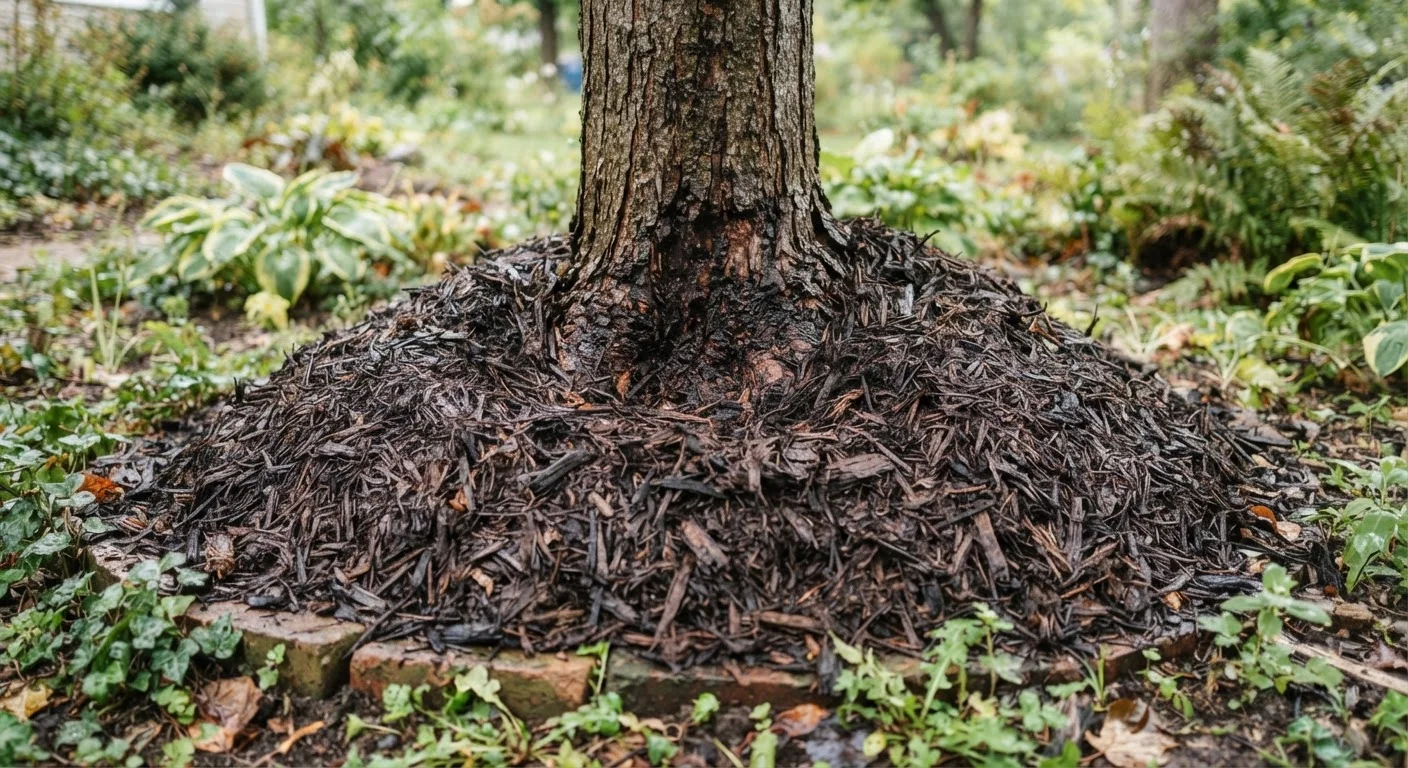
Photo credit: ResultsRover.com | Insights You Can Trust
From volcano mulching to the wrong depth, common mulching habits can damage roots and encourage pests. Here's what the evidence says.
Key Takeaways
- Mulch piled against tree trunks (volcano mulching) causes rot, disease, and pest damage.
- The ideal mulch depth is 2–4 inches — more can suffocate roots and repel water.
- Fresh wood chips do not significantly rob nutrients from established garden plants.
- Landscape fabric under mulch typically creates more problems than it solves over time.
- Mulch should be refreshed, not perpetually added; old layers need to be checked regularly.
Why Mulching Advice Goes Wrong
Mulch is one of the simplest tools a homeowner can use to protect garden beds, conserve moisture, and discourage weeds. Yet a surprising number of widespread mulching habits — passed along at garden centers, in neighborhood chats, and across social media — are quietly working against your plants. Some cause root damage. Others invite rot, fungal disease, or rodents. A few do all three at once.
The good news: the fixes are straightforward once you know what to look for. The myth-and-fact pairs below cover the most common errors, grounded in guidance from university cooperative extension programs and horticultural research. Think of this as a quick audit for your garden beds — not a reason to redo everything, but a practical checklist for doing things right going forward.
If you're rethinking ground-level coverage more broadly, also see our article on low-maintenance ground covers that actually suppress weeds.
Myth
Piling mulch high around tree trunks — sometimes called a 'mulch volcano' — protects the tree and looks tidy.
Fact
Volcano mulching traps moisture against the bark, promotes fungal rot, and creates a haven for rodents and insects that damage the trunk.
University extension programs consistently identify volcano mulching as one of the leading causes of preventable tree decline in residential landscapes. Bark is not designed to stay wet — when mulch is mounded 6–12 inches up a trunk, moisture accumulates, bark softens, and rot-causing fungi gain a foothold. Rodents often nest in the warm, damp pile and gnaw the cambium (the thin living layer just under bark), which can girdle and eventually kill the tree. The correct approach is a flat, doughnut-shaped ring: mulch 2–4 inches deep, pulled away from the trunk by at least 3–6 inches.
Myth
The more mulch you add each year, the better — a thick layer means better weed suppression and moisture retention.
Fact
Layers deeper than 4 inches can repel water, suffocate roots, and create anaerobic (oxygen-depleted) conditions that harm soil microbes.
There's a point of diminishing returns with mulch depth. Beyond 4 inches, the mulch itself can become hydrophobic — meaning rainfall beads off and never reaches the root zone — exactly the opposite of the intended effect. Very thick layers also reduce the oxygen exchange that soil organisms and plant roots need. Rather than adding a fresh layer every spring automatically, check what's already there. If depth is already adequate, simply rake to loosen compacted material before topping up sparingly.
Myth
Fresh wood chips rob nitrogen from your garden plants, so you should never use them around ornamentals or vegetables.
Fact
Nitrogen tie-up from wood chips occurs at the soil surface and primarily affects seeds or transplants placed directly in chip material — not established plant roots below.
The concern about nitrogen depletion is real but overstated for most garden applications. Soil microbes do consume nitrogen as they break down carbon-rich wood chips, but this process happens in the top inch or so of soil and does not significantly draw nitrogen away from established root systems growing deeper in the soil profile. Research from Washington State University and other land-grant institutions has found that wood chips used as a surface mulch around established plants pose little nitrogen risk and may actually improve soil biology over time as they decompose. The situation differs if you till chips directly into the soil as an amendment — that can tie up nitrogen more meaningfully.
Myth
Landscape fabric under mulch is the best long-term solution for weed control.
Fact
Landscape fabric typically degrades within a few years, becomes entangled with roots, and can reduce soil health — making it harder to manage than weeds alone.
Landscape fabric feels like a permanent fix, but it rarely performs as one. As organic mulch breaks down on top of the fabric, a thin layer of soil forms — and weeds happily root into it from above, often becoming harder to pull because their roots interlock with the fabric. Meanwhile, the fabric restricts earthworm movement, slows organic matter from reaching the soil, and can impede the spreading roots of the very plants you're trying to protect. A 3–4 inch layer of organic mulch, renewed as needed, generally outperforms fabric for long-term weed management in planted beds.
Myth
Colored or dyed mulch is harmful to plants and soil.
Fact
Most commercially dyed mulches use iron oxide or carbon-based colorants that are generally considered safe, though the quality of the base wood material matters more.
The dye itself in most reputable bagged mulch products is not the primary concern. What matters more is what the wood was before it was chipped — some colored mulches are made from recycled wood that may include pallets or construction lumber treated with compounds you'd rather not have in garden soil. If you're uncertain about a product's source, choosing mulch made from certified virgin wood material is a reasonable precaution. The color will fade within a season regardless, so the cosmetic benefit is short-lived.
How to Mulch Smarter This Season
Applying mulch correctly takes about the same effort as applying it incorrectly — the difference is in knowing a few key rules before you start spreading.
2–4 in.
Recommended mulch depth for garden beds
University cooperative extension programs broadly agree that 2–4 inches of organic mulch provides effective moisture retention and weed suppression without harming roots.
3–6 in.
Clear gap to maintain around tree trunks
Horticultural guidelines recommend keeping mulch at least 3–6 inches away from tree trunks and shrub stems to prevent rot and rodent damage.
- Pull mulch back from trunks and stems. Leave a clear, dry gap of at least 3–6 inches around the base of trees, shrubs, and perennial crowns. This one habit prevents the most common mulching damage.
- Measure your depth. Aim for 2–4 inches across the bed. If existing mulch is already at 3 inches, you may only need to fluff and top-dress rather than add a full new layer.
- Choose the right material for the job. Shredded hardwood bark breaks down slowly and suits permanent beds. Wood chips work well under trees. Fine-textured mulches like straw suit vegetable gardens where you want faster decomposition.
- Skip the fabric barrier. If you're planting perennials or shrubs that you want to thrive long-term, landscape fabric tends to impede root expansion and organic matter exchange. A thick layer of organic mulch alone is more effective.
Mulching also interacts closely with your watering habits. A proper mulch layer reduces evaporation and encourages roots to grow deeper — which pairs well with a deep, infrequent watering strategy rather than daily shallow sprinkles.
Don't Let Old Mulch Layers Stack Up
Adding fresh mulch on top of old layers year after year can push total depth well beyond 6 inches without the homeowner realizing it. Before each new application, pull back the surface and measure what's already there. If existing mulch is still in good shape and close to 3 inches, skip adding more and simply fluff the existing layer to restore air circulation.
Even well-mulched beds benefit from periodic review. Scoop back the top layer each spring to check whether old mulch has compacted into a water-repelling mat. If it has, break it up before adding anything new. Small adjustments like these are what separate a garden that merely survives from one that genuinely thrives.

Author
Home & Garden Editorial Team
Home & Garden Editorial Team is the collective byline for our editorial team and contributor network. Articles published under this byline or an editorial pen name are researched, written, and reviewed according to our editorial standards for clarity, consistency, and independence before publication.
View all articles →