
Pressure Washing at Home: What It Helps, What It Can Damage
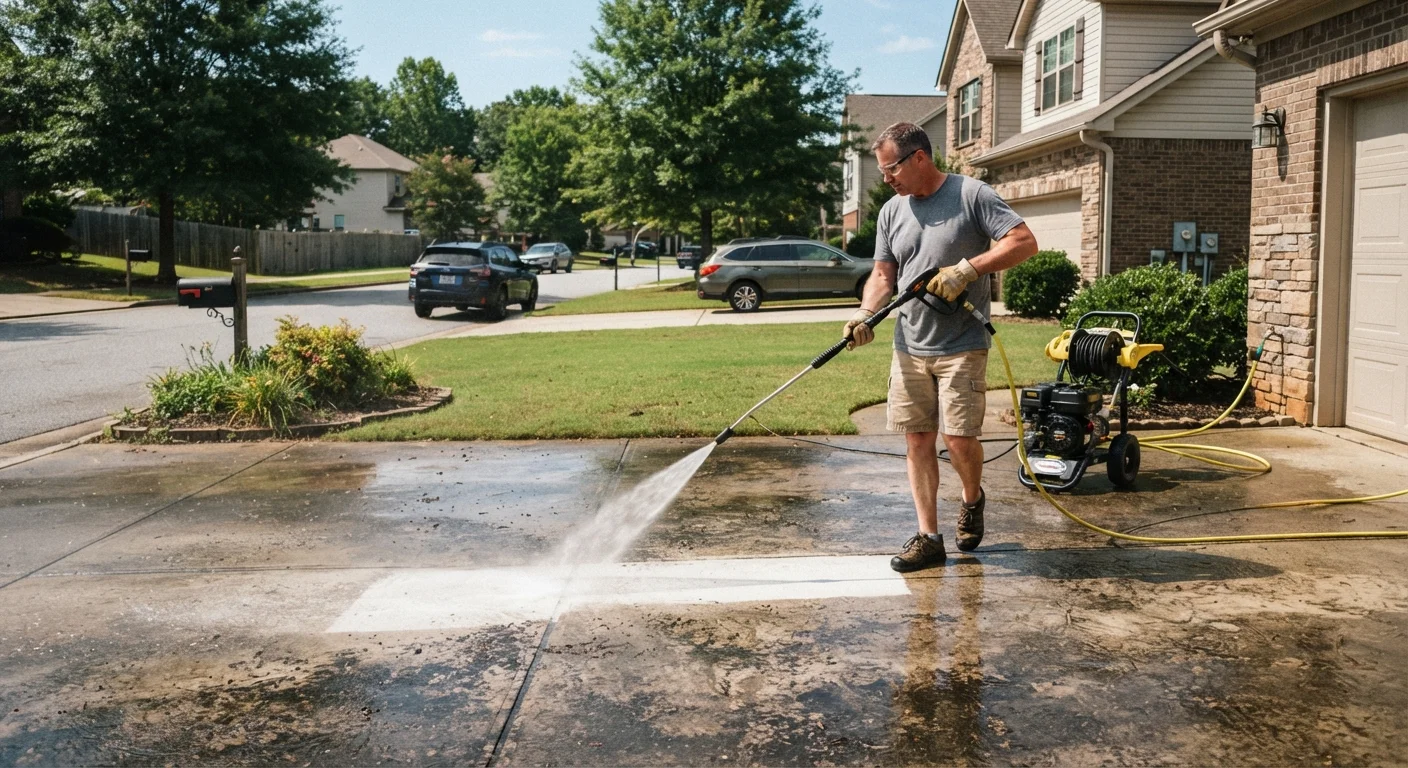
Photo credit: ResultsRover.com | Insights You Can Trust
In this article
Pressure washing cleans effectively but can damage siding, mortar, and painted surfaces when misused. Here's a balanced look at when to use it.
Key Takeaways
- Pressure washing is highly effective on concrete, brick pavers, and composite decking.
- Soft or aged materials - including wood siding, stucco, and old mortar - are commonly damaged by high-pressure water.
- PSI setting and nozzle angle matter as much as the surface being cleaned.
- Soft washing (lower pressure with cleaning solution) is safer for many exterior surfaces.
- Improper use can void warranties and cause water intrusion behind siding or trim.
Cleans hard surfaces dramatically faster than manual scrubbing
A standard driveway or patio that would take hours to hand-scrub can be cleaned in under 30 minutes with a pressure washer, reducing the physical effort involved in exterior maintenance.
Removes mildew and algae that degrade surfaces over time
Organic growth like algae and mildew actively breaks down concrete, siding, and wood if left unchecked. Removing it regularly extends the life of these surfaces.
Reduces reliance on heavy chemical cleaners
For many hard surfaces, pressurized water alone removes grime effectively, cutting down on the need for harsh detergents that require careful handling and disposal.
Supports curb appeal and surface longevity
Cleaned exterior surfaces look better and deteriorate more slowly, making pressure washing a cost-effective part of routine home maintenance.
Equipment is widely available for rent or purchase
Homeowners don't need to buy a pressure washer outright - rental options are commonly available at hardware stores for one-time or occasional jobs.
High pressure strips paint and damages wood grain
Wood siding, fences, and natural wood decking are easily damaged by pressures above 1,200 PSI, causing raised grain, splintering, and paint failure that requires costly repair.
Erodes aging mortar between bricks and stone
Mortar that has begun to crack or soften with age can be blasted out entirely by pressure washing, creating gaps that allow rainwater to penetrate the structure.
Drives water behind siding and trim
Spraying upward or at close range can force water beneath vinyl or wood siding, creating hidden moisture buildup and potential mold growth inside wall cavities.
Damages window seals and caulking
High-pressure water directed at windows or caulked seams can break the seal, reducing energy efficiency and allowing water intrusion around frames.
Incorrect use can void warranties or insurance protection
Damage caused by improper pressure washing may be classified as owner-caused damage, potentially affecting warranty coverage on siding, roofing, or related components.
Risk of injury from direct contact or recoil
Pressure washer streams at high PSI can cause serious skin lacerations, and the recoil from the wand requires a stable stance and protective equipment to operate safely.
Why Homeowners Reach for a Pressure Washer
A pressure washer can clean a driveway in 20 minutes that would take two hours of scrubbing by hand. That appeal is real. High-pressure water cuts through mildew, algae, road grime, and embedded dirt on hard surfaces far faster than any brush or garden hose - and it does so without chemical-heavy solutions in many cases.
For routine exterior maintenance, pressure washing supports goals that matter financially. Clean surfaces last longer because mildew and algae break down materials over time. A clean driveway, walkway, or deck also signals upkeep to neighbors and prospective buyers alike. As we explore in our piece on exterior curb appeal improvements, the condition of a home's surfaces consistently affects perceived value.
The key is understanding that pressure washers are surface-specific tools - not a single solution for every dirty exterior.
Cleans hard surfaces dramatically faster than manual scrubbing
A standard driveway or patio that would take hours to hand-scrub can be cleaned in under 30 minutes with a pressure washer, reducing the physical effort involved in exterior maintenance.
Removes mildew and algae that degrade surfaces over time
Organic growth like algae and mildew actively breaks down concrete, siding, and wood if left unchecked. Removing it regularly extends the life of these surfaces.
Reduces reliance on heavy chemical cleaners
For many hard surfaces, pressurized water alone removes grime effectively, cutting down on the need for harsh detergents that require careful handling and disposal.
Supports curb appeal and surface longevity
Cleaned exterior surfaces look better and deteriorate more slowly, making pressure washing a cost-effective part of routine home maintenance.
Equipment is widely available for rent or purchase
Homeowners don't need to buy a pressure washer outright - rental options are commonly available at hardware stores for one-time or occasional jobs.
Surfaces Where Pressure Washing Performs Well
Several materials hold up well under high-pressure cleaning when the correct nozzle and distance are used:
- Concrete driveways and sidewalks: Dense, non-porous concrete handles 2,500-3,000 PSI effectively. This is where pressure washing delivers its clearest value.
- Brick pavers and patios: Brick tolerates pressure washing, though the nozzle should be kept at least 12 inches from the surface to avoid dislodging joint sand.
- Vinyl siding in good condition: Using a wide-angle (40-degree) nozzle at lower pressure (under 1,500 PSI) and washing from the top down is generally safe for intact vinyl.
- Composite or PVC decking: Manufacturer guidelines vary, but most composite decking tolerates gentle pressure washing better than natural wood.
- Metal fencing and gutters: Aluminum and steel surfaces clean well, though be cautious around gutters with damaged seams. See our guide to gutter inspection and maintenance before directing water near gutter joints.
1,500 PSI
Maximum recommended for most vinyl siding
Industry guidance from pressure washer manufacturers and contractor associations generally recommends staying at or below 1,500 PSI when cleaning vinyl siding to avoid panel damage.
12+ inches
Minimum nozzle distance for brick and pavers
Keeping the nozzle at least 12 inches from brick or paver surfaces helps prevent dislodging mortar and joint sand, which is a common cause of damage during DIY cleaning.
500 PSI
Upper limit for soft washing applications
Soft washing systems typically operate well below 500 PSI, relying on cleaning solutions rather than mechanical force to remove organic growth from delicate surfaces.
Where Pressure Washing Does Real Damage
The list of surfaces that pressure washing commonly damages is longer than many homeowners expect - and some mistakes are costly to fix.
High pressure strips paint and damages wood grain
Wood siding, fences, and natural wood decking are easily damaged by pressures above 1,200 PSI, causing raised grain, splintering, and paint failure that requires costly repair.
Erodes aging mortar between bricks and stone
Mortar that has begun to crack or soften with age can be blasted out entirely by pressure washing, creating gaps that allow rainwater to penetrate the structure.
Drives water behind siding and trim
Spraying upward or at close range can force water beneath vinyl or wood siding, creating hidden moisture buildup and potential mold growth inside wall cavities.
Damages window seals and caulking
High-pressure water directed at windows or caulked seams can break the seal, reducing energy efficiency and allowing water intrusion around frames.
Incorrect use can void warranties or insurance protection
Damage caused by improper pressure washing may be classified as owner-caused damage, potentially affecting warranty coverage on siding, roofing, or related components.
Risk of injury from direct contact or recoil
Pressure washer streams at high PSI can cause serious skin lacerations, and the recoil from the wand requires a stable stance and protective equipment to operate safely.
Wood siding and natural wood decking absorb high-pressure water rapidly, which can raise the grain, cause splintering, and drive moisture deep into the structure. If that wood is painted, the pressure often strips the paint unevenly, requiring a full repaint. Speaking of paint - common improvement myths include the belief that a fresh coat of paint can hide pressure-wash damage; in reality, paint applied over swollen or stripped wood fails quickly.
Aged mortar between bricks is another frequent casualty. Mortar that has already started to degrade crumbles under high pressure, creating gaps that allow water intrusion - a far bigger problem than surface dirt. This connects to a broader pattern of DIY shortcuts discussed in our article on home maintenance myths that cost money.
Window seals, door frames, and any painted trim are also vulnerable. High-pressure water forced behind trim can create mold conditions inside walls. Homeowners should also know that damage from improper pressure washing may affect coverage; our guide on warranty-voiding upkeep mistakes covers this in detail.
Soft Washing: A Lower-Risk Alternative
Soft washing uses significantly lower water pressure - typically under 500 PSI - combined with a biodegradable cleaning solution to break down algae, mildew, and dirt chemically rather than mechanically. The solution does the work; the water rinses it away gently.
When to Choose Soft Washing Over Pressure Washing
If the surface you need to clean is painted wood, stucco, older brick, roof shingles, or EIFS (synthetic stucco), soft washing is generally the safer choice. The low pressure eliminates the risk of mechanical damage while a diluted cleaning solution handles mildew and algae effectively. Many professional exterior cleaning services default to soft washing for anything above the foundation line. When in doubt, test any method on a small, inconspicuous area first.
This method is widely used by professionals on roofs, painted wood siding, stucco, EIFS (synthetic stucco), and older brick. For homeowners who want to clean these surfaces without the risk of mechanical damage, renting or hiring soft-wash equipment is worth considering over a standard pressure washer.
The trade-off is that soft washing requires appropriate cleaning agents and slightly longer dwell time for the solution to work. On concrete or dense masonry, pressure washing remains more efficient.

Author
Home & Garden Editorial Team
Home & Garden Editorial Team is the collective byline for our editorial team and contributor network. Articles published under this byline or an editorial pen name are researched, written, and reviewed according to our editorial standards for clarity, consistency, and independence before publication.
View all articles →