
Home Improvement Myths That Lead Homeowners to Waste Money
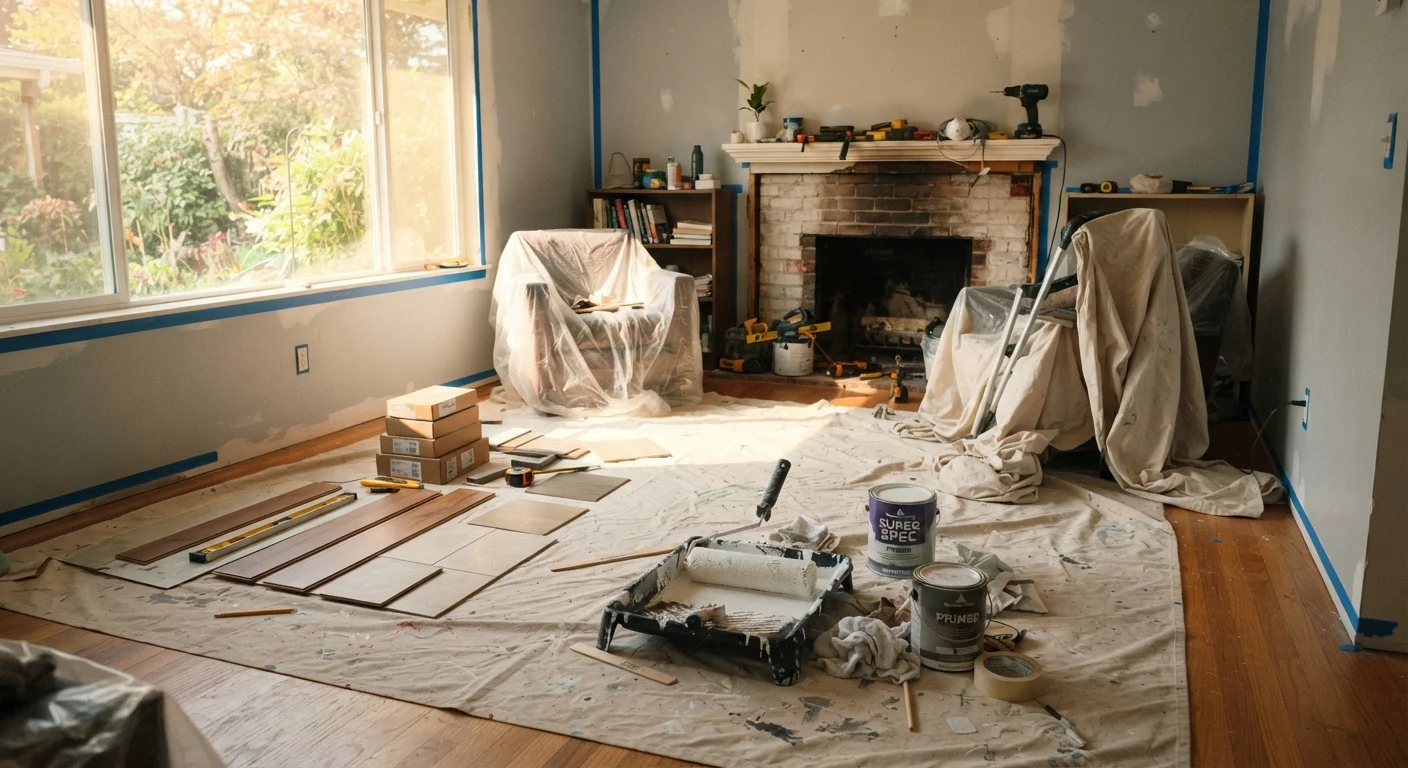
Photo credit: ResultsRover.com | Insights You Can Trust
In this article
From "renovations always add value" to "you can skip the primer," these common beliefs cost homeowners real money. Here's what the evidence actually shows.
Key Takeaways
- Not every renovation adds resale value - some upgrades cost more than they return.
- Skipping primer is one of the costliest shortcuts a homeowner can take.
- DIY work can save money, but unpermitted or unsafe projects may cost far more later.
- High-ROI improvements are often modest: paint, hardware, lighting, and landscaping curb appeal.
- Material quality matters less than proper installation for most flooring and surface projects.
Why These Myths Persist - and What They Cost
Home improvement advice travels fast - through neighborhoods, social media, and well-meaning relatives. The problem is that a lot of it is rooted in outdated rules of thumb, optimistic marketing, or one person's lucky experience. Acting on bad information doesn't just waste effort; it wastes real money. The myths below are among the most common beliefs that send homeowners in the wrong financial direction.
Myth
Any renovation you do will increase your home's value by at least what you spent.
Fact
Most renovations return less than their full cost at resale, and some add almost no measurable value at all.
The idea that home improvements are always a financial gain is one of the most persistent - and expensive - misconceptions in real estate. Industry data consistently shows that most remodeling projects recoup a portion of their cost, not the full amount. A major upscale kitchen remodel, for example, often recoups significantly less than half its cost at resale. Projects like fresh paint, minor kitchen updates, and improved curb appeal tend to offer stronger returns than high-end overhauls. For a realistic look at how to think about returns, see what ROI actually means for home improvement.
Myth
You can skip primer if you're using a paint-and-primer-in-one product.
Fact
Combination paint-and-primer products work well for light touch-ups over the same color, but they are not a substitute for dedicated primer on bare drywall, stained surfaces, or dramatic color changes.
Primer creates a uniform, adhesive base that helps paint bond properly and cover evenly. Skipping it on new drywall or surfaces with water stains almost always means more coats of paint - and more money spent. Fresh paint is one of the highest-ROI improvements a homeowner can make, but only when applied correctly over a properly prepared surface.
Myth
Installing the most expensive materials will guarantee a durable, problem-free result.
Fact
Installation quality almost always matters more than material grade for how well floors, tile, and surfaces hold up over time.
Premium hardwood laid over an uneven or damp subfloor will warp and creak. High-end tile set with the wrong adhesive or without proper grout spacing will crack. The labor and prep work beneath the surface determine longevity far more than the price tag on the materials. This is especially true with flooring - cutting corners on installation often costs more in the long run.
Myth
A full kitchen gut renovation is the best way to add value before selling.
Fact
Targeted, cosmetic kitchen updates typically offer a better return than full gut renovations, especially in mid-range homes.
Full kitchen renovations are among the most expensive projects homeowners undertake, and they rarely return their full cost. Cabinet refacing, new hardware, updated lighting, and a fresh backsplash can deliver a dramatically refreshed look at a fraction of the price. Planning a kitchen refresh without a full renovation is a practical alternative that keeps spending proportional to the likely return.
Myth
Small maintenance issues can wait - fixing them later won't cost much more.
Fact
Deferred maintenance almost always compounds. A minor leak ignored today can become a mold remediation or structural repair tomorrow.
Homeowners often delay small fixes because the immediate cost feels avoidable. But water intrusion, hairline cracks, and worn caulking don't stay small. Small leaks become big bills when moisture damages insulation, framing, or finishes over time. Staying current on routine maintenance is consistently one of the most cost-effective habits a homeowner can develop.
Where Homeowners Actually Get the Best Return
The improvements that tend to hold their value - or outperform their cost - are often the least glamorous: a clean coat of paint in a neutral palette, updated cabinet hardware, better lighting, and landscaping that improves first impressions. Bathroom upgrades that look expensive without the price tag are another strong example of high-impact, lower-cost improvements.
"DIY Always Saves Money" Is Dangerous Shorthand
Some tasks - like replacing an outlet or painting a room - are genuinely DIY-friendly. Others involving electrical panels, gas lines, structural walls, or roofing carry serious injury risk and often require a licensed professional by law. Attempting regulated work without proper credentials can void your homeowner's insurance and create liability if something goes wrong.
Staying informed about routine home maintenance also protects your investment in ways renovations alone cannot. A well-maintained home commands more buyer confidence than a renovated one with deferred upkeep problems lurking underneath. Similarly, understanding smart spending principles can help you allocate your improvement budget where it actually counts - much like avoiding the smart spending myths that erode savings in other areas of life.
Unpermitted Work Can Haunt You at Resale
Finishing a basement, adding a bathroom, or altering load-bearing walls without a permit isn't just a code violation - it can complicate or derail a home sale. Buyers' lenders and inspectors routinely flag unpermitted work, and corrections can cost far more than the original permit fee. See our guide to home improvement permits to understand which projects typically require one.
The consistent thread across high-return improvements is proportion: matching the upgrade to the home's overall condition, the neighborhood's price range, and what a future buyer is likely to value. Doing more doesn't always mean getting more back.

Author
Home & Garden Editorial Team
Home & Garden Editorial Team is the collective byline for our editorial team and contributor network. Articles published under this byline or an editorial pen name are researched, written, and reviewed according to our editorial standards for clarity, consistency, and independence before publication.
View all articles →