
Tire Care from Inflation to Tread Depth
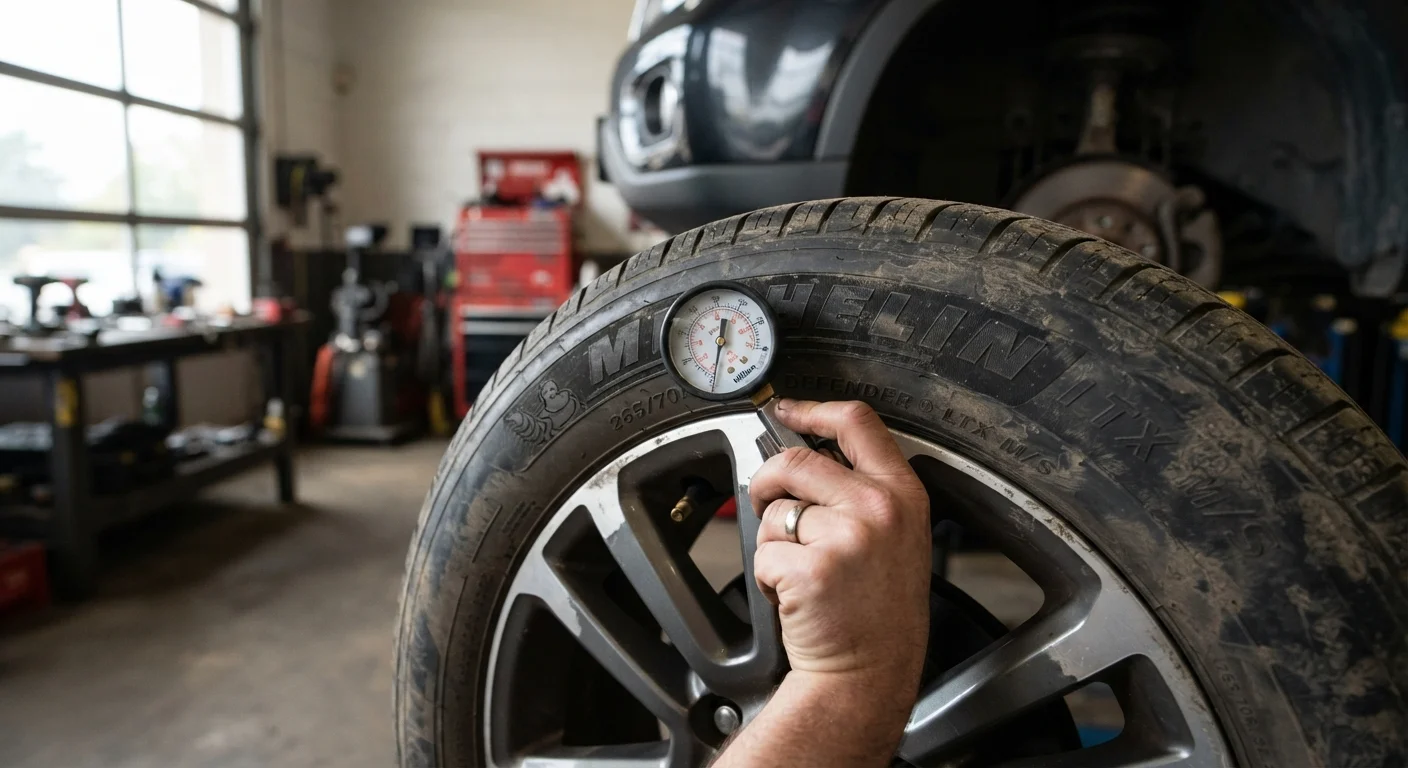
Photo credit: ResultsRover.com | Insights You Can Trust
In this article
A practical walkthrough of tire pressure, tread wear indicators, rotation intervals, and when a tire is no longer safe to drive on.
Key Takeaways
- Check tire pressure monthly using the number on your door jamb sticker, not the tire sidewall.
- Tread depth below 2/32 inch is illegal in most states; replace tires before reaching 4/32 inch for wet-weather safety.
- Rotating tires every 5,000-7,500 miles evens out wear and extends overall tire life.
- Age alone can make a tire unsafe - most manufacturers recommend replacement after six to ten years regardless of tread.
- A TPMS warning light signals a pressure drop of 25% or more - check pressure manually rather than relying on the light alone.
Why Tires Deserve More Attention Than They Get
Tires are the only part of your vehicle that actually contacts the road, yet most drivers check them only when something looks obviously wrong. That gap between what tires need and what they get is where blowouts, handling failures, and unnecessary replacement costs originate.
Routine tire care - pressure, tread depth, and rotation - is among the most cost-effective maintenance a driver can do. It also connects directly to safety. Underinflated tires run hotter, wear unevenly, and reduce fuel efficiency. Worn tread dramatically increases stopping distances on wet pavement. Neither problem announces itself loudly until it's already expensive. See how tires fit into your full maintenance schedule for the broader picture.
11%
Fuel economy lost to underinflated tires
The U.S. Department of Energy estimates fuel economy can drop by about 0.2% for every 1 PSI below the recommended level across all four tires.
43%
Of vehicles have at least one significantly underinflated tire
National Highway Traffic Safety Administration (NHTSA) surveys have found that a substantial portion of passenger vehicles on U.S. roads are running underinflated.
43 ft
Extra stopping distance at 60 mph with worn tread
Testing by tire industry groups has shown that stopping distances on wet pavement can increase significantly when tread drops below 4/32 inch compared to new tires.
Tire Pressure: The Right Numbers and How to Check Them
The correct tire pressure for your vehicle is printed on a sticker inside the driver's door jamb - not on the tire sidewall. The sidewall number is the maximum pressure the tire can hold, not the recommended operating pressure. Using the sidewall figure will over-inflate your tires and create a harsh, unsafe ride.
Pressure is measured in PSI (pounds per square inch). Most passenger cars run between 30 and 35 PSI; trucks and SUVs often call for higher figures. Check yours cold - tires heat up as you drive and pressure rises by roughly 4-6 PSI, which skews the reading.
Always check tire pressure first thing in the morning, before you've driven more than a mile. Even a short trip warms the air inside the tire enough to inflate readings by several PSI.
Temperature directly affects air pressure; readings taken after driving can make a low tire appear properly inflated, masking a real problem.
Buy a quality dial or digital gauge and keep it in your glove box. The stick-type gauges at gas stations are often inaccurate by several PSI and degrade quickly.
Accurate pressure readings depend on the quality of the tool - an unreliable gauge provides a false sense of security.
Your vehicle's TPMS warning light illuminates when pressure drops approximately 25% below the recommended level. That's already a significant deficit. The TPMS is a backup alert, not a substitute for monthly manual checks with a quality gauge. If the light comes on, don't ignore it - address it before your next drive.
Check Pressure When Seasons Change
Tire pressure drops roughly 1 PSI for every 10°F decrease in ambient temperature. A tire that's properly inflated in summer can be noticeably low by the first cold snap of fall. Build a pressure check into your seasonal routine - it takes two minutes and can prevent uneven wear and handling issues all winter.
Tread Depth: Reading Wear Before It Reads You
Tread channels water away from the contact patch, maintaining grip on wet roads. As tread wears down, that capacity shrinks. The legal minimum tread depth in most U.S. states is 2/32 of an inch, but safety research consistently shows that braking performance on wet pavement degrades significantly below 4/32 inch. Plan to replace tires before reaching the legal floor, not at it.
Two Ways to Measure
- Penny test (rough check): Insert a penny into a tread groove with Lincoln's head pointing down. If you can see all of Lincoln's head, tread is at or below 2/32 inch - replace immediately.
- Quarter test (safety margin): Insert a quarter the same way. If Washington's head is fully visible, tread is below 4/32 inch - start planning replacement.
- Tread wear indicators: Molded into the grooves at 2/32 inch. When the tread surface is flush with these bars, the tire is legally worn out.
Also inspect for uneven wear patterns. Wear concentrated at the edges suggests chronic underinflation; center wear indicates overinflation; one-sided wear often points to an alignment issue. Catching these patterns early can prevent you from buying tires before their time. For context on how tires compare to other wear items, see the real lifespan of common wear parts.
Don't Rely on Visual Inspection Alone
A tire can look full and round while being significantly underinflated or structurally compromised. Modern radial tires barely bulge at the contact patch even when 10-15 PSI low. Always use a gauge rather than a squeeze or a glance - what you can't see is often what causes a blowout.
Rotation Intervals and Why They Matter
Front and rear tires wear at different rates because they handle different loads and steering forces. Without rotation, front tires on a front-wheel-drive vehicle typically wear out significantly faster than the rears, forcing you to replace two tires while the others still have life left.
The general guidance is to rotate tires every 5,000 to 7,500 miles, or with every oil change if you're on a 5,000-mile oil interval. Your owner's manual has the manufacturer's specific recommendation - follow that over generic advice.
Rotation patterns vary: front-to-rear straight swaps, cross-rotation, and X-patterns each suit different drivetrain and tire configurations. A shop will know the right pattern for your vehicle. If you have a full-size matching spare, ask whether it can be included in the rotation to spread wear across five tires rather than four. Rotation is one task that straddles the DIY line - it's doable at home with the right jack stands, but most drivers find it easier to bundle with an oil change at a shop.
When a Tire Is No Longer Safe
Tread depth and pressure only tell part of the story. Tires also degrade from age even when they look fine. Rubber compounds oxidize over time, reducing flexibility and increasing cracking risk. Most manufacturers and industry groups recommend replacing tires after six to ten years from the date of manufacture, regardless of tread remaining.
The manufacture date is encoded on the tire sidewall in a four-digit DOT week/year format - for example, "2419" means the 24th week of 2019. This is easy to check before buying used tires or a used vehicle.
Other Signs a Tire Needs Immediate Replacement
- Visible sidewall bulges or bubbles (internal structural failure)
- Cracks in the sidewall or tread grooves
- Exposed cords or fabric
- A slow leak that can't be attributed to the valve stem
- Any impact damage from a pothole or road debris, even if the tire holds air
If you're evaluating a used vehicle's tires, check the DOT date and look for any of the above. A car past 100,000 miles often has tires approaching end-of-life; maintaining a high-mileage vehicle covers how to prioritize those costs. Staying on top of tire condition is also one of the clearest ways to make routine car costs work harder for your budget.
This article is for general informational purposes. Always consult a qualified mechanic or tire professional for diagnosis of specific tire conditions or safety concerns.

Author
Auto Essentials Editorial Team
Auto Essentials Editorial Team is the collective byline for our editorial team and contributor network. Articles published under this byline or an editorial pen name are researched, written, and reviewed according to our editorial standards for clarity, consistency, and independence before publication.
View all articles →