
Maintaining Your Car Yourself: Where the Real Limits Are
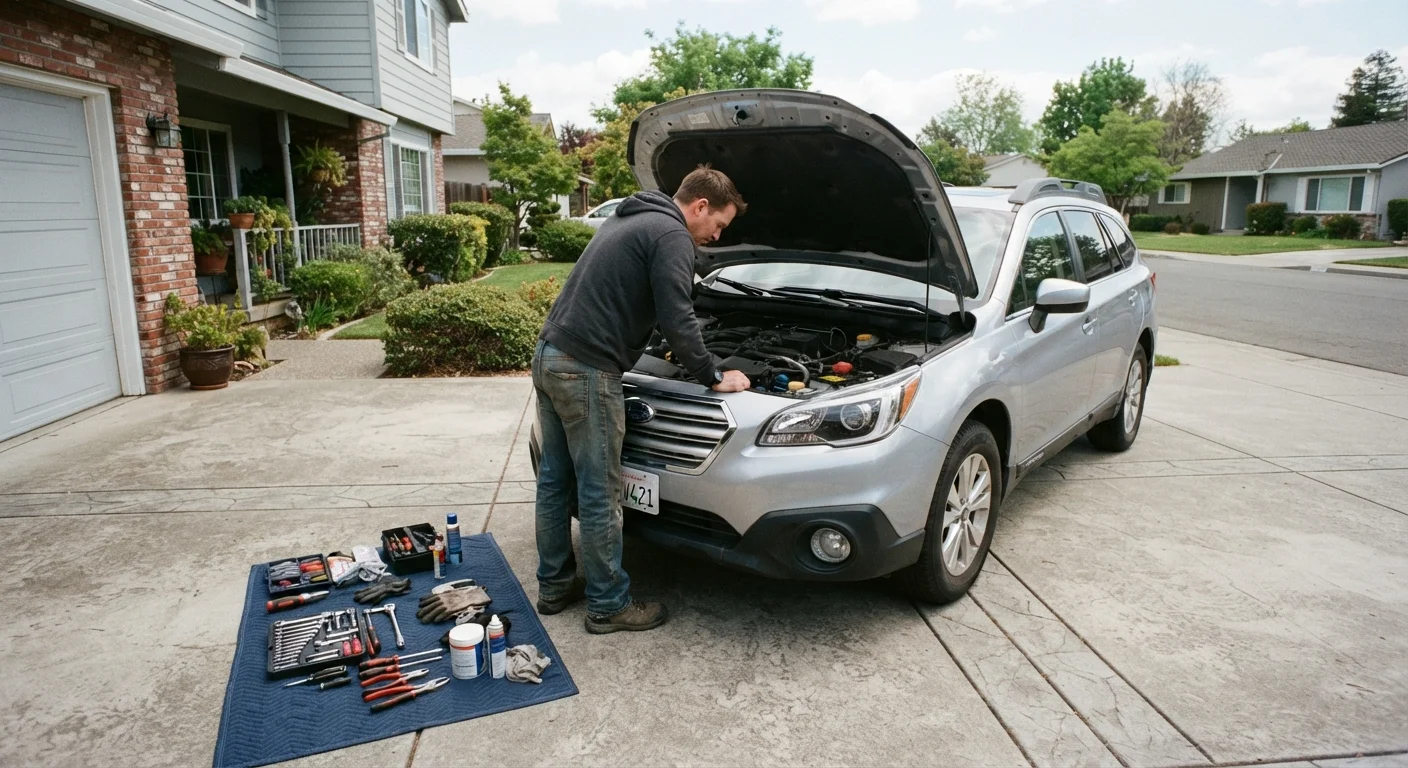
Photo credit: ResultsRover.com | Insights You Can Trust
In this article
Plenty of tasks are genuinely DIY-friendly. Others carry safety or legal implications that make a qualified mechanic the right call. Know the difference.
Key Takeaways
- Routine tasks like oil changes, air filters, and wiper blades are genuinely DIY-friendly with basic tools.
- Brake system, suspension, and airbag-related work carry real safety risks and should go to a qualified mechanic.
- Mistakes on complex repairs can void warranties, fail inspections, or create liability on the road.
- DIY maintenance saves money on labor but requires honest self-assessment of skill and equipment.
- Your owner's manual and a vehicle-specific forum are your two most reliable starting resources.
Significant labor cost savings on routine tasks
Shop labor rates commonly range from $80 to $150 per hour depending on location and shop type. Routine tasks like oil changes and filter swaps can be completed for the cost of parts alone when done at home.
Firsthand knowledge of your vehicle's condition
Doing your own maintenance means you're the one looking at hoses, belts, and fluid levels up close. That familiarity makes it easier to catch developing issues before they become expensive failures.
Scheduling flexibility and no waiting room time
Home maintenance happens on your schedule, not a shop's. For drivers with predictable routines, this convenience is a genuine quality-of-life benefit.
Builds mechanical literacy over time
Even drivers who eventually hand off complex work to a mechanic make better decisions - and are harder to oversell on unnecessary services - when they understand how their vehicle works.
Safety-critical errors carry serious consequences
A mistake on a brake job or suspension component doesn't just mean a return trip to the shop - it can mean compromised vehicle control on the road. The stakes are not equivalent across all repair types.
Upfront tool investment can offset savings
A torque wrench, floor jack, jack stands, and specialty sockets represent a real upfront cost. For drivers who only perform maintenance occasionally, the per-job economics may not favor DIY.
Modern vehicles increasingly require diagnostic software
Resetting service lights, programming new sensors, and diagnosing fault codes often requires a scan tool or manufacturer-specific software - equipment that most home garages don't have.
Warranty and inspection risk if work is done incorrectly
Improper repairs or non-compliant parts can jeopardize warranty coverage and cause a vehicle to fail emissions or safety inspections, creating costs that exceed the original labor savings.
Time cost is real, especially for beginners
A task a mechanic completes in 20 minutes may take a first-time DIYer two hours, including research, setup, and cleanup. Time is a legitimate variable in the cost-benefit equation.
What DIY Maintenance Actually Covers
The range of tasks a motivated, tool-equipped driver can handle is wider than most people assume - but narrower than YouTube playlists suggest. Routine maintenance that follows clear, repeatable steps and carries limited consequence for minor error sits firmly in DIY territory.
Tasks generally considered accessible to home mechanics include:
- Engine oil and filter changes
- Air filter replacement (engine and cabin)
- Windshield wiper blades
- Battery terminal cleaning and battery swaps
- Checking and topping off fluids (coolant, washer fluid, power steering)
- Replacing burnt-out bulbs (on vehicles without sealed LED assemblies)
- Tire inflation and visual tread checks
These tasks appear in nearly every manufacturer's owner's manual, require modest tools, and have well-documented procedures. See our tire care guide for a closer look at pressure, tread wear, and rotation intervals you can monitor yourself.
Significant labor cost savings on routine tasks
Shop labor rates commonly range from $80 to $150 per hour depending on location and shop type. Routine tasks like oil changes and filter swaps can be completed for the cost of parts alone when done at home.
Firsthand knowledge of your vehicle's condition
Doing your own maintenance means you're the one looking at hoses, belts, and fluid levels up close. That familiarity makes it easier to catch developing issues before they become expensive failures.
Scheduling flexibility and no waiting room time
Home maintenance happens on your schedule, not a shop's. For drivers with predictable routines, this convenience is a genuine quality-of-life benefit.
Builds mechanical literacy over time
Even drivers who eventually hand off complex work to a mechanic make better decisions - and are harder to oversell on unnecessary services - when they understand how their vehicle works.
Where the Real Limits Start
The line between DIY and professional territory isn't about confidence - it's about consequence. Some repairs have a narrow margin for error, involve safety-critical systems, or require specialized diagnostic equipment that a home garage simply won't have.
Brake system work sits at the top of this list. Replacing brake pads is achievable for experienced home mechanics, but bleeding brake lines, replacing calipers, or diagnosing ABS (anti-lock braking system) faults involves hydraulic systems and electronic modules where a single error can compromise stopping power. That's a safety issue, not just a repair cost issue.
Suspension and steering components - struts, control arms, tie rods - affect how the vehicle handles under load and in emergency maneuvers. Incorrect installation or missed torque specifications can cause unpredictable handling.
Airbag and restraint systems must never be DIY territory. Supplemental Restraint Systems (SRS) can deploy unexpectedly during servicing. Federal regulations also govern their installation and testing.
Emissions-related components including catalytic converters and oxygen sensors may affect your vehicle's ability to pass state inspections, and tampering with emissions controls is federally prohibited.
Safety-critical errors carry serious consequences
A mistake on a brake job or suspension component doesn't just mean a return trip to the shop - it can mean compromised vehicle control on the road. The stakes are not equivalent across all repair types.
Upfront tool investment can offset savings
A torque wrench, floor jack, jack stands, and specialty sockets represent a real upfront cost. For drivers who only perform maintenance occasionally, the per-job economics may not favor DIY.
Modern vehicles increasingly require diagnostic software
Resetting service lights, programming new sensors, and diagnosing fault codes often requires a scan tool or manufacturer-specific software - equipment that most home garages don't have.
Warranty and inspection risk if work is done incorrectly
Improper repairs or non-compliant parts can jeopardize warranty coverage and cause a vehicle to fail emissions or safety inspections, creating costs that exceed the original labor savings.
Time cost is real, especially for beginners
A task a mechanic completes in 20 minutes may take a first-time DIYer two hours, including research, setup, and cleanup. Time is a legitimate variable in the cost-benefit equation.
For a broader look at how maintenance complexity scales over a vehicle's life, our high-mileage vehicle guide covers what changes after 100,000 miles.
The Hidden Costs of Getting It Wrong
DIY maintenance saves on labor, but the math only works when the job is done correctly. A stripped drain plug can turn a $10 oil change into a $300 oil pan replacement. An improperly seated air intake can trigger a check-engine light and a diagnostic fee that exceeds what a shop would have charged originally.
$80-$150
Typical shop labor rate per hour (U.S.)
Labor rates vary significantly by region, shop type, and dealership vs. independent - this range reflects common national figures cited in automotive industry surveys.
~35%
Share of vehicle owners who perform some DIY maintenance
Consumer research consistently finds a substantial minority of drivers handle at least some of their own routine upkeep, concentrated in oil changes and basic inspections.
Warranty implications also matter. Most new vehicles carry a manufacturer's powertrain warranty, and while the Magnuson-Moss Warranty Act generally protects your right to perform your own maintenance, that protection depends on using the correct parts and fluids and keeping records. If a warranty claim arises and a dealer can demonstrate that an improper repair contributed to the failure, coverage may be denied.
The maintenance schedule explainer covers which intervals matter most and why sticking to them - however you handle them - protects both your vehicle and your coverage.
Building a Realistic DIY Practice
The most effective approach treats DIY maintenance as a skill set to develop progressively, not a binary choice. Start with tasks where the cost of error is low and the documentation is strong. Your owner's manual is the authoritative starting point; vehicle-specific forums and community repair databases often provide model-level detail that generic guides miss.
A basic home toolkit - floor jack, jack stands, socket set, torque wrench, oil drain pan - opens up most beginner and intermediate tasks safely. Never work under a vehicle supported only by a hydraulic jack; jack stands are non-negotiable.
When to Stop Mid-Job
Unexpected corrosion, seized fasteners, or components that don't match your repair guide are common mid-job surprises - especially on older vehicles. If you encounter a complication you didn't anticipate, pause rather than improvise. Reassembling a system incorrectly is often worse than leaving it partially disassembled while you get professional input. Many independent mechanics are willing to complete a job a DIYer started, though they may charge a diagnostic fee to assess the current state.
Knowing when to stop is as important as knowing how to start. If a job reveals a complication mid-way - unexpected corrosion, a bolt that won't break loose, a component that looks different from the instructions - stopping and consulting a mechanic is the right call, not a failure. For drivers new to vehicle ownership, the first-timer's maintenance primer lays out the habits and tools worth establishing early.

Author
Auto Essentials Editorial Team
Auto Essentials Editorial Team is the collective byline for our editorial team and contributor network. Articles published under this byline or an editorial pen name are researched, written, and reviewed according to our editorial standards for clarity, consistency, and independence before publication.
View all articles →