
The Real Lifespan of Common Wear Parts
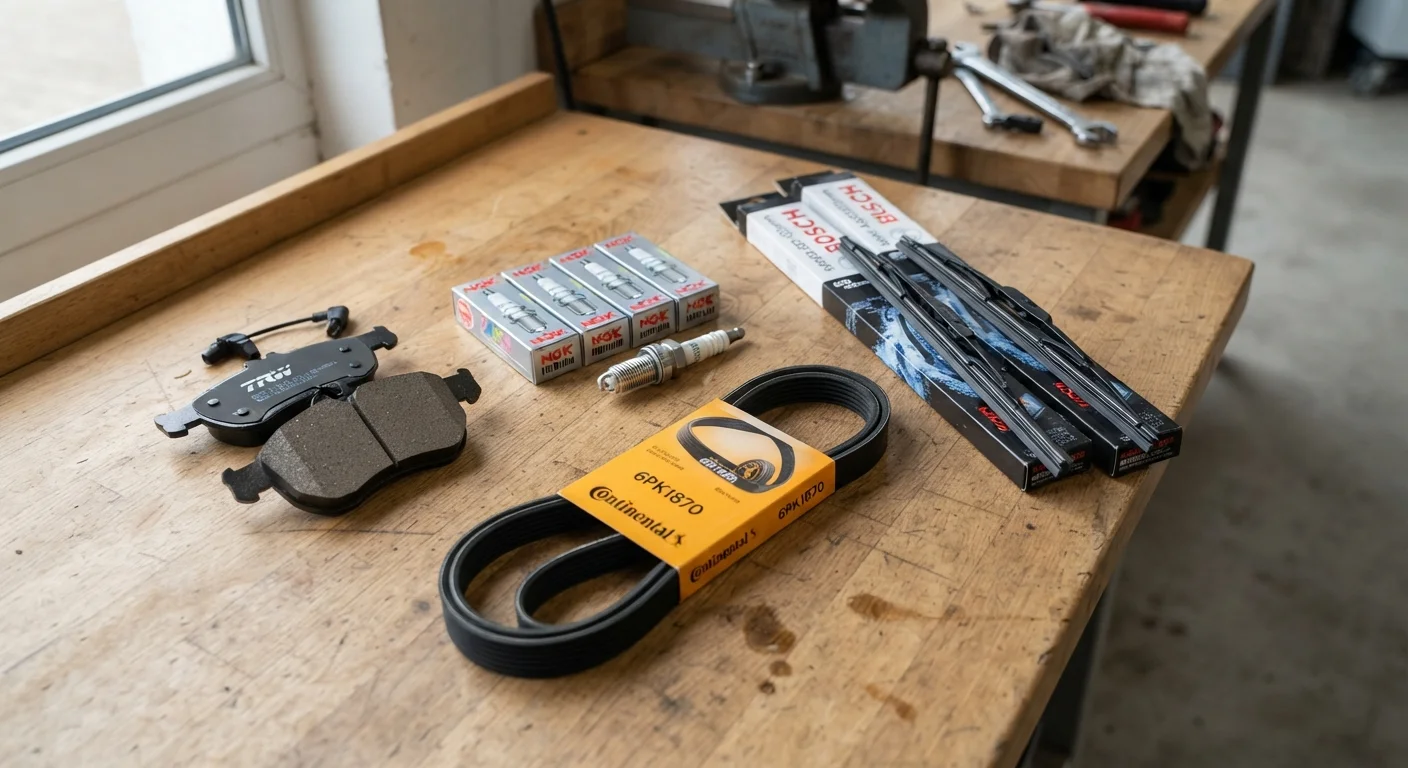
Photo credit: ResultsRover.com | Insights You Can Trust
In this article
Brake pads, serpentine belts, spark plugs, wiper blades — how long each part typically lasts and what shortens or extends those intervals.
Why Wear Part Intervals Matter
Every car contains components designed to wear out and be replaced - that's not a flaw, it's engineering. The problem is that most drivers don't know the expected lifespan of these parts until something fails. Replacing a brake pad proactively costs a fraction of what a rotor replacement runs after the pad wears through. The same logic applies across the board.
The intervals below reflect general industry consensus and manufacturer guidance. Your actual mileage will vary depending on driving style, climate, and vehicle make. Think of these ranges as planning benchmarks, not guarantees. For a broader view of how maintenance costs compound over time, see car ownership costs across every stage of a vehicle's life.
Lifespan of the Most Common Wear Parts
Use this section as a quick reference. If a part is approaching its outer mileage limit, budget for it now rather than waiting for a symptom.
Brake Pads
Typical range: 25,000-70,000 miles. City driving with frequent hard stops chews through pads faster than highway cruising. Most pads include a wear indicator that produces a high-pitched squeal when material is low. Ignoring that sound long enough means metal-on-metal contact, which can score rotors and triple the repair cost.
Serpentine Belt
Typical range: 60,000-100,000 miles. This single belt drives the alternator, power steering pump, air conditioning compressor, and sometimes the water pump. A snapped belt leaves you stranded immediately. Inspect for cracking, fraying, or glazing at every oil change; replace at the manufacturer's stated interval regardless of appearance.
Spark Plugs
Typical range: 30,000-100,000 miles depending on plug type. Copper plugs wear fastest; iridium and platinum plugs can last three times longer. Worn plugs cause misfires, rough idle, and measurable fuel economy losses. Check your owner's manual - the interval is usually explicit.
Wiper Blades
Typical range: 6-12 months. UV exposure and temperature swings degrade rubber faster than actual use. Streaking, skipping, or squeaking are clear replacement signals. Don't wait for a rainstorm to find out they're inadequate.
Air Filter (Engine)
Typical range: 15,000-30,000 miles. A clogged filter restricts airflow to the engine, hurting fuel economy and throttle response. Dusty or rural driving conditions shorten the interval considerably.
Cabin Air Filter
Typical range: 15,000-25,000 miles. This filter protects the HVAC system and interior air quality. Reduced airflow from the vents is often the first sign it's overdue.
For how these replacements fit into a broader service calendar, your car's maintenance schedule explained provides the full picture.
Wear part
A component engineered to degrade with use and be replaced periodically. Examples include brake pads, belts, and filters. These are distinct from structural or lifetime parts.
Serpentine belt
A single continuous belt that drives multiple engine accessories - alternator, power steering, AC compressor, and sometimes the water pump - from one crankshaft pulley.
Wear indicator
A built-in tab on brake pads that contacts the rotor and creates a squealing noise when pad material drops below a safe thickness, signaling replacement is needed.
Service interval
The mileage or time period specified by the manufacturer or industry consensus at which a particular part should be inspected or replaced, regardless of visible symptoms.
What Shortens - or Extends - These Intervals
Mileage is only one variable. Several factors consistently push parts toward the early end of their range:
- Stop-and-go driving: Accelerates brake pad and transmission wear significantly.
- Extreme temperatures: Heat degrades rubber components (belts, hoses, wiper blades) faster; cold causes brittleness.
- Towing and hauling: Adds stress to brakes, transmission, and cooling systems.
- Infrequent oil changes: Dirty oil degrades seals and accelerates engine wear, which creates secondary failures in unrelated systems.
On the other side, gentle highway driving, consistent fluid maintenance, and covered parking can push many parts toward their upper service limits. Drivers keeping older vehicles running should pay particular attention - keeping a high-mileage vehicle on the road covers the priority items for cars past 100,000 miles.
One caution worth emphasizing: skipping a scheduled replacement rarely saves money. Why deferred maintenance costs more than the service itself explains how one missed interval can trigger a cascade of more expensive failures. Similarly, keeping an eye on what's under the hood - including all the fluids under the hood and what each one does - is part of the same discipline.
Up to 3×
Cost difference: rotor replacement vs. pad-only replacement
Allowing brake pads to wear through to metal contact commonly requires rotor resurfacing or replacement, multiplying repair costs.
~7%
Fuel economy loss from worn spark plugs
The U.S. Department of Energy has noted that misfiring spark plugs can reduce fuel efficiency noticeably, though the exact figure varies by vehicle and plug condition.
This article is for general informational purposes only. Always consult your vehicle's owner's manual and a qualified mechanic before making maintenance decisions specific to your car.

Author
Auto Essentials Editorial Team
Auto Essentials Editorial Team is the collective byline for our editorial team and contributor network. Articles published under this byline or an editorial pen name are researched, written, and reviewed according to our editorial standards for clarity, consistency, and independence before publication.
View all articles →