
Warning Lights Most Drivers Ignore Until It's Too Late
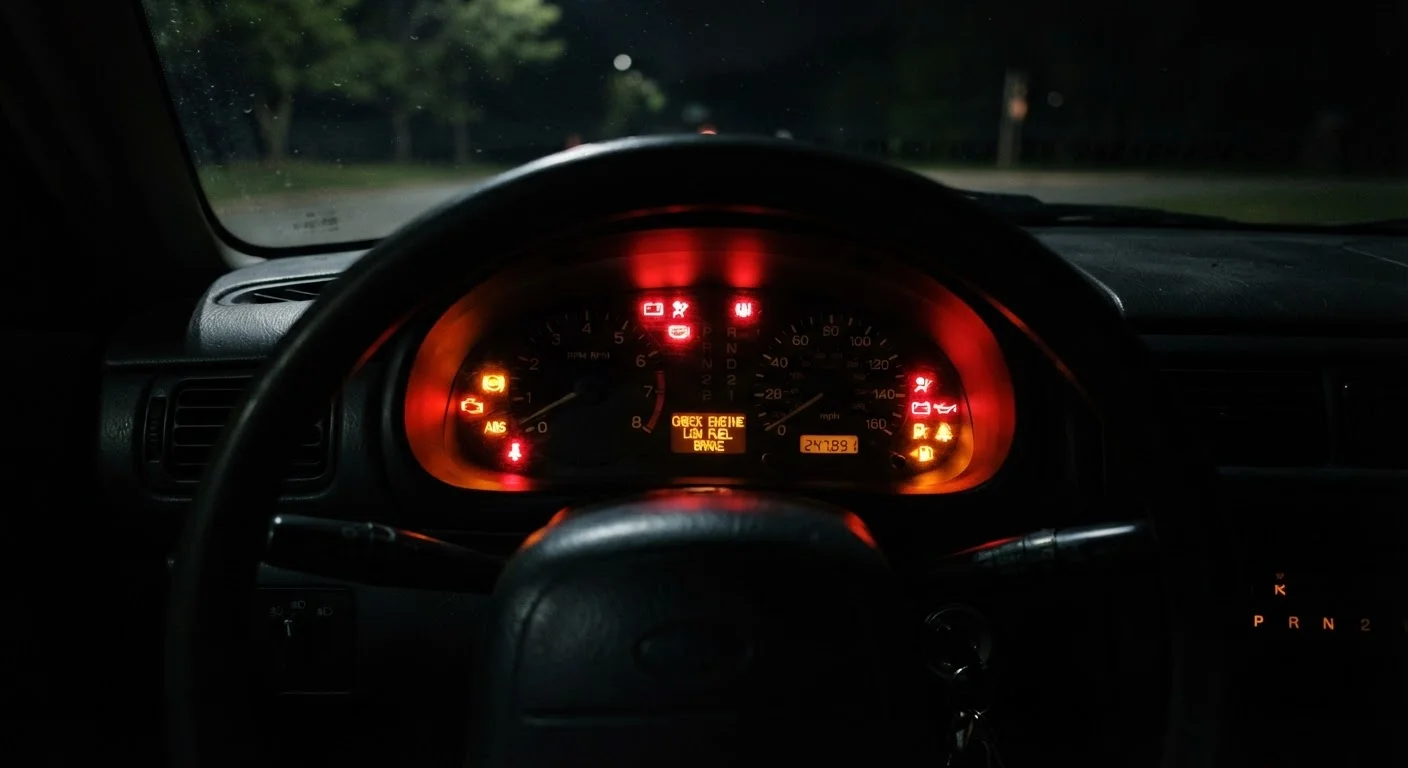
Photo credit: ResultsRover.com | Insights You Can Trust
In this article
That amber glow on your dashboard isn't decoration. Understand what common warning lights signal and when ignoring them becomes expensive.
Key Takeaways
- Most dashboard warning lights signal problems that worsen - and cost more - the longer you wait.
- Some lights, like low oil pressure or engine temperature, demand immediate action to prevent serious damage.
- The check engine light covers a wide range of issues; a diagnostic scan is the only way to know what's wrong.
- Ignoring the TPMS light can reduce fuel economy and increase blowout risk, especially at highway speeds.
- A battery warning light rarely means just the battery - the charging system needs professional evaluation.
Why Dashboard Warnings Get Dismissed
Dashboard warning lights are designed to catch problems early - before they become roadside emergencies or four-figure repair bills. Yet surveys consistently show that a significant share of drivers keep driving after a warning light appears, sometimes for weeks. The reasons are understandable: the car still seems to run fine, there's no obvious symptom, and a shop visit feels inconvenient or expensive.
That logic tends to invert quickly. The systems these lights monitor - engine, transmission, brakes, tires, charging - are interconnected. Stress one long enough and you stress others. What starts as a $80 sensor replacement can become a $1,200 repair if the underlying cause damages surrounding components.
For drivers of older vehicles especially, staying on top of early warnings pays off. Our guide to keeping a high-mileage vehicle on the road outlines the maintenance priorities that matter most once a car passes 100,000 miles.
Red Lights Mean Stop - Amber Means Act Soon
Color coding on warning lights is intentional and consistent across most modern vehicles. Red indicates a condition that may require you to stop driving immediately. Amber or yellow signals an issue that needs attention soon but may not require stopping on the spot. Treating an amber light as a red - or a red as an amber - can be costly in opposite ways: unnecessary panic or dangerous delay.
The Most Commonly Ignored Lights - and What Each Means
Not every warning light carries the same urgency, but dismissing any of them without investigation is a mistake. Here are the lights drivers most frequently overlook, and why that habit is costly.
Ignoring the check engine light because the car seems to run normally.
Why it happens: The check engine light covers hundreds of possible fault codes, many of which don't produce an immediate, noticeable symptom. Drivers assume no symptom means no problem.
Treating the oil pressure warning light as a reminder to top off oil at the next stop.
Why it happens: Drivers confuse the oil pressure warning (a critical alert) with the oil life or oil change reminder light (a scheduled maintenance prompt). They look similar to an untrained eye.
Driving on with the tire pressure monitoring system (TPMS) light on, planning to deal with it later.
Why it happens: The car handles acceptably, so the light feels like a minor nuisance rather than a real hazard. Drivers often mistake it for a sensor glitch, especially in colder weather when pressure naturally drops.
Ignoring the battery or charging system warning light until the car won't start.
Why it happens: If the car started fine this morning, a battery light seems puzzling or premature. Many drivers assume it will self-resolve or clear on the next startup.
Dismissing the temperature warning light as a minor fluctuation.
Why it happens: Engine temperature gauges can fluctuate slightly in traffic, so some drivers interpret even a high-temperature alert as normal variation rather than a sign of overheating.
1 in 3
Drivers ignoring an active warning light
A survey by the RAC Foundation and similar U.S. research suggest roughly one in three drivers continues operating a vehicle with an active dashboard warning light without seeking immediate diagnosis.
Up to 25%
Fuel efficiency loss from underinflated tires
The U.S. Department of Energy estimates that tires underinflated by just 1 PSI per tire can reduce gas mileage by about 0.2%, with significant cumulative impact across all four tires.
A Smarter Approach to Warning Light Response
The single most useful habit you can build is knowing roughly what each symbol on your specific dashboard means before one appears. Your owner's manual categorizes them by severity - red lights are generally stop-now situations, amber lights signal a needed inspection, and blue or green lights are typically informational.
A few practical steps help narrow your response time:
- Keep a basic OBD-II scanner in your glovebox. These plug-in devices read fault codes from the check engine system and cost under $30 at most auto parts retailers. Knowing the code before you call a shop gives you a factual starting point.
- Don't confuse resetting a light with fixing the problem. Clearing a code without addressing the cause means the light comes back - and the damage continues.
- Check fluid levels and tire pressure yourself first. Many amber lights respond to simple, free corrections. Our tire care guide explains how to read and adjust tire pressure accurately.
Understanding your vehicle's warning system is part of being a fully informed owner - just as understanding your insurance coverage protects you financially. If you haven't reviewed your policy assumptions lately, common insurance myths that cost drivers real money is worth a look.
Never Drive on a Lit Oil Pressure or Temperature Warning
These two lights represent the highest-risk scenarios on a standard dashboard. Engine seizure from oil starvation or warped heads from overheating can result in repair costs that exceed the vehicle's value. If either light activates while driving, pull over as soon as it is safe, shut off the engine, and call for assistance rather than attempting to reach your destination.

Author
Auto Essentials Editorial Team
Auto Essentials Editorial Team is the collective byline for our editorial team and contributor network. Articles published under this byline or an editorial pen name are researched, written, and reviewed according to our editorial standards for clarity, consistency, and independence before publication.
View all articles →