
Why Skipping Routine Maintenance Costs More Than the Service Itself
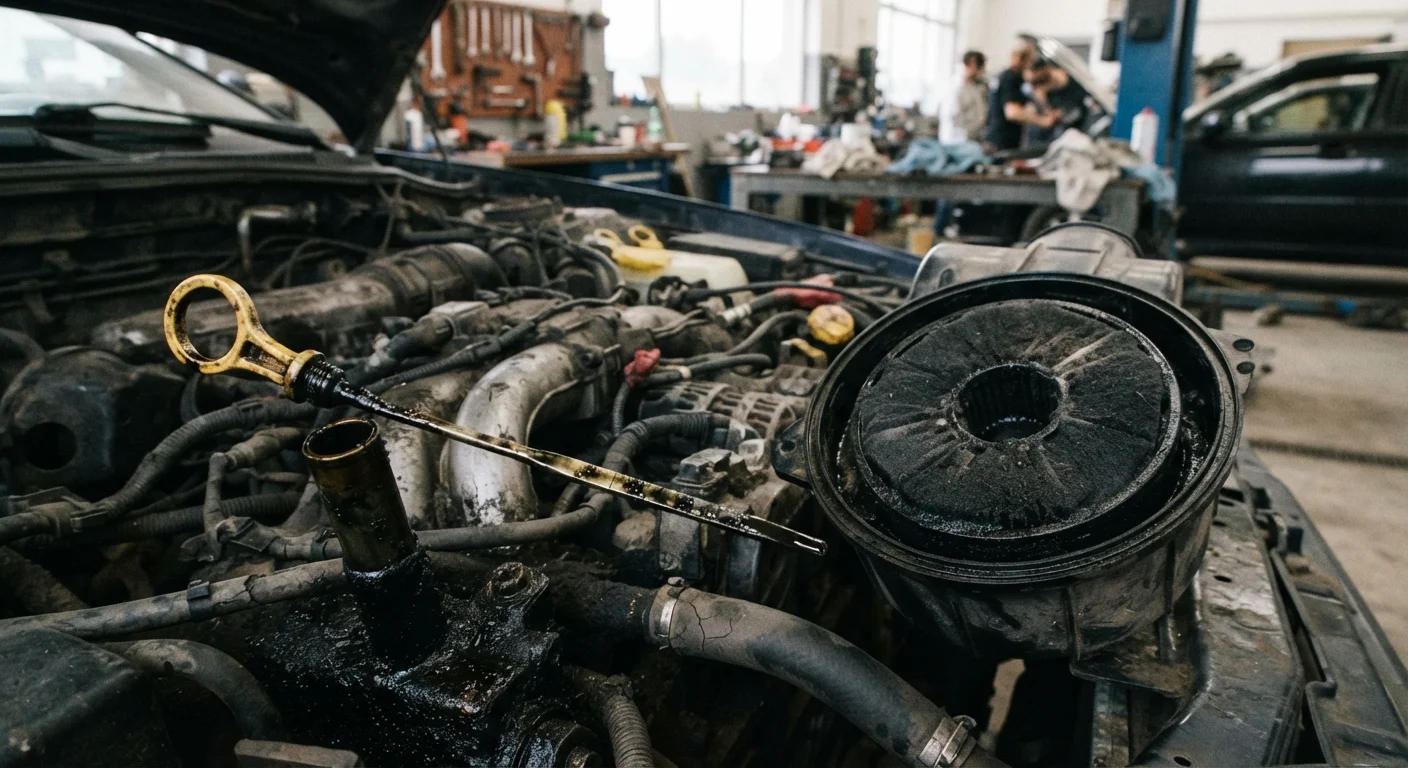
Photo credit: ResultsRover.com | Insights You Can Trust
In this article
Deferred maintenance compounds quietly. Understand the chain of failures that begins with one missed oil change, coolant flush, or filter replacement.
Key Takeaways
- A single skipped oil change can accelerate engine wear and eventually cause thousands in repair costs.
- Maintenance tasks are interdependent - neglecting one often damages adjacent systems.
- Most catastrophic engine and cooling system failures are traceable to deferred routine service.
- Keeping service records protects resale value and can support warranty claims.
- Proactive maintenance almost always costs less than reactive repair over a vehicle's lifetime.
The Chain Reaction That Starts With One Skipped Service
Vehicle systems don't fail in isolation. They're interconnected, and when one component is allowed to degrade beyond its service limit, it places additional stress on the parts around it. A missed oil change is the clearest illustration of this principle.
Engine oil has two jobs: lubricate moving parts and carry heat and contaminants away from critical surfaces. As miles accumulate, oil breaks down thermally and fills with metal particles, combustion byproducts, and moisture. Once it degrades past its effective range, the protective oil film thins - and metal begins contacting metal. Bearings, cam lobes, and cylinder walls all wear faster. That wear produces more debris, which circulates through the engine and compounds the damage further.
Left long enough, degraded oil turns to sludge, blocking oil passages and starving components of lubrication entirely. At that stage, the conversation shifts from an oil change to an engine rebuild or replacement. The original service cost a fraction of a percent of that outcome.
Follow Your Owner's Manual, Not Rules of Thumb
Generic advice like 'change your oil every 3,000 miles' may not apply to your vehicle. Modern synthetic oils and engine designs often allow intervals of 5,000-10,000 miles or more. Your owner's manual lists the manufacturer's actual recommendations for your specific engine and driving conditions - it's the most reliable reference you have.
This same compounding logic applies across the vehicle. For a broader look at how deferred upkeep escalates costs in other areas of ownership, see our explainer on deferred home repairs.
Cooling System Neglect: A Quiet Path to Engine Damage
Coolant is another area where deferred service carries outsized consequences. Most manufacturers recommend flushing coolant every 30,000 to 50,000 miles, but many drivers skip it until a symptom appears - by which time damage is often already done.
As coolant ages, its corrosion inhibitors deplete and the fluid becomes acidic. That acidity attacks aluminum components, rubber seals, and the solder joints inside a radiator. Water pumps fail prematurely. Heater cores develop pinhole leaks. Thermostats stick. Each of those failures can cause the engine to overheat, and overheating is one of the leading contributors to warped cylinder heads and blown head gaskets - repairs that commonly run $1,500 to $3,000 or more.
$3,000-$10,000+
Typical engine repair or replacement cost
Industry repair data suggests major engine failures - often linked to oil neglect - regularly reach this range, versus $50-$100 for a routine oil change.
$1,500-$3,500
Average head gasket repair cost
Head gasket failures are frequently caused by overheating events tied to cooling system neglect, according to automotive repair industry estimates.
$2,000-$5,000
Automatic transmission replacement range
Transmission failures are among the most expensive common repairs; many are preventable with regular fluid changes costing $80-$200.
The irony is that a coolant flush is a low-cost, low-complexity service. Waiting until a component fails first multiplies the cost by an order of magnitude.
Filters, Fluids, and the Cost of Cumulative Neglect
Air filters, cabin filters, transmission fluid, and brake fluid all follow the same pattern: cheap to service on schedule, expensive to ignore.
A clogged air filter restricts airflow to the engine, causing the fuel management system to compensate - reducing efficiency and, in sustained cases, contributing to fouled spark plugs and rough running. Transmission fluid breaks down and loses its ability to protect clutch packs and valve bodies; many automatic transmission failures are directly linked to fluid that was never changed. Brake fluid absorbs moisture over time, lowering its boiling point and introducing the possibility of brake fade under heavy use.
None of these services are glamorous, and none of them feel urgent until something fails. That's precisely what makes deferred maintenance so costly: the consequences are invisible right up until they aren't.
For drivers just establishing a maintenance routine, the maintenance fundamentals guide for first-time owners covers the core tasks and intervals in plain terms. It's also worth checking your assumptions against common service myths - the car maintenance myths article addresses several that lead drivers to over- or under-service their vehicles.
What Proactive Maintenance Actually Costs - and What It Prevents
Routine maintenance across a typical vehicle's service life - oil changes, filters, coolant, transmission fluid, spark plugs - adds up to real money. But that figure is consistently lower than the cost of a single major failure it prevents.
Consider: an annual coolant flush might cost $80-$150. A head gasket repair on the same engine, caused in part by cooling system neglect, can run $1,500-$3,500. Transmission fluid changes cost $80-$200 depending on the vehicle. A failed automatic transmission costs $2,000-$5,000 to replace. The math is straightforward - and it doesn't account for the secondary costs of being without a vehicle during a lengthy repair.
Staying current on maintenance also protects resale value. Buyers and dealers will ask for service records, and a documented history of consistent upkeep commands a measurably higher price at trade-in or private sale. Skipping services doesn't just cost more in repairs - it costs at the point of sale too.
For a broader view of how vehicle ownership costs add up, the Auto Costs & Insurance hub covers the full picture, from depreciation to coverage decisions.
“Maintenance is almost always cheaper than repair. The engine doesn't care about your budget - it only responds to whether it's been properly serviced.”
— ASE-Certified Master Technician, Automotive Service Excellence credential holder, independent repair industry
This article provides general vehicle maintenance information for educational purposes. For guidance specific to your vehicle, consult your owner's manual and a qualified mechanic.
Frequently Asked Questions

Author
Auto Essentials Editorial Team
Auto Essentials Editorial Team is the collective byline for our editorial team and contributor network. Articles published under this byline or an editorial pen name are researched, written, and reviewed according to our editorial standards for clarity, consistency, and independence before publication.
View all articles →