
Synthetic vs. Conventional Motor Oil: What Actually Differs
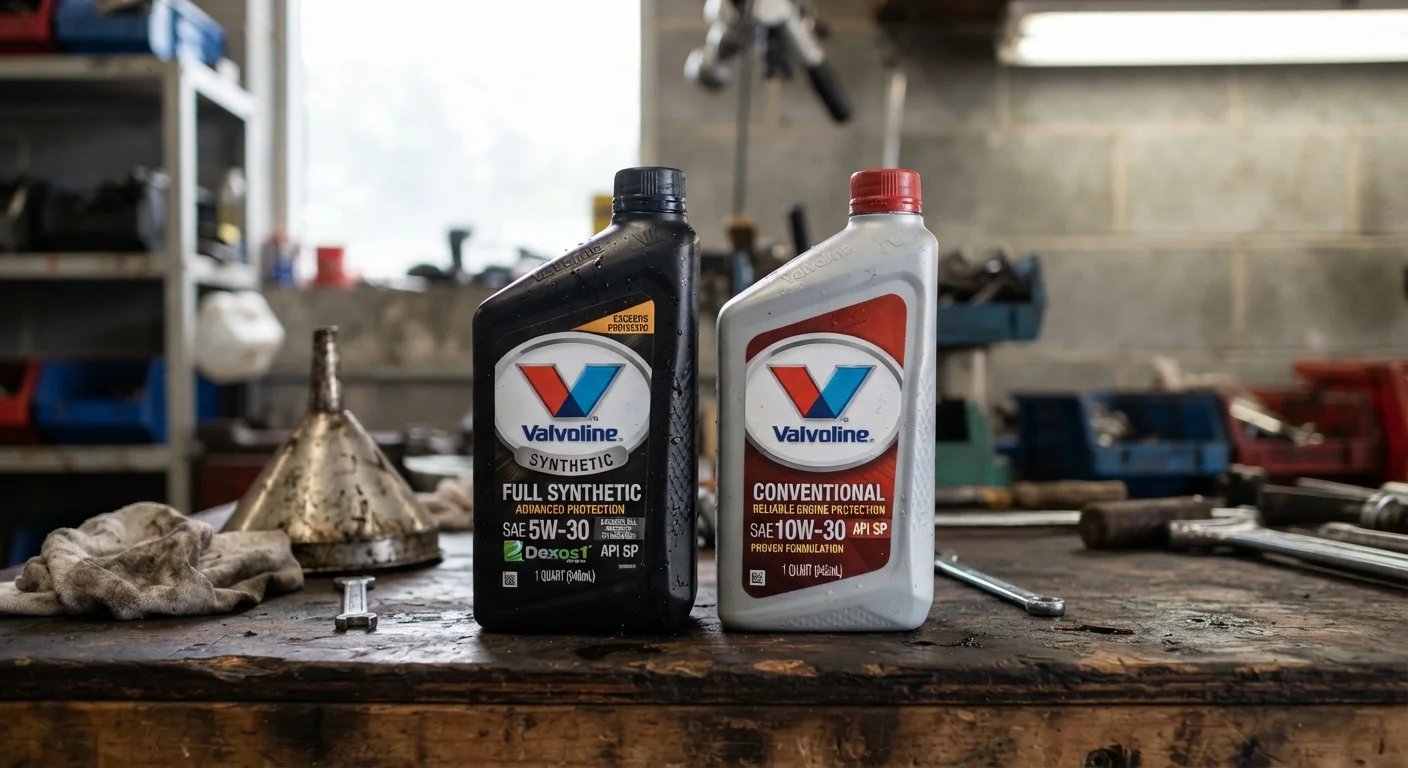
Photo credit: ResultsRover.com | Insights You Can Trust
In this article
Synthetic and conventional oil aren't interchangeable for every engine. Here's what sets them apart and how to read your owner's manual correctly.
Key Takeaways
- Synthetic oil is chemically engineered for uniform molecules; conventional oil is refined directly from crude petroleum.
- Synthetics typically last 7,500-15,000 miles per change; conventional oil generally needs changing every 3,000-7,500 miles.
- Your owner's manual - not the quick-lube shop - is the authoritative source for which oil type your engine requires.
- Switching from conventional to synthetic in a high-mileage engine carries some risk; consult a mechanic first.
- Viscosity grade (e.g., 5W-30) matters as much as oil type - always use the grade your manufacturer specifies.
How Each Oil Is Made
The core difference between synthetic and conventional motor oil is origin and structure. Conventional oil is extracted from crude petroleum and refined to remove impurities, but the resulting molecules vary in size and shape. That inconsistency affects how the oil performs under stress.
Synthetic oil starts from a base stock - often chemically synthesized compounds such as polyalphaolefins (PAOs) - and is engineered at the molecular level for uniformity. Some synthetics are also made by further processing conventional base oils to a higher purity standard; these are called synthetic blends or full synthetics depending on the process. The uniform molecular structure is what gives synthetics their performance advantages in temperature extremes and under heavy loads.
For a broader look at every fluid in your engine bay and what each one does, see Fluids Under the Hood and What Each One Does.
| Criterion | Synthetic Motor Oil | Conventional Motor Oil |
|---|---|---|
| Base material | Chemically engineered compounds | Refined crude petroleum |
| Molecule consistency | Uniform - by design | Variable sizes and shapes |
| Typical change interval | 7,500-15,000 miles | 3,000-7,500 miles |
| Cold-weather flow | Faster at low temperatures | Slower; thickens more in cold |
| Heat resistance | Higher thermal stability | More prone to breakdown under heat |
| Cost per quart | Higher (approx. 2-4× conventional) | Lower upfront cost |
| Suitability for turbocharged engines | Recommended or required | Generally not sufficient |
Performance, Longevity, and Cost Tradeoffs
Synthetic oil generally outperforms conventional oil in three measurable ways: cold-start flow, heat resistance, and oxidation stability. At sub-freezing temperatures, synthetic flows to engine components faster, reducing the metal-on-metal wear that occurs in the first seconds after ignition. At high temperatures, it resists breaking down into sludge more effectively.
Those properties translate into longer drain intervals. Many manufacturers specify 7,500 to 15,000 miles for full synthetic, compared to 3,000 to 7,500 miles for conventional - though actual intervals depend entirely on your specific vehicle and driving conditions. The persistent 3,000-mile rule is largely outdated for modern engines; see Car Maintenance Myths That Keep Costing Drivers Money for more on why.
The tradeoff is cost per quart. Synthetic typically runs two to four times the price of conventional. However, when you account for fewer changes per year, the total annual cost difference often narrows significantly - and in many cases the per-mile cost is comparable.
7,500-15,000 mi
Typical synthetic oil change interval
Most major automakers publishing synthetic-specific maintenance schedules cite intervals in this range, though conditions vary by vehicle and use.
2-4×
Cost premium of synthetic per quart
Retail pricing across common oil grades consistently shows synthetic costs roughly two to four times more per quart than conventional equivalents.
~30%
U.S. new vehicles requiring full synthetic
Industry analysts estimate a substantial and growing share of new passenger vehicles specify full synthetic oil, driven by turbocharged engines and tighter tolerances.
Reading Your Owner's Manual Correctly
The single most reliable guide to which oil your engine needs is the owner's manual - not the recommendation sticker on your windshield, not the default suggestion at an oil change shop. Look for two things: the oil type (conventional, synthetic blend, or full synthetic) and the viscosity grade, such as 5W-30 or 0W-20.
If your manual requires full synthetic, using conventional is not an acceptable substitute - it won't meet the lubrication demands the engine was designed around. The reverse is generally safe: synthetic can be used where conventional is specified, though it provides no engineering benefit and costs more.
Viscosity Grade Is Non-Negotiable
Regardless of whether you choose synthetic or conventional, always use the viscosity grade printed in your owner's manual. Running the wrong viscosity - even a premium synthetic - can reduce fuel economy, increase engine wear, and in some cases void warranty coverage. The grade printed on the cap (e.g., 5W-30) is not a suggestion; it reflects the clearances your engine was machined to.
High-mileage vehicles (typically over 75,000 miles) warrant extra care when switching oil types. Older seals may have adapted to conventional oil's properties, and switching to full synthetic can sometimes cause minor leaks. If your high-mileage vehicle has been running conventional oil without issues, consult a qualified mechanic before changing oil type.
For a full breakdown of when each fluid service is due, Your Car's Maintenance Schedule, Explained walks through every interval. And if you're deciding whether to handle changes yourself, DIY Oil Change vs. Shop Service covers what each approach actually involves.

Author
Auto Essentials Editorial Team
Auto Essentials Editorial Team is the collective byline for our editorial team and contributor network. Articles published under this byline or an editorial pen name are researched, written, and reviewed according to our editorial standards for clarity, consistency, and independence before publication.
View all articles →