
What a Vehicle History Report Actually Tells You - and What It Misses
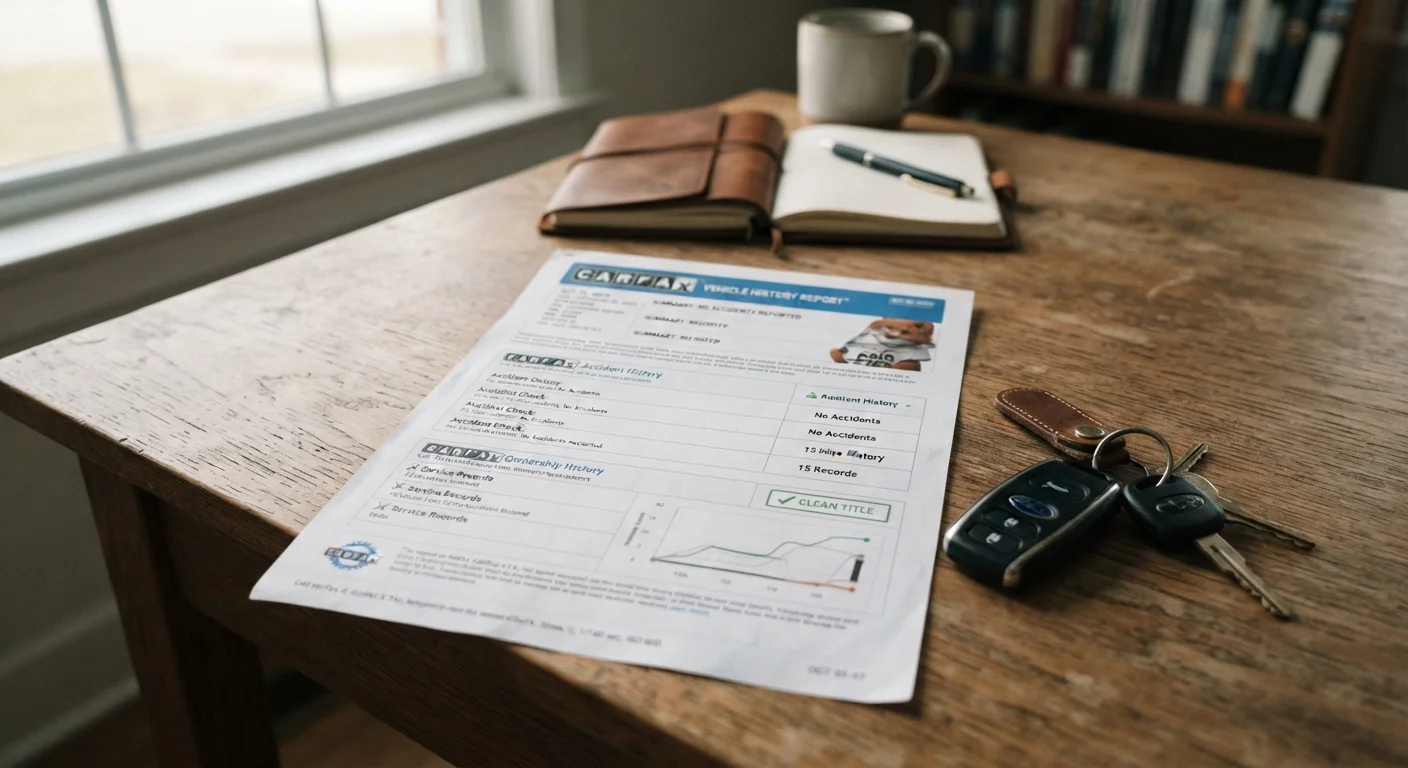
Photo credit: ResultsRover.com | Insights You Can Trust
In this article
Vehicle history reports are useful tools, but they have real blind spots. Understand what data sources they draw from and where gaps commonly appear.
Key Takeaways
- Vehicle history reports pull from multiple data sources, including DMV records, insurance claims, and auction logs.
- Title brands such as salvage, rebuilt, or flood are among the most important flags a report can surface.
- Unreported accidents, private-party repairs, and informal maintenance never appear in any report.
- A clean history report does not guarantee a mechanically sound vehicle.
- Reports work best when paired with a pre-purchase inspection by a qualified mechanic.
Where the Data Comes From
Vehicle history reports aggregate records from a wide range of sources, stitched together by the car's VIN. The primary contributors include state DMV and title databases, the National Motor Vehicle Title Information System (NMVTIS), insurance company total-loss and claim filings, auto auction records, and - where shops participate - service and repair logs.
Each data source covers different events. DMV records capture title transfers, registration history, and title brands (salvage, rebuilt, flood, lemon buyback). Insurance filings add accident and total-loss data. Auction logs reflect condition reports when a vehicle passes through a wholesale or fleet sale. Service records, if contributed, show maintenance events and mileage snapshots over time.
Because these sources are independent, the same event can appear through multiple channels - or none at all, if it was never officially reported to any participating database.
1 in 4
Used vehicles with undisclosed damage history
Analysis of NMVTIS and auction data by vehicle data aggregators has suggested roughly one in four used vehicles has damage history not fully disclosed by sellers.
27+
States contributing to NMVTIS title database
NMVTIS participation has expanded substantially, though coverage and update frequency still vary by state as of the program's most recent publicly reported figures.
~$25-$40
Typical cost of a single vehicle history report
Retail pricing for single reports varies by provider and subscription tier; multi-report packages are often available for buyers evaluating several vehicles.
What a Report Reliably Surfaces
When a vehicle history report is at its most useful, it flags events that carry significant financial or safety implications. The most reliable disclosures include:
- Title brands: Salvage, rebuilt, flood, junk, and lemon buyback designations are federally and state-reported, making them among the most consistent data points in any report.
- Odometer discrepancies: Readings logged at inspections, auctions, or title transfers are compared across time. Inconsistencies - mileage that drops or stalls - are flagged automatically.
- Number of owners and states registered: Frequent ownership changes or registration in multiple states can hint at problems, though context matters.
- Major accident claims: Insurer-reported collisions show up, including estimated damage severity when filed.
- Theft and recovery records: NMVTIS-linked databases capture vehicles reported stolen and subsequently recovered.
For a buyer working through the used-car buying process, these data points are genuinely valuable screening tools - especially title brands, which are difficult to uncover any other way.
The Gaps You Need to Know About
The most important thing to understand about vehicle history reports is what they structurally cannot capture. Any event that was never reported to a participating database is invisible - and that covers a significant portion of real-world vehicle history.
Common blind spots include:
- Cash-paid collision repairs: If a driver hits a pole, pays out of pocket, and uses a non-reporting body shop, no record exists anywhere.
- Private-party maintenance: Oil changes, brake jobs, and timing belt replacements done at home or at a shop that doesn't share data won't appear.
- Flood or hail damage without an insurance claim: Damage that was repaired without involving an insurer generates no title brand and no claim record.
- Pre-database history: Older vehicles may have years of ownership before electronic records were consistently maintained.
This is why a history report should never be the final word. Pair it with a pre-purchase mechanical inspection by a qualified, independent mechanic. A mechanic can spot signs of prior structural repair, mismatched paint, or flood damage that no database will flag.
Always Get an Independent Inspection
Even with a clean history report in hand, budget for a pre-purchase inspection at an independent mechanic - not one recommended by the seller. A qualified mechanic can identify signs of prior structural repair, inconsistent panel gaps, mismatched paint, and other physical evidence of damage that databases will never capture. This step typically costs less than $150 and can prevent a costly mistake.
How to Use a Report Effectively
Think of a vehicle history report as a filter, not a verdict. Use it early in the process - before you invest time in an in-person visit - to screen out vehicles with title brands, odometer anomalies, or repeated major accident claims. Reading the listing carefully before you even pull a report can save you from running one on a vehicle that's already showing warning signs.
If the report comes back clean, treat that as permission to look deeper, not as a green light to skip other steps. Bring the report to your mechanic appointment so they can cross-reference any noted incidents with the physical condition of the car.
For sellers, being proactive about your vehicle's documented history builds buyer confidence. As noted in our overview of common first-time seller mistakes, surprises that surface during a buyer's due diligence - even minor ones - can derail a deal that was otherwise moving smoothly.
Finally, factor in that any significant undisclosed issue discovered post-purchase contributes to the hidden costs of car ownership that catch buyers off-guard. A few dollars spent on a report and a mechanic's inspection is cheap insurance against that outcome.
Report Coverage Varies by Provider
Not all vehicle history report services query the same databases. Some providers have broader access to auction records or service data than others. No single report covers every possible data source. If a vehicle's history is a major concern, consulting multiple sources or working with a trusted mechanic remains the most thorough approach.
Frequently Asked Questions

Author
Auto Essentials Editorial Team
Auto Essentials Editorial Team is the collective byline for our editorial team and contributor network. Articles published under this byline or an editorial pen name are researched, written, and reviewed according to our editorial standards for clarity, consistency, and independence before publication.
View all articles →