
When Buying More Upfront Actually Costs Less — and When It Doesn't
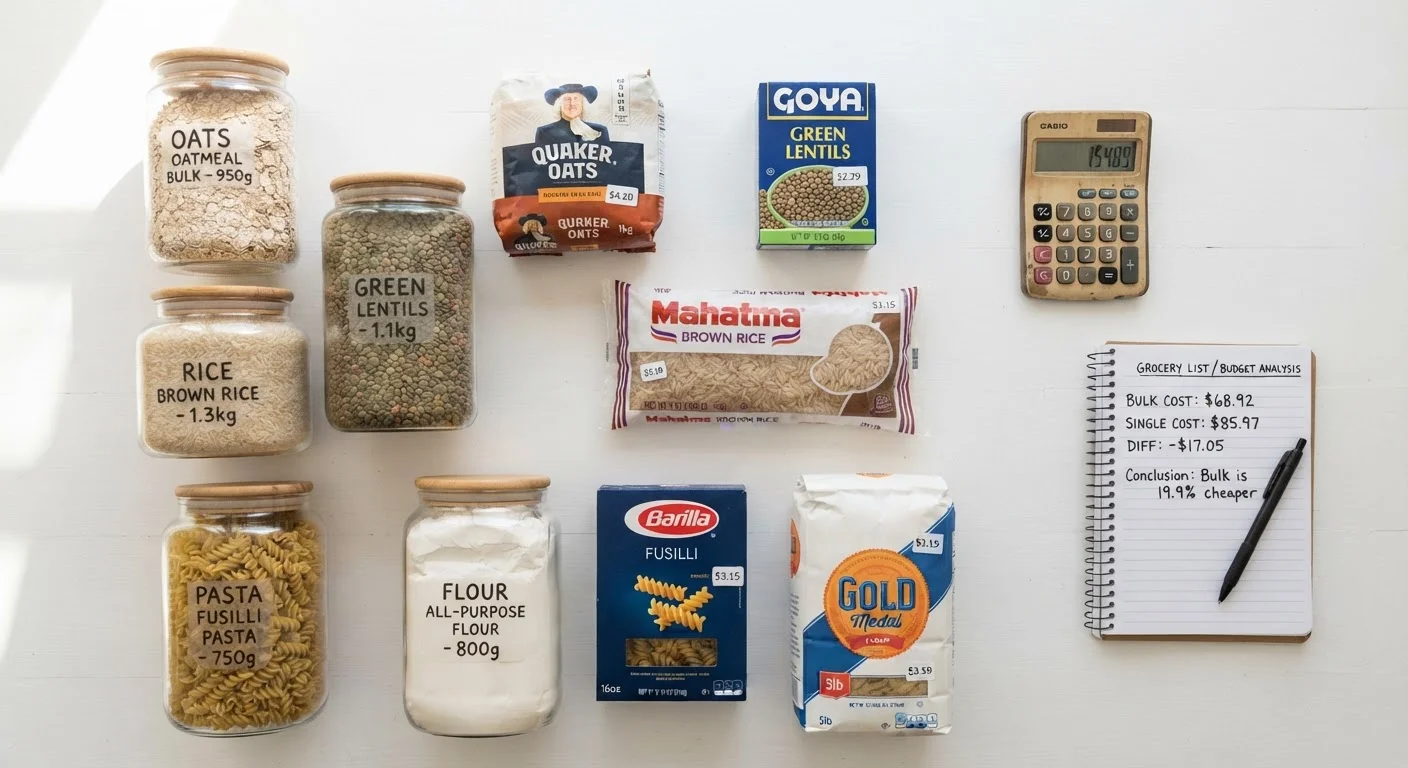
Photo credit: ResultsRover.com | Insights You Can Trust
In this article
Bulk buying and premium tiers aren't always smarter spending. Here's a clear framework for deciding when quantity or quality upgrades pay off.
Key Takeaways
- Buying in bulk saves money only when you consistently use the product before it expires or degrades.
- Premium tiers deliver value when the upgrade directly affects the outcome you care about most.
- Unit price is the correct comparison metric — not package price or percentage discount.
- Storage costs, spoilage risk, and capital tied up in inventory are real costs that bulk pricing ignores.
- Emotional reasoning — 'it feels like a deal' — is the most common driver of wasteful upfront spending.
The Core Question: Does More Spending Now Reduce Total Spending?
The appeal of buying more upfront — whether that's a warehouse-club pallet of paper towels or the premium subscription tier — rests on a straightforward promise: pay more now, spend less overall. That promise is sometimes true and frequently isn't. The difference comes down to a handful of conditions that most shoppers don't systematically check before committing.
Understanding the real difference between price and value is the starting point. A lower unit cost only translates to savings if you actually consume the units — waste eliminates any discount advantage. Similarly, a premium product only justifies its price if the improvement it offers maps directly to something you need.
This article gives you a concrete framework for both scenarios: bulk quantity and premium upgrades. The goal isn't to tell you bulk buying is bad or that the mid-tier is always sufficient. It's to replace gut feel with a repeatable check.
Use Unit Price, Not Discount Percentage
Retailers often express bulk savings as a percentage off, which can obscure whether the deal is actually competitive. Always calculate the per-unit or per-ounce price yourself and compare it to the standard-size option at your regular store. A 20% bulk discount on an inflated base price can still leave you spending more per unit than the smaller package on a routine sale.
When Bulk Buying Pays Off — and When It Doesn't
Bulk buying has a genuine economic basis. Manufacturers and retailers pass on packaging and logistics savings through lower per-unit prices, and those savings are real. The problem is that the saving only materialises if four conditions are all true simultaneously:
- Consistent demand: You use this product regularly and predictably. Buying 200 trash bags when you reliably go through 10 a month makes sense. Buying 200 when you're unsure whether you'll switch brands, move, or reduce usage doesn't.
- Adequate shelf life: Non-perishables (cleaning supplies, canned goods, batteries) tolerate bulk buying well. Fresh produce, many supplements, and opened liquids often don't survive long enough to be used.
- Storage capacity: Bulk goods require space. Storing a year's supply of paper towels in a small apartment has a real cost — inconvenience at minimum, and a displaced-use cost if you're foregoing storage for something else.
- Verified lower unit price: Divide total price by total units and compare to your normal purchase option. Warehouse clubs and bulk sections don't always win on unit price, particularly on branded goods or items that go on sale frequently in standard sizes.
When any of these conditions fails, bulk buying shifts from a savings strategy to a spending trap. Spoilage, product changes (you stop liking it, a better version launches), and capital locked into inventory are costs that never appear on the shelf label. See how small purchase habits accumulate into large annual costs for a related perspective on how routine spending decisions compound over time.
| Bulk Buying | Standard Quantity | Premium Tier | |
|---|---|---|---|
| Unit cost | Usually lower | Baseline | Higher per unit |
| Upfront cash required | High | Low to moderate | Moderate to high |
| Spoilage / waste risk | High for perishables | Low | Low |
| Storage demand | Significant | Minimal | Minimal |
| Best suited for | Non-perishables, high usage | Trial use, irregular need | High-use, functional upgrade |
| Savings realised when | All units consumed | Always (no waste risk) | Upgrade replaces other costs |
| Common failure mode | Spoilage or preference change | Paying more per unit long-term | Paying for unused features |
When Premium Tiers Actually Deliver
Premium versions of a product follow similar logic, but the evaluation criterion shifts from quantity math to functional benefit. The key question: does the upgrade directly improve the outcome I'm paying this product to achieve?
A durable work boot with reinforced construction makes sense for someone on a job site daily — the functional improvement is direct, measurable, and reduces replacement frequency. The same boot on someone who wears it twice a year to a pumpkin patch is expensive overengineering. As explored in when paying more is genuinely worth it, premium pricing is only rational when the benefit you're paying for is one you'll actually use.
Premium upgrades often don't pay off when:
- The improvement is cosmetic, brand-signaling, or marginal in function
- You're in a trial phase and don't yet know your actual usage pattern
- The category changes fast enough that today's premium becomes tomorrow's standard (consumer electronics, software)
- The cost difference isn't recovered through extended lifespan or reduced secondary costs
Why cheap flooring installations often cost more in the long run is a concrete example where the opposite is true — underspending on materials and labor creates downstream costs that dwarf the initial savings.
A Decision Framework You Can Apply Before Any Purchase
Before committing to bulk volume or a premium tier, run through these four checks:
- 1. Calculate unit cost, not package cost.
- Divide total price by total units. Compare to your realistic alternative. Don't compare to the most expensive alternative — compare to what you'd actually buy otherwise.
- 2. Estimate realistic consumption rate.
- How long will this supply actually last? If the answer is more than 12 months for a perishable or 24 months for any consumable, proceed with caution.
- 3. Name the specific functional benefit of the upgrade.
- For premium tiers, write down in one sentence what you're paying extra for and whether it applies to your actual use case. Vague reasons ('it's higher quality') don't count.
- 4. Account for secondary costs.
- Storage, spoilage risk, opportunity cost of capital, and the likelihood of behavior change all affect the real return on upfront spending.
The pre-purchase checklist for major spending decisions expands this logic across a broader range of purchase types and is worth bookmarking for recurring use. For purchases involving financing rather than outright payment, understanding the cash vs. financing trade-off adds another layer to the analysis.
This article is for general informational purposes only and does not constitute financial advice. Consult a qualified financial professional for guidance specific to your situation.

Author
Smart Shopping Editorial Team
Smart Shopping Editorial Team is the collective byline for our editorial team and contributor network. Articles published under this byline or an editorial pen name are researched, written, and reviewed according to our editorial standards for clarity, consistency, and independence before publication.
View all articles →