Paying Cash vs. Financing a Purchase: Understanding the Real Trade-Off
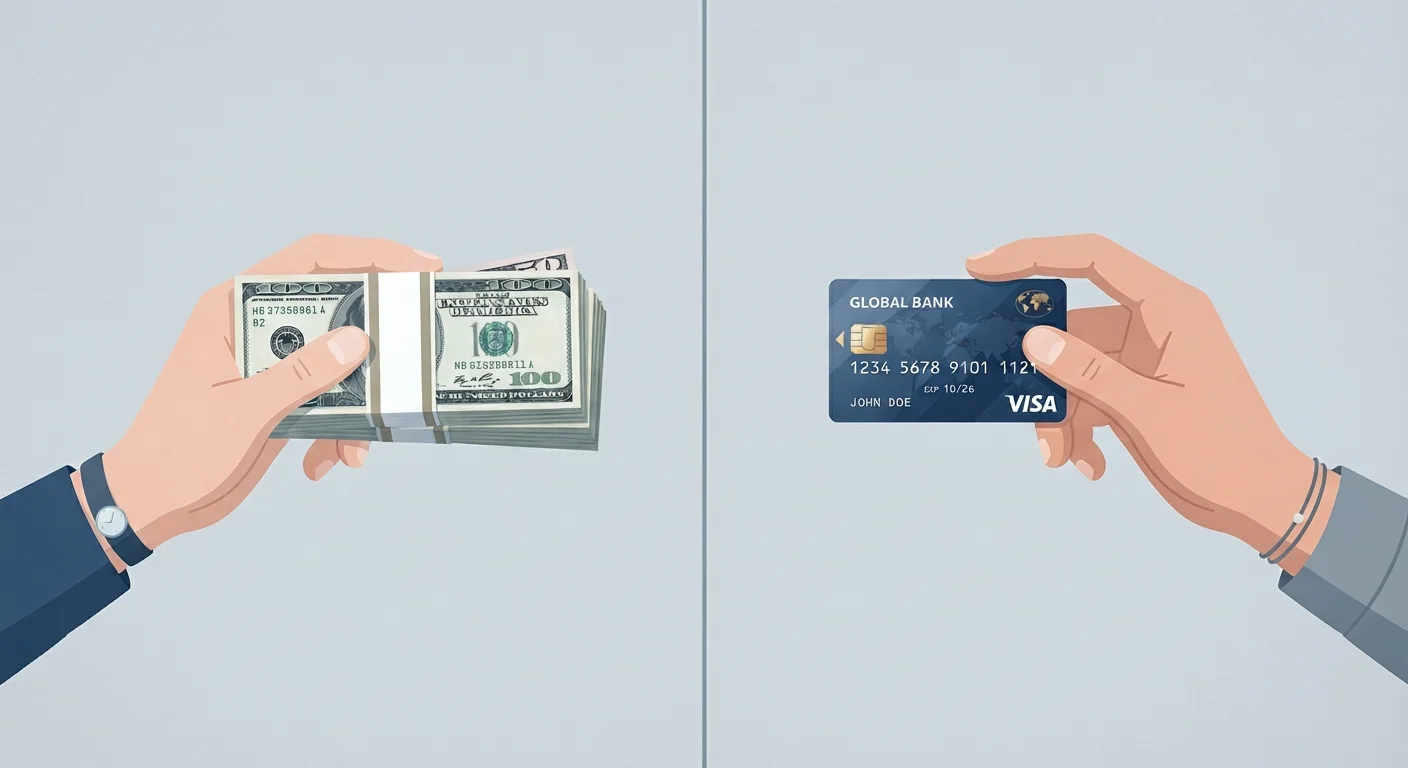
Photo credit: ResultsRover.com | Insights You Can Trust
In this article
Financing isn't always the worse option — and paying cash isn't always the smartest move. A balanced look at both approaches.
Key Takeaways
- Paying cash eliminates interest costs but can deplete emergency savings and reduce financial flexibility.
- Financing makes sense when the interest rate is low and your cash could earn more elsewhere.
- High-interest financing — especially above 10% APR — almost always costs more than it saves in convenience.
- Credit mix and on-time payment history can improve your credit score when financing is managed responsibly.
- The right choice depends on your interest rate, liquidity needs, and what the cash would otherwise do for you.
Why This Decision Is Rarely Obvious
Most people default to a gut feeling: paying cash feels responsible; financing feels risky. Neither instinct is wrong, but neither is complete. The actual question is whether the cost of borrowing money exceeds the benefit of keeping cash on hand — and that math changes with every purchase and every interest rate.
This isn't about discipline or values. It's about understanding when paying more upfront makes financial sense versus when spreading the cost out genuinely works in your favor. Both paths have real trade-offs. Here's how to evaluate them clearly.
| Paying Cash | Financing | |
|---|---|---|
| Total cost | Purchase price only | Purchase price plus interest |
| Impact on liquidity | Reduces cash on hand | Preserves cash reserves |
| Credit score effect | None | Positive if managed responsibly |
| Risk of overspending | Limited to available cash | Monthly payments can mask true cost |
| Best rate environment | High interest rates available | Low-rate or 0% APR offers |
| Ideal emergency fund status | Fully funded before purchase | Preserved by financing the purchase |
The Hidden Cost of Paying Cash
Handing over cash feels final and clean — no monthly bills, no interest. But it carries its own risks that are easy to overlook.
- Liquidity drain: Spending a large cash reserve on a car or appliance can leave you exposed. If an unexpected expense hits a month later, you may be forced to borrow at a much worse rate than what you avoided.
- Opportunity cost: If the cash was sitting in a high-yield savings account earning 4–5% annually, using it to avoid a 3% auto loan means you may have come out behind. Building your savings while carrying low-rate debt can sometimes be the smarter play.
- No credit benefit: Cash purchases don't show up on your credit report. If your credit history is thin, financing responsibly builds the track record lenders look at.
Check Your Net Rate Before Deciding
Before paying cash, compare the financing rate to what your savings is currently earning. If a savings account or money market yields more than the loan APR, financing may cost you less in real terms. Always factor in whether the interest is simple or compounding, and read any promotional offer's fine print carefully.
A useful rule of thumb: if paying cash would drop your liquid savings below three months of expenses, the liquidity risk may outweigh the interest savings.
The Hidden Cost of Financing
Financing has a straightforward downside: interest. On a $10,000 purchase at 18% APR over three years, you'll pay roughly $2,900 in interest alone — nearly 30% more than the sticker price. But the risks go beyond the rate.
Deferred Interest Is Not 0% APR
Retail store financing promotions that advertise 'no interest if paid in full' are often deferred-interest plans, not true 0% APR loans. If you carry any balance past the promotional deadline, the retailer charges all the interest that accumulated from day one. Confirm the exact terms in writing before using this type of financing.
- Promotional traps: Deferred-interest promotions — common with retail store cards — charge all accrued interest retroactively if the balance isn't paid in full by the deadline. These aren't the same as 0% APR offers.
- Payment creep: Monthly payments make expensive purchases feel affordable, which can lead to overextending across multiple obligations. See our budgeting basics guide for tracking total payment load against income.
- Dealer financing nuances: Not all financing is equal. Dealer financing and outside financing carry different structures — comparing both before signing protects you from a marked-up rate.
When the Numbers Actually Favor Financing
There are clear scenarios where financing costs less in practical terms than depleting cash reserves:
18%+
Average retail credit card APR
According to Federal Reserve data, average credit card interest rates have exceeded 20% in recent periods, making high-rate financing particularly costly.
3–6 months
Recommended emergency fund size
Financial planning guidance consistently recommends maintaining three to six months of living expenses in accessible savings before making large discretionary purchases.
- Rate below your savings yield: If you can borrow at 2–3% and your savings earns more than that, keeping the cash invested and making monthly payments produces a net gain over the loan term.
- 0% APR promotions (genuine ones): Interest-free financing on a purchase you were already planning to make is effectively a free loan — as long as you pay it off before the term ends and understand the terms fully.
- Preserving an emergency fund: Protecting 3–6 months of expenses in liquid savings is a foundational financial goal. Financing a necessary purchase to maintain that cushion is a defensible trade-off.
For context on how upfront cost versus long-term value plays out across different purchase types, see when buying more upfront actually costs less.
This article provides general financial information and education, not personalized financial or investment advice. Consult a licensed financial professional for guidance specific to your situation.

Author
Personal Finance Editorial Team
Personal Finance Editorial Team is the collective byline for our editorial team and contributor network. Articles published under this byline or an editorial pen name are researched, written, and reviewed according to our editorial standards for clarity, consistency, and independence before publication.
View all articles →