
Force-Free Training Methods: A Practical Overview for Everyday Pet Owners
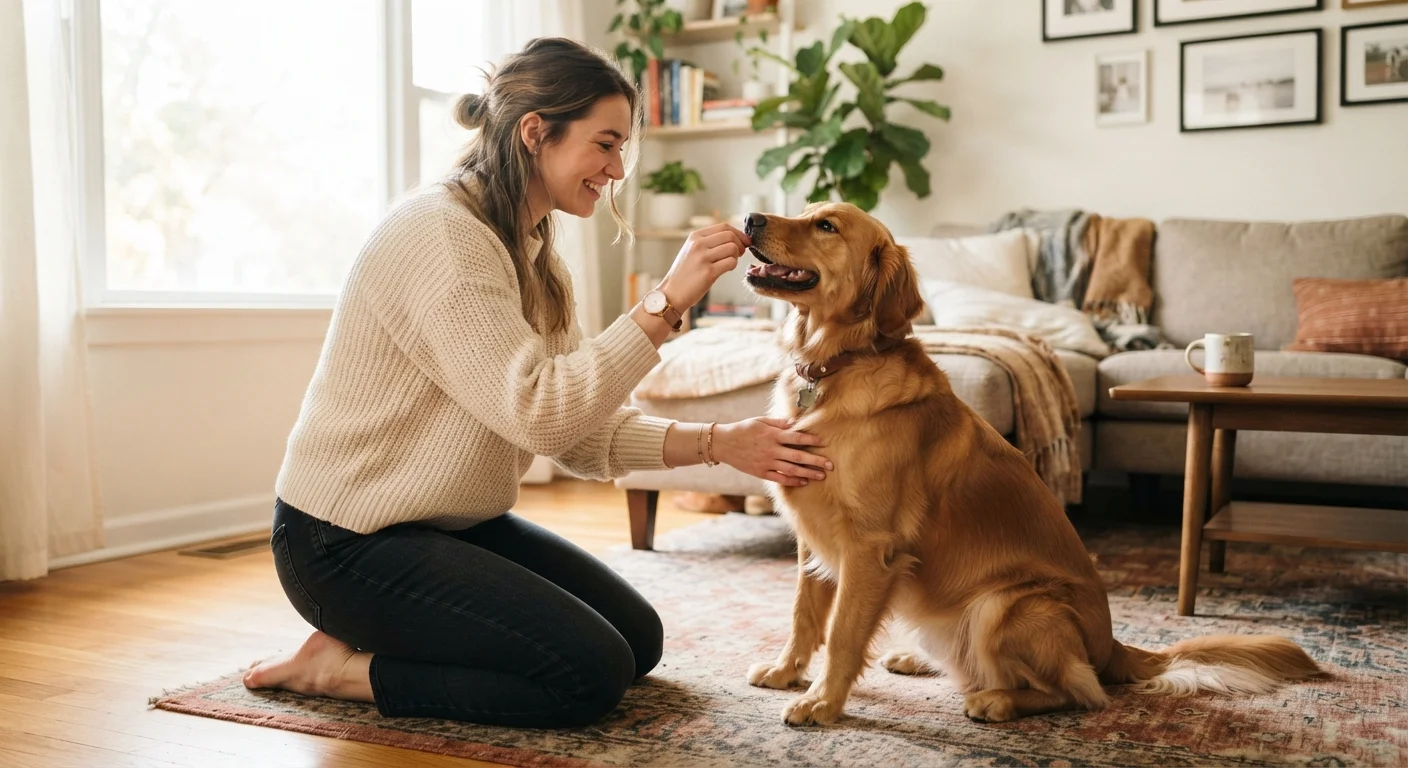
Photo credit: ResultsRover.com | Insights You Can Trust
In this article
Force-free training covers a range of humane techniques. This guide walks through the main approaches, how they work, and when each is most effective.
Key Takeaways
- Force-free training relies on rewards and clear communication rather than fear or pain.
- Positive reinforcement is the most researched and widely applicable force-free method.
- Clicker training and luring are practical entry points requiring minimal equipment.
- Consistency and timing matter more than training session length.
- Most everyday pet behaviors can be shaped using force-free methods alone.
- Professional guidance is available in both group and private formats if you need extra support.
What Force-Free Training Actually Means
Force-free training is an approach to teaching animals that deliberately avoids the use of physical force, intimidation, or pain. The term covers a family of techniques unified by one principle: behaviors the animal chooses voluntarily — because they produce good outcomes — are more reliable and longer-lasting than behaviors produced through fear or compulsion.
This isn't a single method but a philosophy applied through several specific techniques. Understanding what the phrase means — and what it doesn't — helps you evaluate advice you'll encounter online, from friends, or from trainers.
Positive reinforcement
Adding something the animal values — like a treat or praise — immediately after a desired behavior to make that behavior more likely to happen again.
Operant conditioning
A learning process in which an animal's behavior is shaped by its consequences — behaviors that produce good outcomes are repeated; those that don't are gradually dropped.
Classical conditioning
A type of learning where an animal forms an automatic association between a neutral stimulus (like a clicker sound) and a meaningful event (like receiving a treat).
Marker training
Using a precise, consistent signal — a click or a specific word — to mark the exact moment an animal performs the correct behavior, followed immediately by a reward.
Shaping
Rewarding small, gradual steps toward a final behavior rather than waiting for the complete behavior to appear from the start.
Luring
Using a treat or toy to physically guide an animal into a desired position or movement during the early stages of teaching a new behavior.
Force-free training is grounded in behavioral science, particularly the study of operant and classical conditioning. Veterinary and animal behavior organizations broadly support reward-based methods as the most humane and effective starting point for companion animal training.
Core Techniques and How They Work
Several distinct methods fall under the force-free umbrella. Each suits different learning stages and pet personalities.
Positive Reinforcement
The most widely used approach: immediately reward the behavior you want, and that behavior becomes more likely to repeat. The reward must follow the behavior quickly — within one to two seconds — to create a clear association. Treats are the most common reinforcer, but play, praise, or access to something enjoyable can also work depending on your pet.
Luring
A food treat is used to physically guide the animal into a desired position — for example, moving a treat slowly over a dog's nose to prompt a sit. Once the behavior is reliable, the lure is faded so the animal responds to the hand signal or cue alone. Luring is an accessible starting point for beginners.
Clicker Training (Marker Training)
A small handheld clicker makes a distinct sound the instant the animal performs the correct behavior. The click acts as a precise marker that tells the animal exactly which action earned the reward, then the treat follows. Marker training is especially useful for shaping complex or multi-step behaviors. A verbal marker like "yes" works just as well if a clicker isn't available.
Shaping
Rather than waiting for a complete behavior, shaping rewards successive approximations — small steps that gradually lead toward the final goal. It requires patience but allows owners to train behaviors that would be difficult to lure or prompt directly.
Start with one technique at a time
Mixing multiple methods before you're comfortable with any of them can confuse both you and your pet. Pick one approach — positive reinforcement with luring is the most beginner-friendly — and practice it consistently for two to three weeks before adding another tool. Clear, predictable patterns help your pet learn faster.
Choosing the Right Method for Your Pet
No single technique fits every animal or situation. A few questions can help you decide where to start.
- How food-motivated is your pet? Highly treat-motivated animals tend to respond quickly to luring and positive reinforcement. For pets less interested in food, identify what they do value — a favorite toy, a brief play session, or access to the outdoors.
- What is your training goal? Simple cues like "sit" or "stay" are well-suited to luring and positive reinforcement. More complex behaviors — coming reliably off-leash, for instance — often benefit from shaping and marker training.
- What is your pet's current stress level? Animals that are anxious, reactive, or newly adopted may need a slower, lower-demand approach before any structured training begins. Building trust through calm, predictable interactions is itself a form of force-free conditioning.
If your pet is displaying fearful or aggressive behavior, consult a qualified professional before beginning any training program. A comparison of group and private training formats can help you decide which setting fits your situation.
All Household Members Should Train Consistently
Pets learn rules from every person they interact with, not just the primary trainer. If one family member allows a behavior another is trying to discourage, the animal receives conflicting information and progress stalls. A quick family conversation about which cues you're using and what counts as a reward can save significant time and frustration.
Common Mistakes and How to Avoid Them
Even with good intentions, a few consistent errors can slow progress significantly.
- Delayed rewards
- If a treat arrives three seconds after the behavior, your pet may associate the reward with whatever they were doing at that moment — not the behavior you intended. Aim for immediate delivery, or use a marker to bridge the gap.
- Inconsistent cues
- Using "down" one day and "lie down" the next, or asking for "sit" while pointing differently each time, creates confusion. Agree on consistent words and hand signals across everyone in the household.
- Training when frustrated
- Animals read emotional tone. If you end a session after multiple failures, both you and your pet are more likely to approach the next session with reluctance. End every session on an easy success, even if that means going back to a behavior your pet already knows.
- Reward rate too low
- Beginners often under-reward during the learning phase. When a behavior is new, reward every correct attempt. You can reduce treat frequency gradually once the behavior is reliable.
Avoid Punishment-Based Corrections
Even mild punishments — a sharp verbal "no," leash jerks, or spray bottles — can undermine trust and increase anxiety over time, particularly in sensitive animals. Research in animal behavior consistently shows that punishment-based methods carry a higher risk of fear and aggression side effects compared to reward-based approaches. If a behavior isn't improving, adjust your reward strategy rather than adding correction.
Building Training Into Your Daily Routine
Short, frequent sessions outperform long, occasional ones. Most pets learn best in five-minute blocks repeated two to three times a day. This makes training something you can weave into transitions you already have — after feeding, before a walk, or during a commercial break.
For families with busy schedules, integrating training into existing routines is the most sustainable approach. Our guide to building a pet care routine that works for a busy household covers how to structure these habits across the whole family.
Track progress simply — even a brief note about what you practiced and how the pet responded helps you see patterns and adjust. Celebrate small wins. Force-free training isn't just a behavior strategy; it's a way of communicating with your animal that builds trust over a lifetime.
For ongoing support, explore the broader resources available through Pet Health & Wellness and Pet Care Basics.
Group vs. Private Dog Training: Which Is Right for You?
A practical comparison of group classes and one-on-one sessions to help you decide which training format best fits your dog's needs and your household schedule.
Pet Care Basics Hub
A comprehensive resource covering everyday care routines for dogs, cats, and common household pets — a useful companion to any new training program.
Frequently Asked Questions

Author
Pets & Animals Editorial Team
Pets & Animals Editorial Team is the collective byline for our editorial team and contributor network. Articles published under this byline or an editorial pen name are researched, written, and reviewed according to our editorial standards for clarity, consistency, and independence before publication.
View all articles →