
Teaching a Dog to Stay: Building Duration, Distance, and Distraction
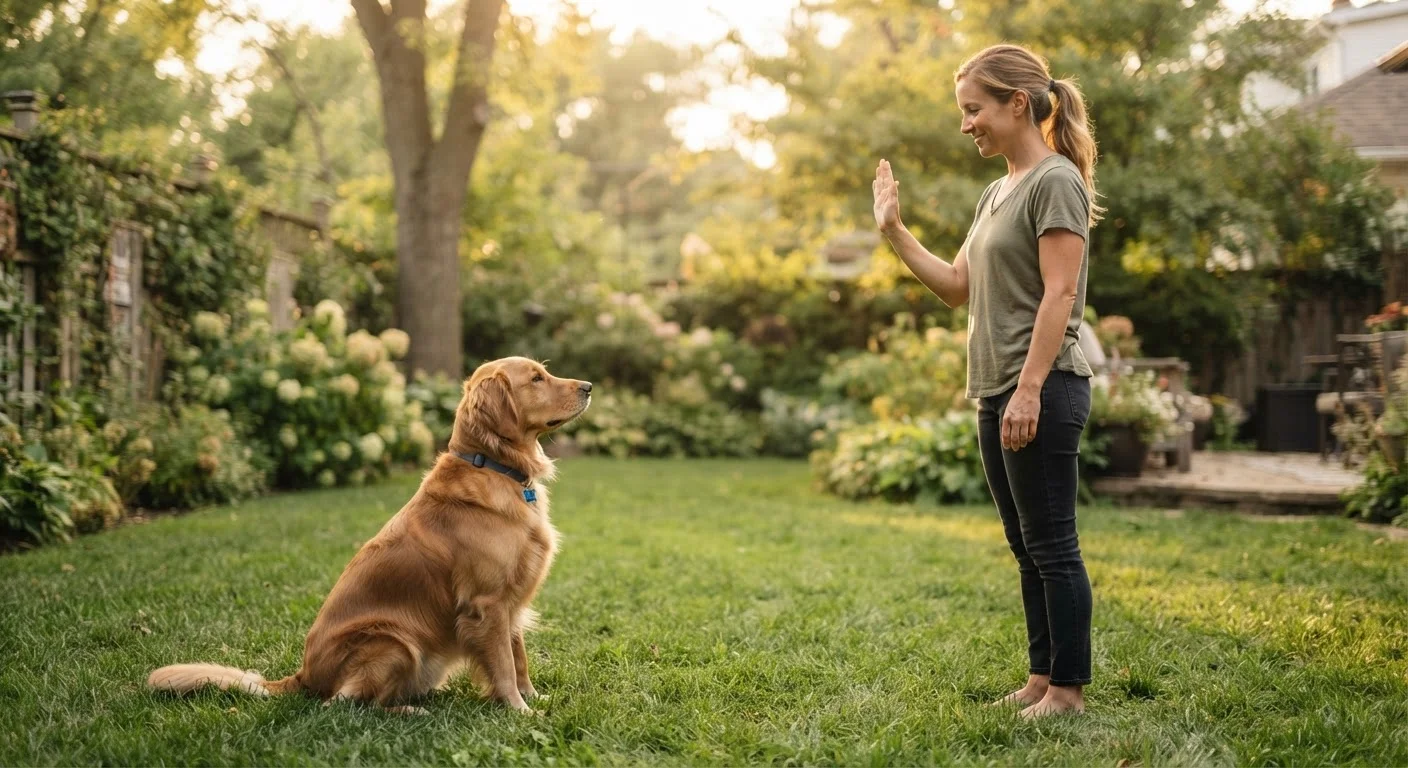
Photo credit: ResultsRover.com | Insights You Can Trust
In this article
A practical, step-by-step breakdown of how to train a reliable stay command by gradually adding the three D's of dog training.
Key Takeaways
- The three D's — duration, distance, and distraction — should be trained one at a time, not simultaneously.
- Always release your dog from the stay with a clear release word to avoid confusion.
- Short, frequent sessions of 5–10 minutes outperform long, infrequent ones for building retention.
- Return to easier criteria any time your dog starts making errors — regression is part of the process.
- A reliable stay is built over weeks of consistent practice, not a single afternoon.
Why the Three D's Framework Works
Dog trainers have long organized stay training around three variables: duration (how long the dog holds position), distance (how far away the handler moves), and distraction (what's happening in the environment). The reason this framework is so effective is that each variable places a distinct demand on the dog's self-control. Trying to increase all three at once makes the task unpredictably hard and leads to consistent failure — which discourages both dog and owner.
This approach aligns closely with force-free training principles, which prioritize building skills through clarity and positive reinforcement rather than pressure. Your role is to set your dog up to succeed by controlling the variables, then rewarding generously when they do.
What you will need
What You'll Need Before You Start
Gathering the right tools before your first session removes friction and keeps training flowing smoothly. A marker — whether a clicker or a consistent verbal word like "yes" — is especially useful for stay training because it tells your dog precisely which moment of holding position earned the reward. If you're new to marker training, our comparison of clicker and verbal marker approaches can help you decide which fits your style.
Training Treats
Reward correct behavior immediately; small, soft pieces work best to keep the pace of a session moving.
Clicker or Verbal Marker
Precisely marks the exact moment your dog earns a reward, improving communication speed and accuracy.
Long Line (15–30 ft leash)
Allows safe distance work outdoors without risking your dog running off during early distance training.
Treat Pouch
Keeps rewards accessible without fumbling through pockets, so you can mark and reward quickly.
Step-by-Step: Building the Stay
Work through each step in order, spending as many sessions as needed at each stage before progressing. Most dogs benefit from daily practice in short bursts rather than occasional long sessions.
Never Punish a Failed Stay
If your dog breaks position, calmly guide them back and make the exercise easier — shorten the duration, close the distance, or remove the distraction. Punishment or frustration at this moment teaches your dog that training is stressful, which undermines the entire process. Staying is a skill that requires repetition, not correction.
Establish a Solid Sit or Down Foundation
Before teaching stay, your dog needs a reliable starting position. Ask for a sit or down and confirm they hold it naturally for at least one or two seconds before you deliver the treat. If they pop up immediately, practice the position cue alone until there's a brief natural pause. This pause becomes the seed of the stay behavior.
Introduce the Stay Cue and a Release Word
Ask your dog to sit, say "stay" once in a calm, clear voice, and immediately mark and reward them while they're still in position — don't wait. Simultaneously, choose a distinct release word such as "free," "okay," or "release" and use it consistently every single time the stay is finished. The release word is as important as the stay cue itself; it tells your dog exactly when the job is done.
Build Duration First
With your dog in stay, gradually increase the time between the cue and the marker. Start at two seconds, then three, then five, working up in small increments over multiple sessions. Vary the intervals rather than always increasing — sometimes reward at three seconds, sometimes at seven. Unpredictable timing keeps your dog engaged rather than anticipating release. Aim for a solid 30-second stay in a calm environment before moving on.
Add Distance Gradually
Once your dog holds a 30-second stay reliably, reset duration back to just a few seconds and begin adding distance. Take one step back, mark and reward, then return to your dog before releasing them. Always return to your dog to reward before using the release cue — walking away and calling them to you teaches them to come, not to stay. Increase distance in single steps, and practice at each level until it's solid before moving further.
Introduce Distractions Systematically
Start with mild, predictable distractions — another person walking quietly past, a toy placed on the floor nearby, or ambient outdoor noise. Each new distraction resets your criteria: shorten duration and close distance when a new distraction is introduced. Gradually increase the intensity of distractions as your dog succeeds. Common progression: household movement → outdoor sounds → other animals visible from a distance → crowded environments.
Combine and Proof in Real-Life Contexts
Once each D is solid in isolation, begin combining them slowly — moderate distance with mild distraction, for example. Practice in multiple locations, because dogs don't automatically generalize skills from one environment to another. A stay mastered in your living room needs to be re-taught, at least briefly, in your yard, on a sidewalk, and anywhere else you'll need it. Real-world proofing is what converts training into a reliable, everyday behavior.
Common Mistakes and How to Avoid Them
The most frequent mistake is moving through the three D's too fast. If your dog is breaking the stay more than about 20% of the time at a given level, the criteria are too difficult — scale back until success is consistent again. A second common error is repeating the stay cue multiple times. Say it once; repeating it teaches your dog that the first cue didn't count.
Don't Stack the Three D's Too Soon
Adding duration, distance, and distraction at the same time is one of the most common training mistakes owners make. Each variable multiplies difficulty exponentially. Build each one independently until solid, then combine them gradually. Rushing this phase leads to a dog that looks like it knows 'stay' in easy settings but falls apart when it counts.
If you're training in a household with multiple pets, maintaining focused one-on-one sessions is especially important early on. Our guide to training multiple pets in the same household covers strategies for keeping each animal's progress on track without interference. And if consistency is a challenge with a packed schedule, the practical routines in our article on building a pet care routine for busy households can help you carve out reliable training windows.
Use High-Value Rewards for Hard Moments
When you first introduce a new distraction or push distance further than before, reach for a especially motivating treat — small pieces of cooked chicken or cheese tend to work well for many dogs. Matching reward value to difficulty level keeps your dog engaged and tells them clearly that the harder moments are worth their focus.

Author
Pets & Animals Editorial Team
Pets & Animals Editorial Team is the collective byline for our editorial team and contributor network. Articles published under this byline or an editorial pen name are researched, written, and reviewed according to our editorial standards for clarity, consistency, and independence before publication.
View all articles →