How Anchoring and Loss Aversion Shape What You Buy
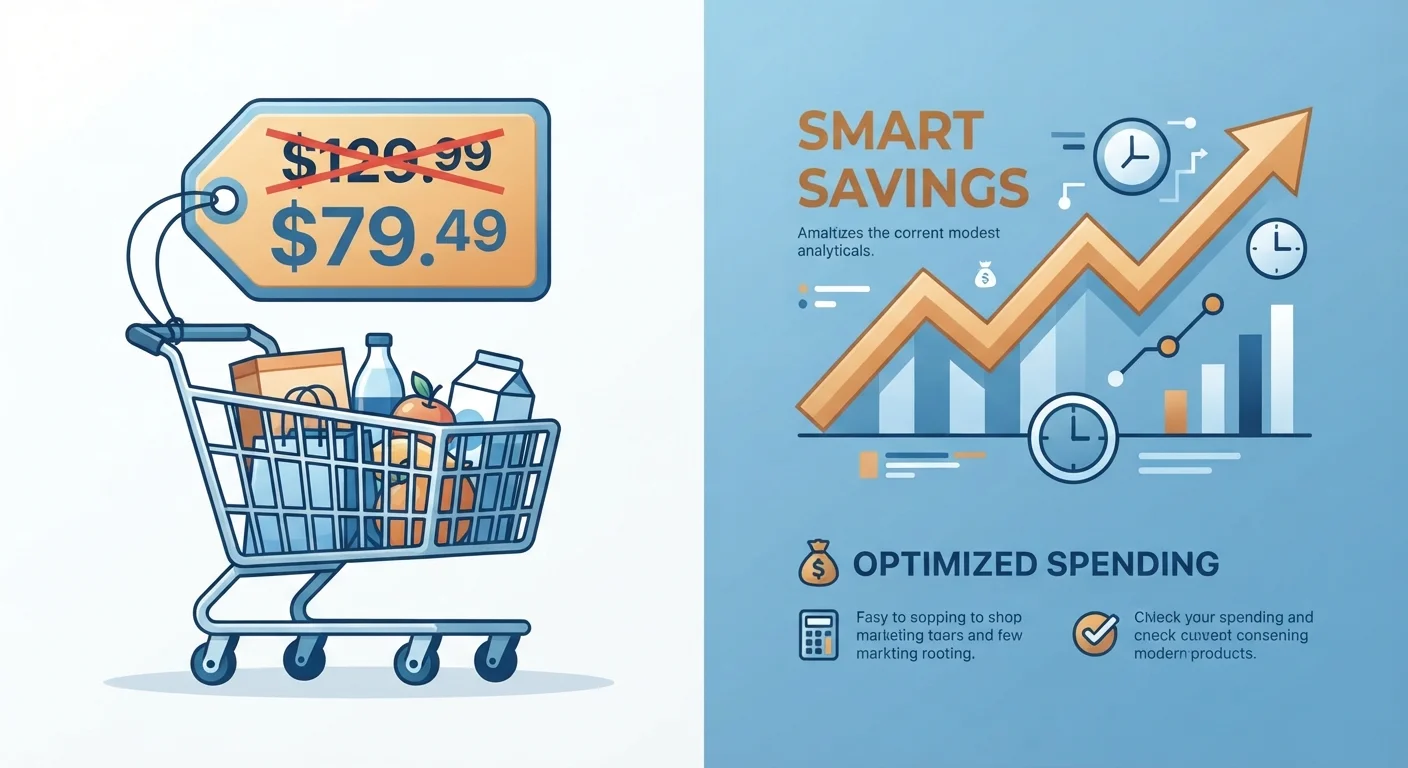
Photo credit: ResultsRover.com | Insights You Can Trust
In this article
Retailers use cognitive biases to influence purchasing decisions. Knowing how these work can help you spend more deliberately.
Key Takeaways
- The first price you see skews your judgment of every price that follows — even if that anchor is arbitrary.
- Fear of missing out on a 'deal' is loss aversion in action, not rational evaluation.
- Retailers deliberately design anchor prices and scarcity cues to trigger both biases.
- Pausing before purchase and comparing to external benchmarks can override both effects.
- These biases affect online and in-store shopping equally — no environment is neutral.
How Anchoring Works at the Register
Every time you see a price tag that reads $149.99 $299.99, your brain has already been manipulated — before you've evaluated whether the item is worth $149.99 at all. The crossed-out number is the anchor: an artificially high reference point that makes the selling price feel like a rescue rather than a cost.
The anchor doesn't have to be plausible to work. Classic behavioral economics research has shown that even random, unrelated numbers can bias a person's price estimate when presented first. In a retail context, anchors are anything but random — they are set deliberately to frame the real price as a bargain.
Watch for anchoring in these common forms:
- Strikethrough 'original' prices on sale tags
- The highest-tier pricing plan displayed first on subscription pages
- Suggested retail price (MSRP) shown alongside a store's price
- Per-unit comparisons framed against a more expensive option
See our full breakdown of common shopping traps for more tactics that work this way.
~2x
Loss feels stronger than equivalent gain
Kahneman and Tversky's Prospect Theory research established that losses are typically felt about twice as intensely as gains of the same magnitude.
60–70%
Shoppers influenced by reference prices
Research published in the Journal of Marketing Research has consistently found that reference (anchor) prices significantly shift consumers' perceived value and purchase likelihood.
24 hrs
Waiting period that reduces impulse purchases
Consumer behavior studies suggest that introducing a deliberate delay before non-essential purchases substantially reduces regretted buying decisions.
Loss Aversion: Why 'Don't Miss Out' Works So Well
Loss aversion is the other side of the coin. While anchoring distorts your reference point for price, loss aversion distorts your sense of urgency. Behavioral economists have described the pattern consistently: losses feel disproportionately painful compared to equivalent gains. This makes the threat of losing access to something — a price, a quantity, a time window — a powerful motivator even when the underlying purchase may not make sense.
Retailers convert this into revenue through:
- Countdown timers on promotional prices
- Low-stock warnings ('Only 3 left!')
- Flash sales with hard end times
- Cart abandonment emails reminding you what you 'left behind'
The framing is always the same: you have something to lose. That framing bypasses the slower, more deliberate thinking your brain would otherwise use to evaluate whether you actually need the item.
“The loss-aversion framing is so powerful because it doesn't feel like a bias — it feels like prudent decision-making. People genuinely believe they are responding to real scarcity or real savings.”
— Richard Thaler, Nobel Prize-winning behavioral economist and co-author of 'Nudge'
For a deeper look at how stores engineer these moments, see how retailers engineer impulse purchases.
Practical Defenses You Can Use Today
Understanding the mechanics gives you a simple but effective toolkit. These biases thrive on speed and emotion — so the counter-strategy is deliberate slowness and external reference points.
The 'Anchor Reset' Habit
Before entering a store or website, write down the maximum you're willing to spend on the item you need — based on your own research, not the retailer's suggested prices. Treat that number as your anchor, not theirs. When a 'deal' exceeds your preset limit, it isn't a deal for you regardless of the markdown shown.
Set your own anchor before you shop. Research what a product typically sells for across multiple sources before entering any single retailer's environment. When you arrive with an independent number in your head, the store's anchor has far less grip.
Separate the deal from the item. Ask yourself: 'If this item were priced at the sale price from the beginning, with no original price shown, would I still want to buy it?' This strips the anchoring effect and forces you to evaluate actual value.
Treat urgency as a signal to pause, not act. Every countdown timer or low-stock warning is a cue designed to suppress deliberation. Treat it as the opposite — a prompt to wait 24 hours. Items that genuinely suit your needs will still make sense tomorrow.
These habits are especially useful at the grocery store, where anchoring appears on nearly every shelf. See grocery spending habits that quietly drain your budget for specifics on where these effects hit hardest.
This article is for general informational and educational purposes only. It is not personalized financial advice. For guidance specific to your financial situation, consult a qualified financial professional.
Frequently Asked Questions

Author
Personal Finance Editorial Team
Personal Finance Editorial Team is the collective byline for our editorial team and contributor network. Articles published under this byline or an editorial pen name are researched, written, and reviewed according to our editorial standards for clarity, consistency, and independence before publication.
View all articles →