Grocery Spending Habits That Quietly Drain Your Budget
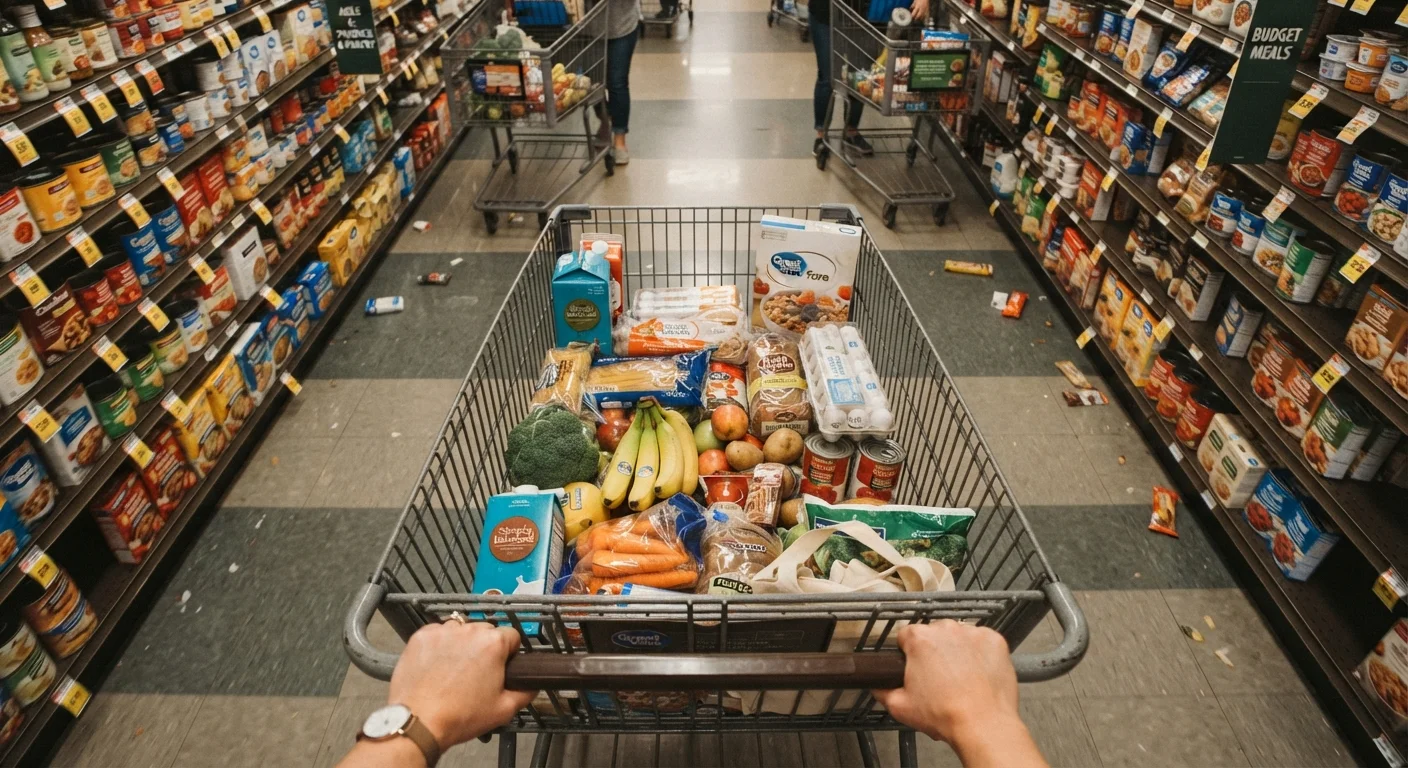
Photo credit: ResultsRover.com | Insights You Can Trust
Impulse buys, store layout tricks, and unit price confusion cost shoppers more than they know. Here's what to watch for.
Key Takeaways
- Shopping without a list consistently leads to higher spending and more food waste.
- Store layout is deliberately designed to slow you down and increase unplanned purchases.
- Unit price — not sticker price — is the only reliable way to compare grocery value.
- Buying in bulk only saves money when you actually use the product before it expires.
- Hunger and fatigue measurably increase impulse spending at the grocery store.
Why Grocery Budgets Bleed Without Warning
Groceries sit in an unusual category: they're a necessity, purchased repeatedly, and easy to rationalize in the moment. That combination makes the grocery store one of the most effective environments for quiet budget erosion. Unlike a one-time large purchase, small weekly overruns compound — an extra $20 per trip across 50 annual trips is $1,000 gone before you've noticed.
The habits below aren't moral failures. They're predictable responses to environments deliberately engineered to produce them. Naming them is how you stop them. If you're working toward a broader spending plan, our budgeting basics hub covers how to set realistic household targets that include groceries.
~$1,500
Average annual US food waste per household
The USDA estimates American households discard roughly 30–40% of the food supply, translating to significant dollar losses per family each year.
Up to 60%
Of supermarket purchases that are unplanned
Industry research has consistently found that a substantial share of grocery purchases are decided in-store rather than planned in advance, making shoppers highly susceptible to layout and promotional cues.
The Six Habits Draining Your Grocery Budget
Each of the following mistakes is common, correctable, and costly when left unchecked. The fix for each one is practical enough to apply on your next trip.
Shopping without a written list — or ignoring the one you brought.
Why it happens: Most shoppers browse by memory, assuming they know what's needed at home. Stores are designed to fill that uncertainty with products you didn't plan to buy.
Comparing prices by package cost rather than unit price.
Why it happens: The large number on the shelf tag is the total price — easy to read and easy to compare incorrectly. The unit price, usually printed in smaller type, tells you the actual cost per ounce, count, or liter.
Buying in bulk without accounting for shelf life or actual consumption rate.
Why it happens: Bulk sizing feels like smart financial planning, and warehouses reinforce this by presenting larger packages as inherently economical.
Shopping while hungry or rushed, which increases impulse purchases.
Why it happens: Hunger heightens the appeal of high-margin convenience foods, and time pressure short-circuits the deliberate comparison-shopping that keeps spending in check.
Defaulting to brand-name products out of habit rather than preference or quality.
Why it happens: Familiarity feels safe, and brand marketing creates strong associations between packaging and perceived quality — even when store-brand formulas are nearly identical.
Treating every sale or coupon as automatic savings.
Why it happens: Discounts are framed as opportunities, which makes declining them feel like a loss — a well-documented behavioral pattern called loss aversion.
Your Cart Reflects Store Design, Not Just Your List
Supermarkets invest heavily in layout research to maximize how much you spend per visit. End-cap displays, checkout lane snacks, and strategically placed sale signs are not accidents — they are engineered triggers. Recognizing these as deliberate commercial decisions, rather than helpful suggestions, is the first step toward shopping on your own terms.
For a wider view of where household spending leaks occur beyond the grocery aisle, see where household budgets quietly leak. And if you're thinking about shopping traps that catch careful buyers, the grocery store is rarely the only place they operate.
Sales Can Cost You More, Not Less
A 'buy two, get one free' deal only saves money if you were already going to buy that item and will use all three units before they expire. Stocking up on sale items you don't normally use — or that will go bad — converts a perceived deal into a real loss. Verify against your actual shopping habits before loading up.
Correcting even two or three of these habits consistently can meaningfully reduce monthly food costs without requiring you to eat differently or shop at different stores. That's the kind of low-effort, high-return adjustment that fits into any household budget. For additional strategies that don't require a loyalty card or app sign-up, see grocery savings without a loyalty card.
This article is for general informational purposes only and does not constitute personalized financial advice. Consider consulting a qualified financial professional for guidance specific to your situation.

Author
Personal Finance Editorial Team
Personal Finance Editorial Team is the collective byline for our editorial team and contributor network. Articles published under this byline or an editorial pen name are researched, written, and reviewed according to our editorial standards for clarity, consistency, and independence before publication.
View all articles →