
Fluids Under the Hood and What Each One Does
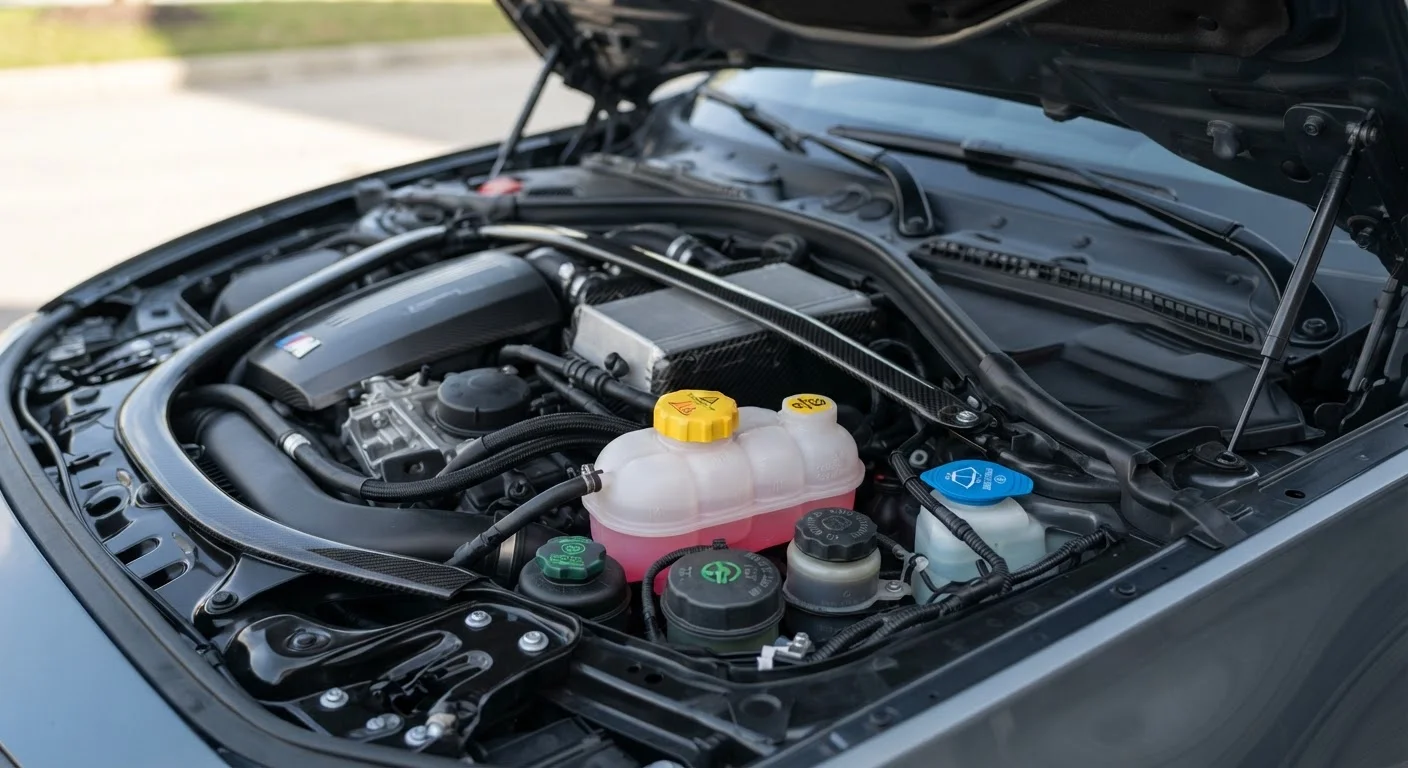
Photo credit: ResultsRover.com | Insights You Can Trust
In this article
Engine oil, coolant, brake fluid, transmission fluid — a clear reference to every reservoir in your engine bay and what running low on each one costs you.
The Six Fluids Every Driver Should Know
Pop the hood on almost any vehicle and you'll find six fluid reservoirs. Each one serves a distinct mechanical function - and each one has a failure mode that ranges from inconvenient to catastrophic. Here's what they do and why neglecting them is expensive.
| Engine oil check interval | Monthly or at every fill-up (General mechanic consensus) |
| Coolant flush interval (typical) | Every 30,000-50,000 miles (Varies by vehicle; consult owner's manual) |
| Brake fluid replacement interval | Every 2-3 years regardless of mileage (General industry recommendation) |
| Power steering fluid type | Vehicle-specific; do not mix types (Owner's manual required) |
| Windshield washer fluid freeze point | Varies by formula; check label for climate rating |
| Transmission fluid flush interval (typical) | Every 30,000-60,000 miles (automatic); varies widely (Check owner's manual; some sealed units are 'lifetime') |
Engine Oil
Oil lubricates moving metal parts inside the engine, reduces friction, and carries heat away from components the cooling system can't reach. Low or degraded oil causes metal-on-metal wear that accumulates invisibly until an engine seizes or loses compression. Check the dipstick monthly - it takes 30 seconds. See your vehicle's full maintenance schedule for oil change intervals, which now commonly run 5,000-10,000 miles with modern synthetic oils (not the old 3,000-mile rule - that's a persistent myth).
Coolant (Antifreeze)
Coolant circulates between the engine and radiator, absorbing combustion heat and dissipating it. A 50/50 mix of coolant and distilled water is standard for most climates. Running low causes overheating; a blown head gasket - a common result - can cost $1,500-$2,500 to repair. Check the reservoir level when the engine is cold; never open a hot radiator cap.
Brake Fluid
Hydraulic brake fluid transmits the force of your foot on the pedal to the brake calipers at each wheel. Because it's hygroscopic - meaning it absorbs moisture from the air - its boiling point drops over time. Moisture-saturated fluid can boil under heavy braking, creating vapor bubbles that cause a sudden loss of pedal pressure. Replace it every two to three years as a general guideline, regardless of mileage.
The Remaining Fluids and What Running Low Actually Costs You
$4,000+
Average engine replacement cost
Running an engine low on oil is one of the most common causes of premature engine failure, according to repair industry data.
~30%
Brake fluid moisture absorption in 2 years
Studies have shown that brake fluid can absorb enough moisture within two years to meaningfully lower its boiling point, reducing stopping reliability.
Transmission Fluid
Automatic transmission fluid (ATF) lubricates and cools the transmission's clutch packs, bands, and gears while also acting as the hydraulic medium that shifts gears. Burnt or low ATF causes harsh shifting, slippage, and eventually transmission failure - a repair that can exceed $3,000 for a rebuild. Many modern vehicles have a sealed transmission with no dipstick; consult a mechanic if you suspect a problem. CVT-equipped vehicles require a specific CVT fluid - using standard ATF can destroy the unit.
Power Steering Fluid
Hydraulic power steering systems use pressurized fluid to reduce steering effort. Low fluid causes whining noises and stiff steering; running the pump dry can ruin it. Note that many newer vehicles use electric power steering and have no fluid reservoir at all - check your owner's manual to confirm which system your car uses.
Windshield Washer Fluid
Plain water freezes and grows bacteria; washer fluid contains surfactants and freeze-point depressants. It's the one fluid you can check and top off yourself with no mechanical risk. Match the formula to your climate - cold-weather formulas are rated to well below freezing.
Always Check Your Owner's Manual First
Fluid specifications - type, capacity, and change interval - vary significantly between makes and models. What works for one vehicle can damage another. Your owner's manual is the authoritative source; when in doubt, ask a qualified mechanic rather than relying on generic advice.
Keeping all six fluids at proper levels is one of the simplest ways to avoid the kind of repair bills that make car ownership feel unpredictable. For a fuller picture of how maintenance costs fit into long-term ownership expenses, see car ownership costs across every stage of the vehicle's life.
Viscosity
A fluid's resistance to flow. Motor oil viscosity ratings (e.g., 5W-30) indicate how the oil flows at cold starts and operating temperatures. Using the wrong viscosity can reduce engine protection.
Hygroscopic
Describes a fluid that absorbs moisture from the air over time. Brake fluid is hygroscopic, which is why it degrades and must be replaced periodically regardless of mileage.
Coolant / Antifreeze
A water-based fluid mixed with ethylene glycol that regulates engine temperature, preventing both overheating in summer and freezing in winter.
CVT Fluid
Transmission fluid formulated specifically for continuously variable transmissions (CVTs). Using standard automatic transmission fluid in a CVT can cause serious damage.

Author
Auto Essentials Editorial Team
Auto Essentials Editorial Team is the collective byline for our editorial team and contributor network. Articles published under this byline or an editorial pen name are researched, written, and reviewed according to our editorial standards for clarity, consistency, and independence before publication.
View all articles →