
Full Coverage vs. Liability-Only Insurance
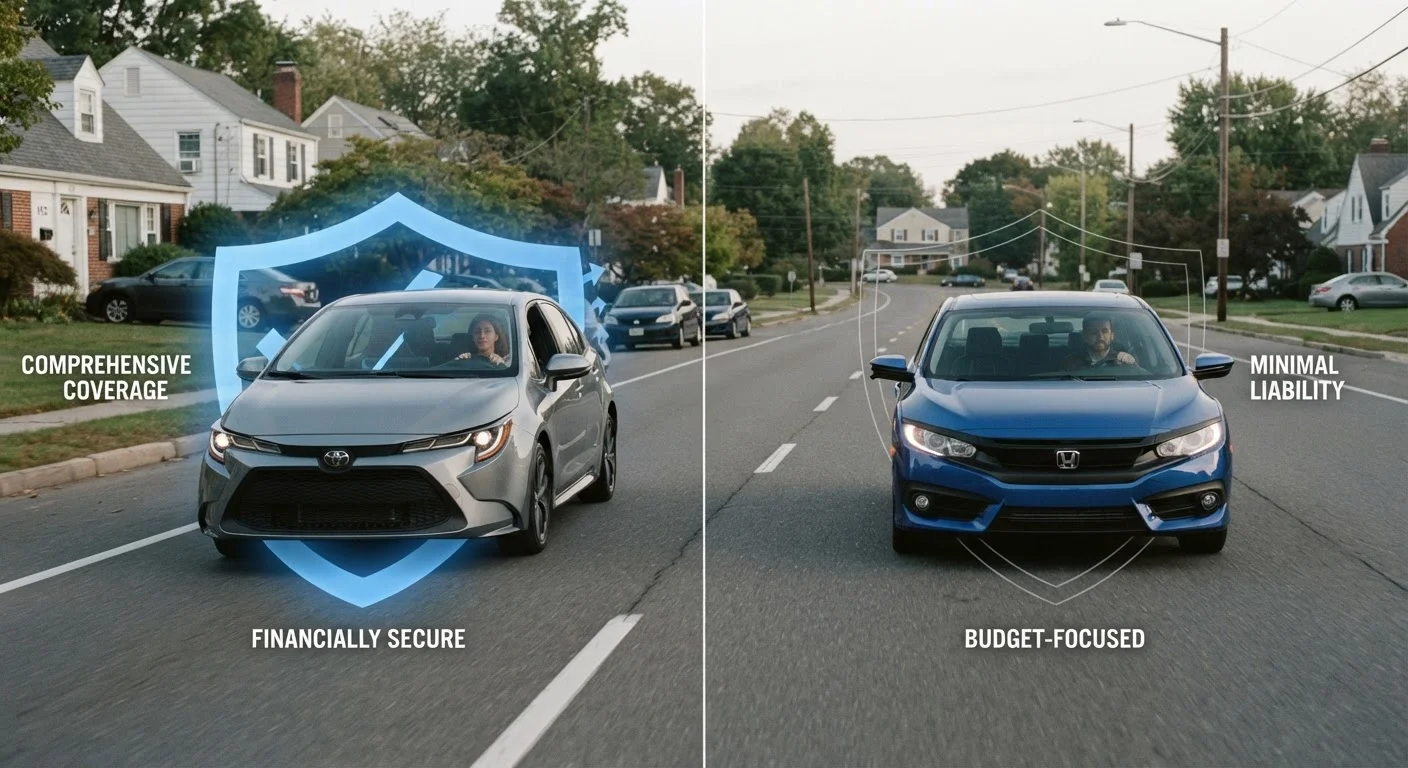
Photo credit: ResultsRover.com | Insights You Can Trust
In this article
Not every driver needs the same level of coverage. Compare what each option includes, what it costs, and when each makes financial sense.
Key Takeaways
- Liability-only covers damage and injuries you cause to others; it does not cover your own vehicle.
- Full coverage bundles liability with collision and comprehensive, protecting your car from crashes, theft, and weather.
- Lenders typically require full coverage on financed or leased vehicles - it's rarely optional in those cases.
- A common rule of thumb: if your annual premium exceeds 10% of your car's market value, liability-only may make more financial sense.
- Neither option is universally better - the right choice depends on vehicle value, savings, and personal risk tolerance.
What Each Policy Actually Covers
Liability-only insurance is the floor - the legal minimum most states require. It pays for bodily injury and property damage you cause to other people in an at-fault accident. It does not pay a cent toward repairing or replacing your own vehicle. For a deeper breakdown of how each coverage type is defined, see our guide to what every coverage type actually does.
Full coverage is not a single product - it's an industry shorthand for a policy that combines liability with collision (repairs your car after a crash, regardless of fault) and comprehensive (covers theft, weather events, fire, and other non-collision losses). Some policies also include personal injury protection (PIP) or uninsured motorist coverage, depending on state requirements and what you add on. To understand exactly where collision ends and comprehensive begins, see comprehensive vs. collision coverage.
| Criterion | Full Coverage | Liability-Only |
|---|---|---|
| Covers others' injuries/property | Yes | Yes |
| Covers your vehicle after a crash | Yes (collision) | No |
| Covers theft, weather, fire | Yes (comprehensive) | No |
| Required by lenders/lessors | Yes | No |
| Typical relative cost | Higher premium | Lower premium |
| Financial risk to driver | Lower (deductible only) | Higher (full vehicle loss) |
| Best vehicle age/value fit | Newer or higher-value cars | Older or lower-value cars |
The Cost Gap - and What Drives It
Full coverage consistently costs more than liability-only because it insures more risk. According to the National Association of Insurance Commissioners (NAIC), the average annual expenditure on auto insurance in the U.S. has risen steadily, with comprehensive and collision components accounting for a significant share of total premium costs.
~$936
Average U.S. annual auto insurance expenditure
Per the NAIC's most recently published auto insurance database report, average expenditure per insured vehicle has climbed consistently over the past decade.
10%
Rule-of-thumb premium-to-value threshold
If annual collision and comprehensive premiums exceed roughly 10% of your car's market value, many financial educators suggest reconsidering full coverage.
49 states
States requiring minimum liability coverage
Nearly every U.S. state mandates at least some liability coverage; New Hampshire is the primary exception, though it imposes financial responsibility requirements.
The size of the premium gap varies based on your vehicle's value, your deductible choices, your driving history, and where you live. Higher deductibles lower your premium but increase your out-of-pocket exposure when you file a claim. For practical ways to reduce what you pay without eliminating useful protection, see lowering your auto insurance rate without sacrificing coverage.
It's also worth understanding how claims affect future costs. Even on a full coverage policy, filing a claim can raise your premium for years. Our article on what happens to your insurance when you file a claim explains how insurers factor that history into your rate.
When Each Option Makes Financial Sense
The clearest case for full coverage is a financed or leased vehicle. Lenders require it - not as a suggestion, but as a contract condition. Dropping to liability-only on a loan could put you in default. Leasing versus buying also affects which coverage structures your lender will mandate.
Beyond loan requirements, full coverage makes sense when the financial hit of losing your vehicle would be hard to absorb. If your car was totaled tomorrow and you'd need to finance a replacement immediately, the premium cost is likely worth it.
The case for liability-only strengthens as a vehicle ages and its market value falls. A widely cited rule of thumb: if your annual collision and comprehensive premium exceeds roughly 10% of your car's actual cash value, the math starts to favor dropping those coverages. This isn't a guarantee of savings - it's a starting point for your own calculation.
Your Car's Market Value Is the Key Variable
Vehicle valuation tools - such as those published by Kelley Blue Book or the NAIC - can give you a baseline estimate of what your car is worth today. Run that number against your current collision and comprehensive premium to see whether the coverage is still pulling its financial weight. Reassess annually, since depreciation changes the equation every year.
Regardless of which path you choose, actually reading your policy matters. Reading a car insurance policy without getting lost walks through declarations pages, exclusions, and endorsements so you know exactly what you're getting - and what you're not.
This article provides general educational information about auto insurance and is not personalized insurance, financial, or legal advice. Coverage terms, costs, and requirements vary by provider and state. Consult a licensed insurance agent or adviser for guidance specific to your situation.

Author
Auto Essentials Editorial Team
Auto Essentials Editorial Team is the collective byline for our editorial team and contributor network. Articles published under this byline or an editorial pen name are researched, written, and reviewed according to our editorial standards for clarity, consistency, and independence before publication.
View all articles →