
Comprehensive vs. Collision Coverage: Knowing Which Pays When
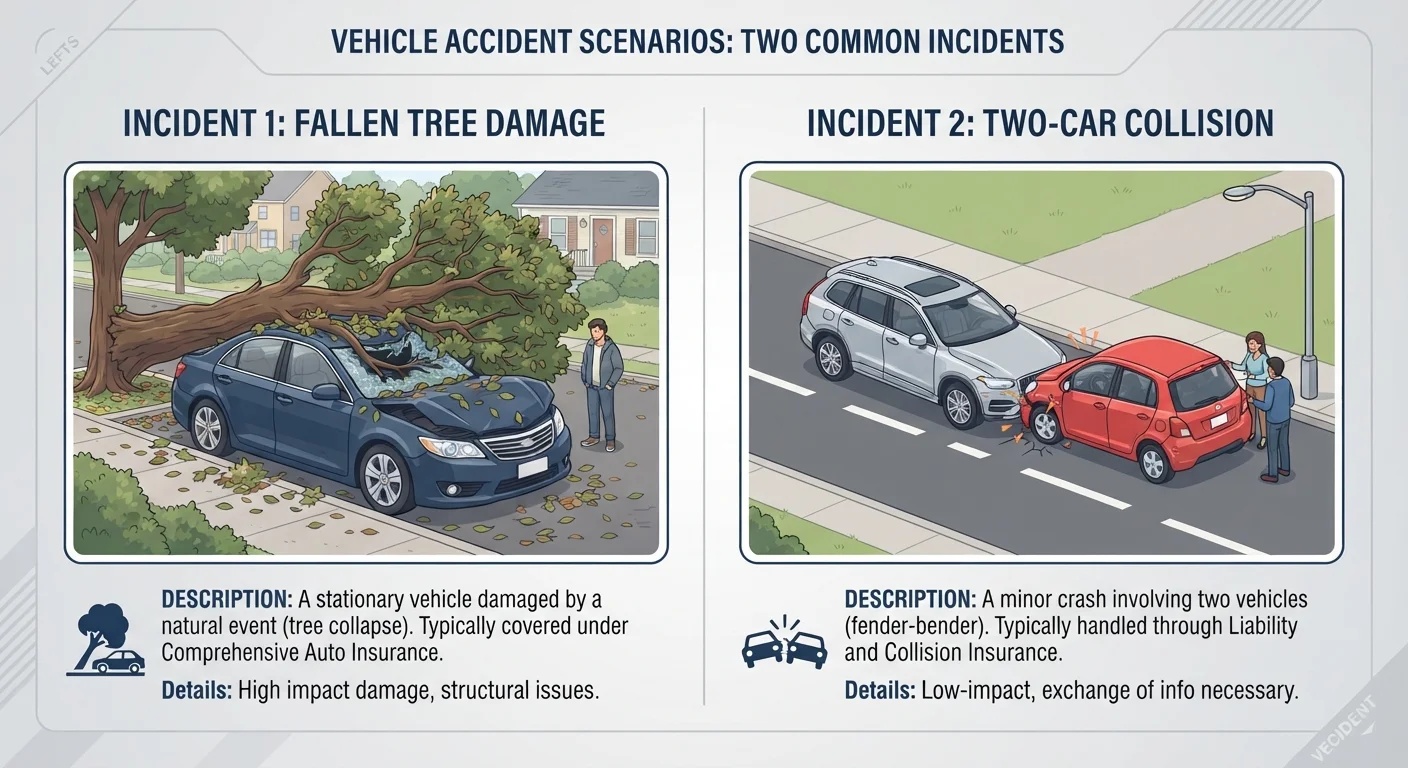
Photo credit: ResultsRover.com | Insights You Can Trust
In this article
These two coverages are often confused. See exactly what each one covers, what it excludes, and when carrying both makes sense.
Key Takeaways
- Comprehensive covers non-collision events like theft, hail, floods, and animal strikes.
- Collision covers damage to your vehicle from crashes, regardless of who is at fault.
- Neither coverage is legally required by states, but lenders typically mandate both on financed vehicles.
- Dropping either coverage on an older, low-value vehicle may save money but increases out-of-pocket risk.
- Your deductible directly affects your premium - a higher deductible lowers your monthly cost.
What Each Coverage Actually Covers
The confusion between comprehensive and collision coverage is understandable - both apply to physical damage to your own vehicle, and both are often sold together. But they respond to completely different events.
Comprehensive coverage kicks in when your car is damaged by something other than a collision. Common triggers include theft, vandalism, hail, flooding, fire, falling objects (like a tree branch), and animal strikes (such as hitting a deer). Think of it as coverage for events largely outside your control as a driver.
Collision coverage pays when your vehicle is damaged by an impact - hitting another car, backing into a pole, or rolling over. Fault generally doesn't matter; your own policy pays for your vehicle's damage, and your insurer may later seek reimbursement from an at-fault driver's carrier.
For a full breakdown of how these fit into your overall policy, see Car Insurance Decoded.
| Criterion | Comprehensive | Collision |
|---|---|---|
| Trigger event | Non-collision incidents (theft, weather, animals) | Vehicle impacts and rollovers |
| Fault requirement | No fault concept applies | Pays regardless of fault |
| State requirement | Not legally required | Not legally required |
| Lender requirement | Usually required on financed vehicles | Usually required on financed vehicles |
| Typical deductible | $100-$1,000 (your choice) | $250-$1,500 (your choice) |
| Average annual cost | Lower (roughly $150-$300/yr nationally) | Higher (roughly $300-$600/yr nationally) |
| Covers other vehicle | No | No |
| Covers personal belongings inside car | No | No |
What Neither Coverage Pays For
Both coverage types have clear exclusions that catch drivers off guard at claim time.
- Mechanical breakdown: Neither covers engine failure, transmission problems, or worn components. Those fall under a vehicle warranty or a separate mechanical breakdown policy.
- Personal belongings stolen from the car: Comprehensive covers the vehicle itself, not the laptop or golf clubs inside it. Homeowners or renters insurance typically handles that.
- Damage to the other driver's car: That's what liability coverage handles. Comprehensive and collision are strictly first-party coverages - they apply to your vehicle only.
- Injuries to you or others: Medical costs are handled by medical payments (MedPay), personal injury protection (PIP), or health insurance.
Gap Insurance Is a Separate Consideration
If you owe more on your car loan than the vehicle is currently worth, neither comprehensive nor collision will cover that difference - they pay actual cash value, not your loan balance. Gap insurance (or a loan/lease payoff endorsement) is a separate product that addresses this specific shortfall. Ask your insurer or lender whether it applies to your situation.
Understanding these boundaries before you file a claim saves time and frustration. For help reading the fine print in your own policy, see Reading a Car Insurance Policy Without Getting Lost.
When Carrying Both Makes Financial Sense
The decision to carry one, both, or neither comes down to your vehicle's value, your financial cushion, and your risk exposure.
~$500
Average comprehensive + collision annual premium
According to the National Association of Insurance Commissioners (NAIC), combined physical damage coverage averages roughly $500 per year nationally, though this varies widely by state, vehicle, and driver profile.
1 in 8
Drivers involved in a crash each year (estimate)
Insurance industry estimates suggest roughly one in eight licensed drivers is involved in a collision annually, underscoring the practical relevance of collision coverage for active drivers.
A common rule of thumb: if your annual combined premium for both coverages exceeds 10% of your car's market value, dropping one or both may make financial sense. You can check your vehicle's current value through resources like Kelley Blue Book or the NADA Guides.
If your car is financed or leased, the decision is often made for you - lenders contractually require both comprehensive and collision as a condition of the loan or lease.
For a broader view of how these coverages fit within a full versus liability-only policy decision, see Full Coverage vs. Liability-Only Insurance.
This article provides general insurance information for educational purposes only. Coverage terms, exclusions, premiums, and availability vary by insurer and state. Consult a licensed insurance professional or review your specific policy documents before making decisions about your coverage.

Author
Auto Essentials Editorial Team
Auto Essentials Editorial Team is the collective byline for our editorial team and contributor network. Articles published under this byline or an editorial pen name are researched, written, and reviewed according to our editorial standards for clarity, consistency, and independence before publication.
View all articles →