
Brand Loyalty and Its Hidden Price Tag
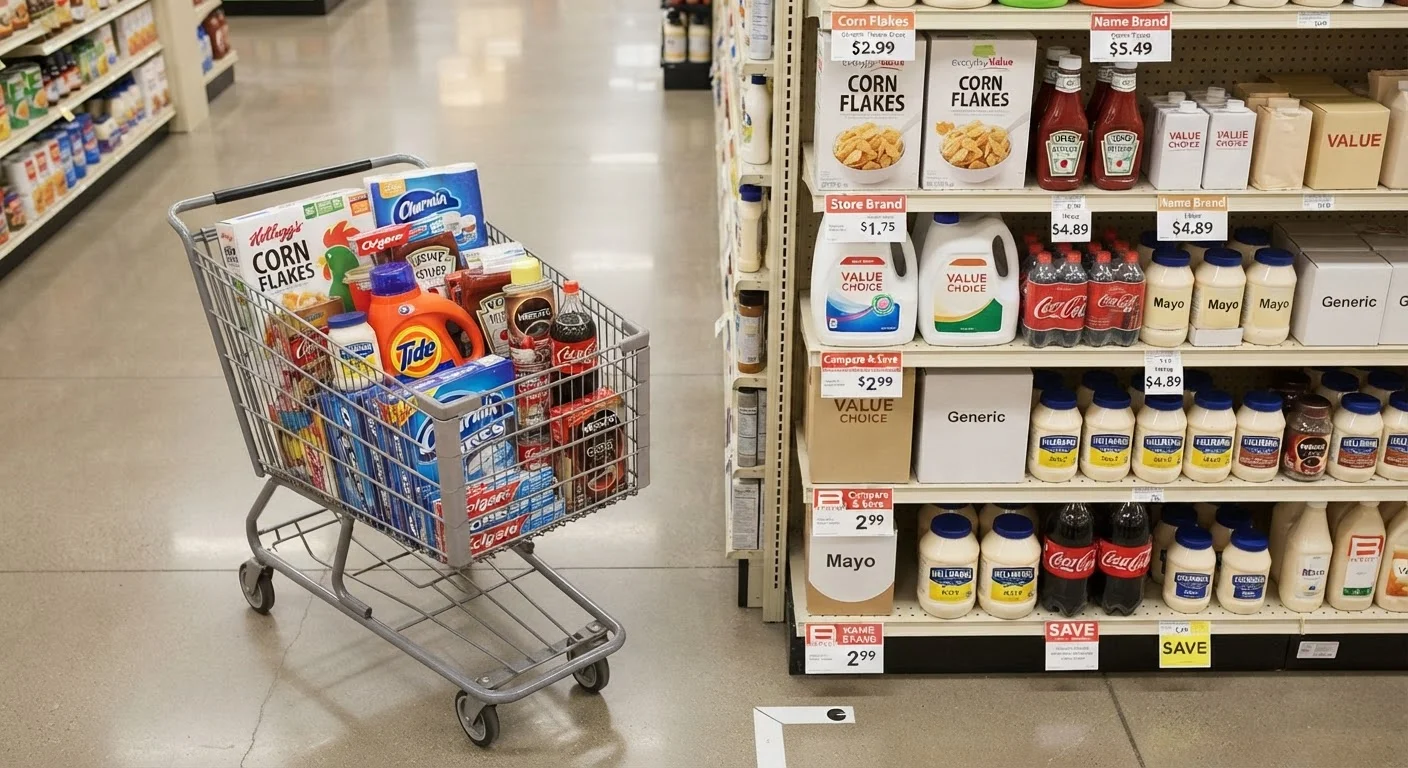
Photo credit: ResultsRover.com | Insights You Can Trust
In this article
Sticking to familiar brands can feel safe, but it often means overpaying. Here's an honest look at what brand loyalty costs and when it's worth it.
Key Takeaways
- Brand loyalty often leads consumers to pay a measurable premium for comparable quality.
- Loyalty programs return real value in some categories but rarely offset the cost of habitual overspending.
- Consistency and reliability from trusted brands can justify higher prices in specific situations.
- Objective product evaluation — not habit — should drive repeat purchases.
Reduces decision fatigue on routine purchases
Familiar brands eliminate the cognitive load of comparison shopping for items bought regularly. For time-pressed consumers, that efficiency has genuine value.
Predictable quality reduces risk of disappointment
When a product consistently meets expectations, the probability of a failed purchase drops. This matters most in categories where a bad experience has real consequences — food allergies, sensitive skin care, or professional tools.
Loyalty programs can return measurable value
Some brand loyalty programs provide points, discounts, or member pricing that offset part of the price premium — particularly for high-volume buyers in specific categories.
Established brands often have stronger warranty support
Major brands typically have clearer returns processes, more accessible customer service, and broader service networks, which can reduce the cost of ownership on durable goods.
Habitual premium payments without quality verification
Many consumers pay 20–40% more for branded versions of commoditized products — pain relievers, cleaning sprays, pantry staples — without confirming any quality difference exists.
Marketing shapes perception of quality unfairly
Heavy advertising investment builds brand recognition that consumers often misread as a quality signal. Packaging, celebrity association, and repetition influence preference independently of the product's actual performance.
Loyalty programs rarely offset the full premium
Points and rewards sound like free money but typically return a fraction of the price gap between a branded and unbranded alternative. The math often favors switching outright over staying loyal for rewards.
Limits exposure to genuinely better alternatives
Sticking with a familiar name means not discovering products that might perform better or cost less. Categories like grocery, personal care, and home goods see frequent quality improvements in private-label lines.
Compounds expense in high-frequency purchase categories
A small brand premium feels trivial per transaction but scales rapidly for items purchased weekly or monthly. Over a year, these premiums can represent a significant and invisible budget drain.
What Brand Loyalty Actually Costs
Brand loyalty — the tendency to repeatedly choose the same brand over alternatives — feels like a rational shortcut. You know what you're getting, you trust the quality, and the decision requires zero effort. But that convenience has a real dollar cost that rarely appears on any receipt.
Research on consumer behavior consistently shows that loyal buyers pay a price premium relative to comparable products. In categories like over-the-counter medications, cleaning supplies, and packaged food, store-brand or generic products frequently meet the same regulatory or functional standards as their branded counterparts, yet carry significantly lower price tags.
The gap compounds across high-frequency purchases. A modest per-unit premium on something bought weekly adds up to a substantial annual figure — a dynamic explored in depth in how small daily habits accumulate into large expenses.
25–40%
Typical price premium for branded vs. store-brand goods
Consumer Reports and USDA economic research have consistently documented this price gap across grocery and household product categories.
~80%
Store-brand OTC drugs sharing same active ingredients
The FDA requires that store-brand (generic) over-the-counter medications contain the same active ingredients and dosages as their branded equivalents.
Worth noting: the premium isn't always unjustified. There are product categories where brand differences in quality, reliability, or performance are genuine. The problem is that most consumers never stop to verify which category they're in.
The Case for Brand Loyalty
Brand loyalty isn't purely a marketing construct. There are defensible reasons to return to the same source repeatedly — provided the decision is conscious rather than reflexive.
Reduces decision fatigue on routine purchases
Familiar brands eliminate the cognitive load of comparison shopping for items bought regularly. For time-pressed consumers, that efficiency has genuine value.
Predictable quality reduces risk of disappointment
When a product consistently meets expectations, the probability of a failed purchase drops. This matters most in categories where a bad experience has real consequences — food allergies, sensitive skin care, or professional tools.
Loyalty programs can return measurable value
Some brand loyalty programs provide points, discounts, or member pricing that offset part of the price premium — particularly for high-volume buyers in specific categories.
Established brands often have stronger warranty support
Major brands typically have clearer returns processes, more accessible customer service, and broader service networks, which can reduce the cost of ownership on durable goods.
Loyalty programs deserve a closer look here. Many brands offer points, cashback, or exclusive pricing to repeat customers. Whether those returns actually offset the premium paid is a separate calculation — one that comparing loyalty programs to cash back portals can help clarify.
Where Brand Loyalty Works Against You
The loyalty premium becomes a problem when it's invisible — when consumers aren't aware they're paying it, or assume it's justified without verifying.
Habitual premium payments without quality verification
Many consumers pay 20–40% more for branded versions of commoditized products — pain relievers, cleaning sprays, pantry staples — without confirming any quality difference exists.
Marketing shapes perception of quality unfairly
Heavy advertising investment builds brand recognition that consumers often misread as a quality signal. Packaging, celebrity association, and repetition influence preference independently of the product's actual performance.
Loyalty programs rarely offset the full premium
Points and rewards sound like free money but typically return a fraction of the price gap between a branded and unbranded alternative. The math often favors switching outright over staying loyal for rewards.
Limits exposure to genuinely better alternatives
Sticking with a familiar name means not discovering products that might perform better or cost less. Categories like grocery, personal care, and home goods see frequent quality improvements in private-label lines.
Compounds expense in high-frequency purchase categories
A small brand premium feels trivial per transaction but scales rapidly for items purchased weekly or monthly. Over a year, these premiums can represent a significant and invisible budget drain.
Some spending myths reinforce blind loyalty. The belief that a higher price signals higher quality, or that a familiar brand is inherently safer, doesn't hold across all product types. Common spending beliefs that don't hold up to scrutiny examines several of these assumptions directly.
When 'Convenience' and Loyalty Overlap
Brand loyalty and convenience spending are closely related traps. Paying more to avoid the effort of comparing alternatives is a form of convenience premium — not a quality decision. If you find yourself defaulting to a brand primarily because switching feels like work, that's worth examining. Understanding when paying more for convenience is justified offers a clearer framework for that trade-off.
Evaluating Your Own Brand Habits
The practical question isn't whether brand loyalty is good or bad — it's whether yours is deliberate. A few straightforward steps can sharpen that judgment.
- Identify your repeat purchases. List products you buy on autopilot. Household staples, personal care items, and pantry goods are common candidates.
- Check what you're actually paying for. Compare active ingredients, specifications, or nutritional content against lower-cost alternatives. In many regulated categories, differences are minimal.
- Factor in total cost. For durable goods — appliances, tools, electronics — a higher-priced brand might deliver lower lifetime cost. Calculating total cost of ownership provides a framework for this comparison.
- Run a trial switch. On low-stakes items, try the alternative for one purchase cycle. Objective assessment beats assumption.
Working brand substitutions into a household budget isn't complicated, but it does require tracking where the money goes. Budgeting fundamentals can help build that visibility.
The goal isn't to abandon every familiar name — it's to make sure you're choosing them, rather than just defaulting to them.

Author
Smart Shopping Editorial Team
Smart Shopping Editorial Team is the collective byline for our editorial team and contributor network. Articles published under this byline or an editorial pen name are researched, written, and reviewed according to our editorial standards for clarity, consistency, and independence before publication.
View all articles →