
Post-Purchase Protections: A Complete Consumer Reference Guide
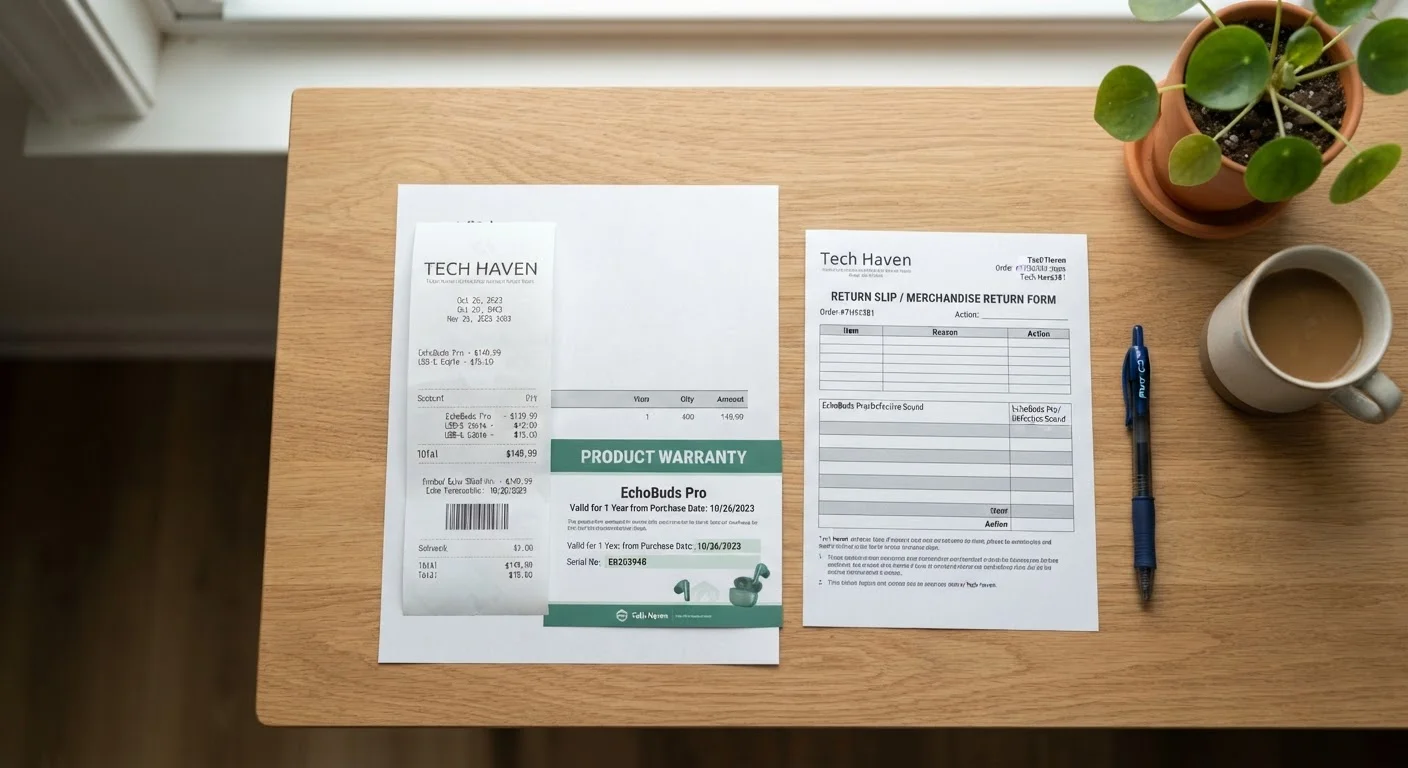
Photo credit: ResultsRover.com | Insights You Can Trust
In this article
A concise reference covering key terms and concepts in return policies, warranties, and consumer protections — all in one place.
What Post-Purchase Protections Actually Cover
When something goes wrong after a purchase, most consumers have more options than they realize — and fewer guarantees than marketing language implies. Post-purchase protections fall into several distinct categories, each with its own rules, time limits, and scope. Knowing which protection applies to your situation is the first step to using it effectively.
The four main layers of protection are: the retailer return policy, the manufacturer's warranty, any extended warranty or service contract you may have purchased, and credit card protections such as purchase protection or extended warranty coverage offered by your card issuer. These layers can overlap, but they do not stack infinitely — and gaps exist between them.
For a side-by-side breakdown of how warranties and return policies differ in practice, see how warranties and return policies compare. For a broader overview of all protection types together, this coverage comparison breaks them down in detail.
| Federal law governing written warranties | Magnuson-Moss Warranty Act (1975) (U.S. Federal Trade Commission) |
| FTC Cooling-Off Rule cancellation window | 3 business days (U.S. Federal Trade Commission) |
| Typical retailer return window (general merchandise) | 15 to 90 days (Varies by retailer; no federal minimum) |
| Implied warranty protection | Applies in most U.S. states by default (Uniform Commercial Code (UCC)) |
| Credit card purchase protection duration (typical) | 60 to 120 days from purchase (Varies by card issuer; check your cardholder agreement) |
| Chargeback filing deadline (general guideline) | 60 to 120 days from statement date (Varies by card network and issuer) |
Key Terms Defined: The Reference Glossary
Consumer protection language is notoriously inconsistent. Retailers use terms like "guarantee" and "warranty" interchangeably, and "extended warranty" rarely means what buyers assume. The definitions below reflect standard legal and regulatory usage in the United States.
Return Policy
A retailer's stated rules governing when and how a customer may return a purchased item for a refund, exchange, or store credit. Terms vary widely by store and product category.
Manufacturer's Warranty
A guarantee from the product's maker that the item will function as described for a specified period. It typically covers defects in materials or workmanship but not damage caused by the buyer.
Extended Warranty
A service contract — sold separately by a retailer or third party — that extends coverage beyond the manufacturer's warranty period. These are distinct from warranties and vary significantly in what they actually cover.
Implied Warranty of Merchantability
A legal protection under the Uniform Commercial Code (UCC) that holds that any product sold must be fit for its ordinary intended purpose, even if no written warranty exists.
Magnuson-Moss Warranty Act
A U.S. federal law that sets minimum standards for written warranties on consumer products and prohibits manufacturers from making full warranties conditional on the use of specific branded parts or services.
Restocking Fee
A charge deducted from a refund when a customer returns certain items, most commonly electronics or opened packaging. The fee is set by the retailer, not by law.
Chargeback
A credit card dispute mechanism that allows a cardholder to request that their bank reverse a charge — typically used when a merchant fails to deliver goods, ships a defective item, or refuses a valid return.
As-Is Sale
A transaction in which the seller explicitly disclaims all warranties, meaning the buyer accepts the item in its current condition with no recourse for defects discovered afterward.
Pro-Rated Warranty
A warranty that provides decreasing coverage value over time. For example, a battery may be replaced free in year one, but the buyer pays a rising percentage of the cost in subsequent years.
Full Warranty
Under the Magnuson-Moss Act, a warranty that must provide free repair or replacement within a reasonable time, with no deductible and no requirement that the buyer perform duties beyond notification.
Limited Warranty
Any written warranty that does not meet all Magnuson-Moss standards for a full warranty. Most consumer product warranties are limited, meaning they may exclude certain defects, labor costs, or require the buyer to pay shipping.
Cooling-Off Rule
An FTC regulation giving consumers three business days to cancel certain door-to-door or off-premises sales contracts for $25 or more, without penalty. It does not apply to purchases made in a permanent retail store.
State Laws Can Expand Your Rights
Federal law sets a floor for consumer protections, but individual states may provide stronger rules — particularly around implied warranties, return fraud, and lemon laws for vehicles. If a retailer or manufacturer denies a claim, your state attorney general's consumer protection office is a useful starting point. Always verify the specific rules in your state before assuming federal minimums apply.
Extended Warranties Are Service Contracts, Not Warranties
Despite the name, extended warranties sold at retail checkout are legally service contracts, not warranties. They are regulated differently and governed primarily by contract law rather than the Magnuson-Moss Act. Read the terms carefully: coverage gaps, deductibles, and exclusions vary widely and can make these contracts less valuable than they appear at point of sale.
Understanding these distinctions matters most when a claim is denied. A retailer saying a return is outside the "warranty period" may simply mean their own store policy has expired — your manufacturer's warranty or implied warranty rights may still apply. Keep documentation of your purchase date, product condition, and any communications with the seller.
For practical steps to protect yourself before a problem arises, protecting major purchases before something goes wrong outlines habits worth building into every significant purchase.
How to Use These Protections When You Need Them
Knowing your rights and exercising them are two different things. Most successful claims share a few common factors: clear documentation, timely action, and the right escalation path.
~$816B
U.S. retail returns per year (estimated)
According to the National Retail Federation's 2023 Consumer Returns report, returns represent a significant share of annual retail sales.
3 days
FTC Cooling-Off Rule cancellation window
The FTC's Cooling-Off Rule gives buyers three business days to cancel qualifying off-premises sales without penalty.
~18%
Average return rate across U.S. retailers
The National Retail Federation estimated an average return rate of approximately 18% of total retail sales in 2022.
- Start with the retailer. Return policies are the fastest resolution channel. Act within the stated window, keep original packaging where possible, and bring proof of purchase.
- Move to the manufacturer if the retailer can't help. Defects that appear after a return window has closed often fall under the manufacturer's warranty. Contact them directly and document every exchange in writing.
- Check your credit card benefits. Many cards offer purchase protection (covering damage or theft shortly after purchase) and extended warranty coverage that adds time to the manufacturer's warranty. Review your cardholder agreement — these benefits are underused precisely because they are underadvertised.
- File a chargeback as a last resort. If a merchant refuses to honor a valid claim, a chargeback through your card issuer may be appropriate. Use it after attempting resolution with the seller, and file within your card's stated deadline.
- Escalate to regulators when warranted. The FTC, your state attorney general's office, and the Consumer Financial Protection Bureau all accept consumer complaints that can prompt enforcement action.
For a framework covering the full purchase lifecycle — including how protection decisions fit into smarter buying overall — see this end-to-end buying guide. A complete overview of your legal rights as a consumer is also available at Returns, Warranties, and Consumer Rights: The Full Picture.

Author
Smart Shopping Editorial Team
Smart Shopping Editorial Team is the collective byline for our editorial team and contributor network. Articles published under this byline or an editorial pen name are researched, written, and reviewed according to our editorial standards for clarity, consistency, and independence before publication.
View all articles →