
Coupons, Promo Codes, and Cash Back: What Each One Actually Does
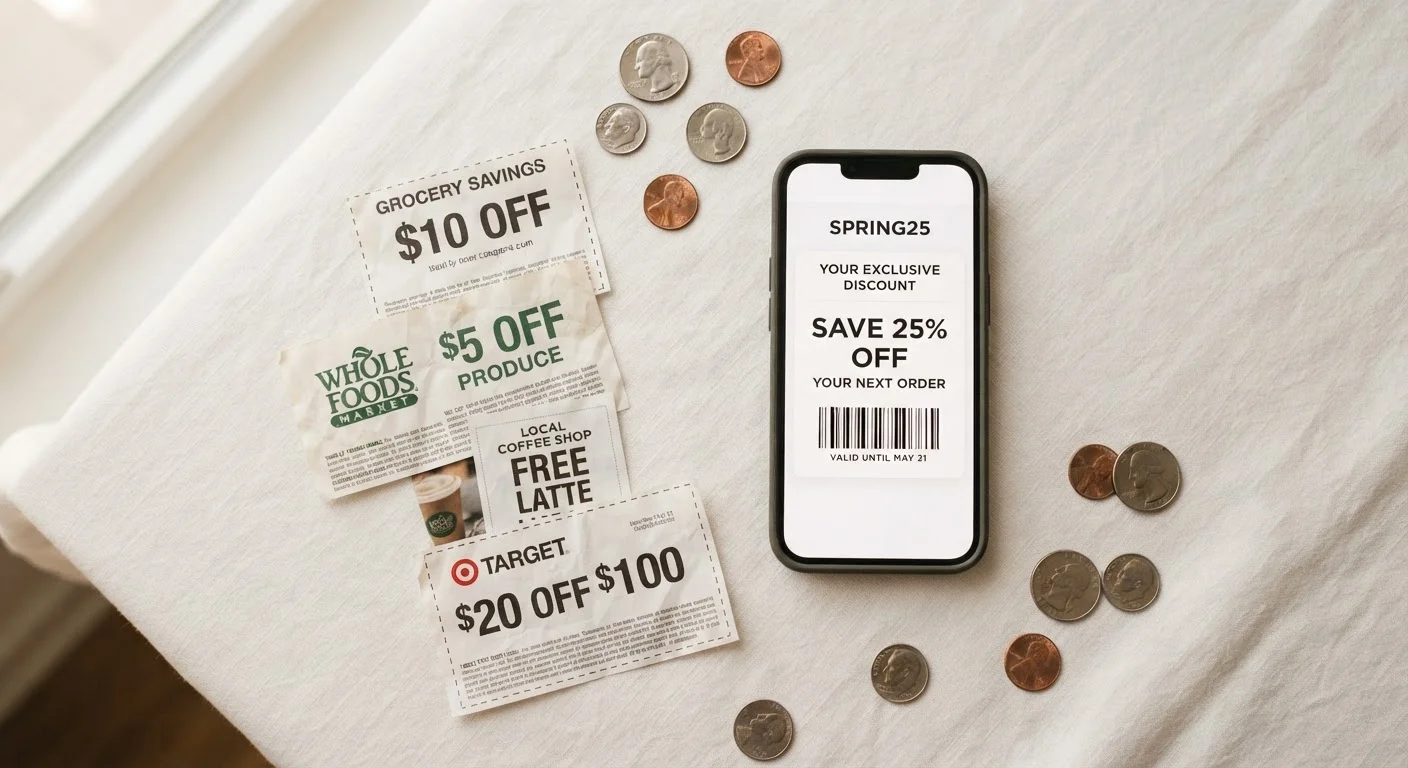
Photo credit: ResultsRover.com | Insights You Can Trust
In this article
Coupons, promo codes, and cash back all save money differently. Learn how each mechanism works so you can use them strategically.
Key Takeaways
- Coupons reduce the price at checkout, either in dollar amounts or as a percentage off specific items.
- Promo codes work like digital coupons entered at checkout, often with broader eligibility rules than traditional coupons.
- Cash back returns a percentage of what you spent after the purchase clears — it is a rebate, not an upfront discount.
- Each mechanism has different restrictions on stacking, expiration, and eligible purchases.
- Using all three strategically on the same purchase is sometimes possible, depending on retailer policy.
How Coupons Work
A coupon is a straightforward price reduction applied at the point of purchase. It knocks a fixed dollar amount or a set percentage off a specific item or order. Coupons can be issued by the manufacturer — in which case they're typically accepted at any participating retailer — or by the store itself, which limits redemption to that chain.
The key thing to understand about coupons is their restrictions. Most are tied to a specific product, size, quantity, or purchase minimum. A coupon for a particular brand's 32-oz version won't apply to the 16-oz version, even if the price is similar. Expiration dates are firm, and cashiers (or checkout systems) will reject coupons used outside their terms.
Paper coupons still circulate through newspaper inserts and direct mail, but digital coupons — clipped to a store loyalty account — now dominate. Once clipped, a digital coupon typically applies automatically when the qualifying item is scanned, removing the need to present anything at the register. For a detailed breakdown of how these two formats differ in real-world use, see our comparison of digital and paper coupons.
Check the Issuer Before Assuming Acceptance
Manufacturer coupons are generally accepted wherever the product is sold, but store coupons are only valid at the issuing retailer. Before planning a shopping trip around a coupon, confirm whether it's store-issued or manufacturer-issued — it's usually stated in the fine print.
How Promo Codes Work
Promo codes — sometimes called discount codes or coupon codes — are alphanumeric strings entered during online checkout to trigger a discount. Functionally, they're similar to coupons: the savings are applied before your card is charged. The main difference is their origin and flexibility.
While traditional coupons are usually product-specific, promo codes more often apply to an entire order, a spending threshold, or a broad category. A code might give 15% off everything in your cart or free shipping on orders over $50. Retailers distribute them through email lists, affiliate sites, social media, and seasonal promotions.
Promo codes carry risks worth knowing. They can be single-use, account-restricted, or region-locked. Codes circulating on third-party deal sites may be expired or intended for a different audience segment. The only reliable way to confirm a code's validity is to apply it and read the confirmation message before completing checkout.
Promo Codes Found on Deal Sites May Be Stale
Third-party coupon aggregator sites pull codes from multiple sources and don't always remove them when they expire. A code listed on such a site could be months old or intended for a different customer segment. Treat deal-site codes as worth trying but not worth counting on — always verify at checkout before finalizing your order.
How Cash Back Works
Cash back is fundamentally different from coupons and promo codes because it's a rebate — money returned to you after a transaction, not a reduction applied during it. You pay full price (or whatever discounted price you negotiated), and a percentage comes back later.
Cash back comes from two main sources. First, credit cards that offer cash back rewards return a percentage of your spending — commonly 1% to 5% depending on the category — credited to your account or statement. Second, cash back shopping portals track purchases you initiate through their links and return a retailer-funded rebate, typically ranging from 1% to 15% depending on the merchant.
~$3B
U.S. digital coupon redemptions annually
Industry tracking data consistently shows billions of digital coupon transactions per year across U.S. grocery and retail channels.
1%–15%
Typical cash back portal rebate range
Cash back rates through shopping portals vary widely by retailer and category; higher rates often apply to travel, apparel, and subscription services.
90 days
Maximum typical portal payout delay
Most cash back portals hold rebates for 30 to 90 days to account for return windows before releasing funds to members.
The rebate nature of cash back has practical implications. Because the full price posts first, it doesn't help if you're short on funds at checkout. And because portals require a tracked link to attribute the purchase, you must start your shopping session from the portal — bookmarking a retailer's site directly won't trigger the rebate. For more on how portals compare to loyalty programs, see our breakdown of cash back portals versus store loyalty programs.
Using All Three Together — and When You Can't
The most effective approach treats coupons, promo codes, and cash back as complementary layers rather than alternatives. In many cases, you can apply a digital coupon to a specific item, enter a promo code for a site-wide discount, and then earn cash back through a portal — all on the same order.
But layering has limits. Many retailers prohibit applying more than one promo code per order. Some cash back portals exclude purchases where a third-party coupon code was used, because the retailer's affiliate terms don't allow it. And manufacturer coupons sometimes carry language restricting use with other offers.
The practical approach is to confirm the rules of each mechanism before committing. Check the promo code's terms, review the cash back portal's exclusions list, and read coupon fine print for "cannot be combined" language. Our guide to stacking discounts walks through which combinations retailers most commonly permit and how to verify before checkout. For a broader framework on building consistent savings habits, see the complete roadmap to using deals and coupons year-round.
Frequently Asked Questions

Author
Smart Shopping Editorial Team
Smart Shopping Editorial Team is the collective byline for our editorial team and contributor network. Articles published under this byline or an editorial pen name are researched, written, and reviewed according to our editorial standards for clarity, consistency, and independence before publication.
View all articles →