
The Honest Trade-Offs of Using Food Rewards in Pet Training
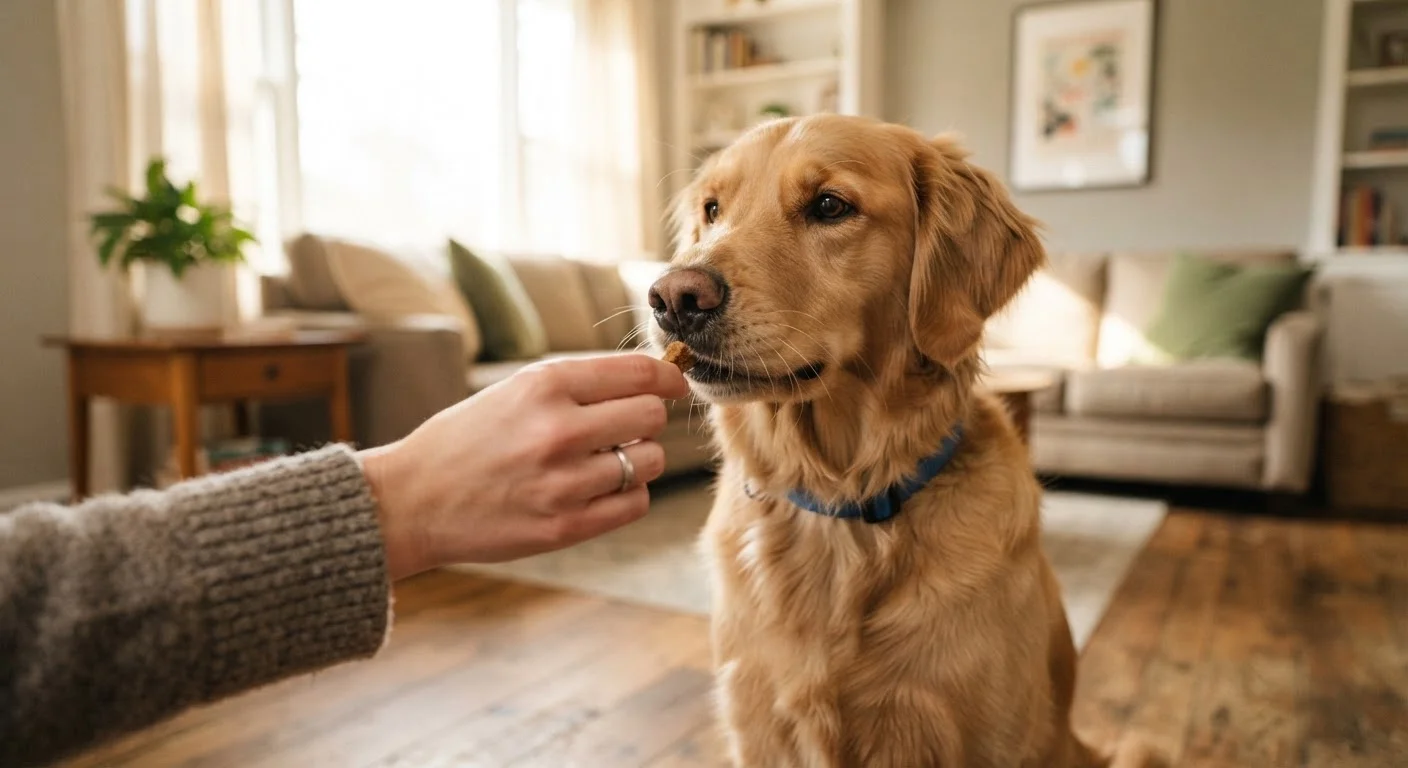
Photo credit: ResultsRover.com | Insights You Can Trust
In this article
Treat-based training is widely endorsed, but it comes with genuine trade-offs. Weigh the advantages and limitations before making it your primary method.
Key Takeaways
- Food rewards accelerate learning by giving animals a clear, immediate signal that they did something right.
- Over-reliance on treats can reduce a pet's motivation to respond when food is absent.
- Treat calories must be counted as part of your pet's daily food intake to avoid weight gain.
- Systematic fading — gradually replacing treats with praise or play — helps maintain trained behaviors long-term.
- Food rewards work best as one tool within a broader, varied reinforcement strategy.
Provides clear, immediate feedback during learning
Animals associate the reward with the precise moment they performed correctly, making the learning signal unambiguous. This clarity speeds up the acquisition of new behaviors compared to methods that rely on less immediate feedback.
Effective across a wide range of species
Because food satisfies a primary biological drive, it works as a motivator for most domesticated pets — not just dogs. Cats, birds, rabbits, and even some reptiles can be trained effectively using food rewards when the treat matches the animal's preferences.
Supports a positive emotional state during training
Sessions that end with a pleasant outcome help animals build a positive association with the training environment itself. Over time, this can reduce anxiety and increase willingness to engage — a meaningful benefit for shy or reactive animals.
Accessible and easy to implement for beginners
Unlike some tools that require precise technique to avoid harm, food rewards are forgiving for new trainers. Mistimed rewards slow progress but don't cause distress, giving owners room to learn alongside their pets.
Highly adaptable to individual motivation levels
Treats can be scaled in value — from low-value kibble for easy tasks to high-value protein treats for challenging or distracting environments — giving trainers a flexible tool that matches task difficulty.
Risk of treat dependency if not phased out
Pets trained exclusively with food can learn to respond only when they can see or smell a reward. Without deliberate reinforcement fading, this creates behaviors that break down in everyday situations where treats aren't present.
Caloric load adds up quickly
Even small treats contribute to daily caloric intake, and multiple training sessions per day can push pets toward excess weight if portions aren't adjusted. Owners should track treat calories and compensate by slightly reducing meal size.
Less effective for food-indifferent animals
Some pets — particularly cats, certain dog breeds, or animals that are stressed or unwell — show little interest in food during training. In these cases, food rewards may need to be replaced or supplemented with play, access, or social interaction.
Can increase competition in multi-pet households
When food is present during training, other pets in the home may become disruptive or anxious. Managing separate sessions takes additional time and planning to keep each animal's progress on track.
May not transfer well to high-distraction environments
A pet that performs reliably for food at home may ignore treats entirely at the dog park or on a busy street. Building generalization requires deliberate practice in varied environments, which owners sometimes overlook.
Why Food Rewards Are So Widely Used
Treat-based training works because it leverages one of the most fundamental principles in behavioral science: operant conditioning. When a behavior is immediately followed by something the animal wants, that behavior becomes more likely to repeat. Food is a primary reinforcer — meaning it satisfies a biological need — which makes it reliably motivating across a wide range of species, from dogs and cats to rabbits and parrots.
This reliability is a key reason that certified professional trainers and veterinary behaviorists commonly recommend food rewards, particularly when teaching new skills or working with animals that have no prior training history. For a deeper look at how reward-based approaches fit within humane training overall, see our practical overview of force-free training methods.
Provides clear, immediate feedback during learning
Animals associate the reward with the precise moment they performed correctly, making the learning signal unambiguous. This clarity speeds up the acquisition of new behaviors compared to methods that rely on less immediate feedback.
Effective across a wide range of species
Because food satisfies a primary biological drive, it works as a motivator for most domesticated pets — not just dogs. Cats, birds, rabbits, and even some reptiles can be trained effectively using food rewards when the treat matches the animal's preferences.
Supports a positive emotional state during training
Sessions that end with a pleasant outcome help animals build a positive association with the training environment itself. Over time, this can reduce anxiety and increase willingness to engage — a meaningful benefit for shy or reactive animals.
Accessible and easy to implement for beginners
Unlike some tools that require precise technique to avoid harm, food rewards are forgiving for new trainers. Mistimed rewards slow progress but don't cause distress, giving owners room to learn alongside their pets.
Highly adaptable to individual motivation levels
Treats can be scaled in value — from low-value kibble for easy tasks to high-value protein treats for challenging or distracting environments — giving trainers a flexible tool that matches task difficulty.
The Real Disadvantages Worth Knowing
No training method is without trade-offs, and treat-based training is no exception. Understanding its limitations helps you use it strategically rather than defaulting to it blindly.
Risk of treat dependency if not phased out
Pets trained exclusively with food can learn to respond only when they can see or smell a reward. Without deliberate reinforcement fading, this creates behaviors that break down in everyday situations where treats aren't present.
Caloric load adds up quickly
Even small treats contribute to daily caloric intake, and multiple training sessions per day can push pets toward excess weight if portions aren't adjusted. Owners should track treat calories and compensate by slightly reducing meal size.
Less effective for food-indifferent animals
Some pets — particularly cats, certain dog breeds, or animals that are stressed or unwell — show little interest in food during training. In these cases, food rewards may need to be replaced or supplemented with play, access, or social interaction.
Can increase competition in multi-pet households
When food is present during training, other pets in the home may become disruptive or anxious. Managing separate sessions takes additional time and planning to keep each animal's progress on track.
May not transfer well to high-distraction environments
A pet that performs reliably for food at home may ignore treats entirely at the dog park or on a busy street. Building generalization requires deliberate practice in varied environments, which owners sometimes overlook.
One frequently underestimated issue is the caloric cost. Training treats are small by design, but multiple short sessions per day can add up quickly. Consult your veterinarian about appropriate daily treat limits for your specific pet — a general guideline often cited is that treats should account for no more than 10% of daily caloric intake, but individual needs vary. For a broader look at how food choices affect your pet's health, the nutritional trade-offs between dry and wet food article offers useful context.
Managing Treat Dependency Over Time
The most common concern trainers hear from owners is: "My dog only listens when I have a treat in my hand." This is a real problem — but it's a training execution issue, not an inherent flaw in food rewards.
When to Start Fading Treats
Begin phasing out predictable treat delivery once your pet can perform a behavior reliably — typically after several consistent repetitions across different settings. Don't wait until the behavior is "perfect"; fading too late can entrench the expectation of food. A good rule of thumb is to reward roughly 80% of correct responses initially, then gradually decrease frequency while keeping the occasional high-value treat in rotation.
The solution is a process called reinforcement fading: systematically reducing treat frequency while increasing the value of other rewards — praise, play, or access to something the animal enjoys. The key is to vary your reinforcement unpredictably rather than eliminating it abruptly. Unpredictable reward schedules actually strengthen behavior over time, a concept known as variable ratio reinforcement.
Pairing food with a consistent marker signal — a click or a short verbal cue — can also help. The marker itself becomes meaningful, giving you more flexibility in when and whether food follows. Clicker training versus verbal markers explores how these marker systems differ in practice.
Fitting Food Rewards Into a Broader Strategy
Treat-based training performs best as part of a varied reinforcement toolkit rather than as a standalone method. Some pets are more motivated by play or social interaction than by food, and even highly food-motivated animals benefit from learning to work for non-food rewards in real-world contexts.
~10%
Recommended daily caloric limit for treats
Many veterinary nutrition guidelines suggest treats — including training rewards — should represent no more than 10% of a pet's daily caloric intake to support healthy weight.
3–5 min
Recommended session length for most pets
Animal behavior experts generally recommend keeping individual training sessions short — around three to five minutes — to maintain engagement and prevent frustration or food satiation during a session.
If you live with more than one pet, food rewards introduce additional complexity — competition, jealousy, and uneven progress. Training multiple pets in the same household covers practical strategies for keeping sessions fair and productive.
Finally, understanding why food rewards work — and when other approaches might serve better — equips you to make informed decisions. What the science says about positive reinforcement versus punishment-based training provides evidence-based context for weighing your options.
This article is for general informational and educational purposes only. For guidance specific to your pet's health, dietary needs, or behavioral challenges, consult a licensed veterinarian or certified animal behaviorist.

Author
Pets & Animals Editorial Team
Pets & Animals Editorial Team is the collective byline for our editorial team and contributor network. Articles published under this byline or an editorial pen name are researched, written, and reviewed according to our editorial standards for clarity, consistency, and independence before publication.
View all articles →