Debit Card vs. Credit Card for Daily Spending
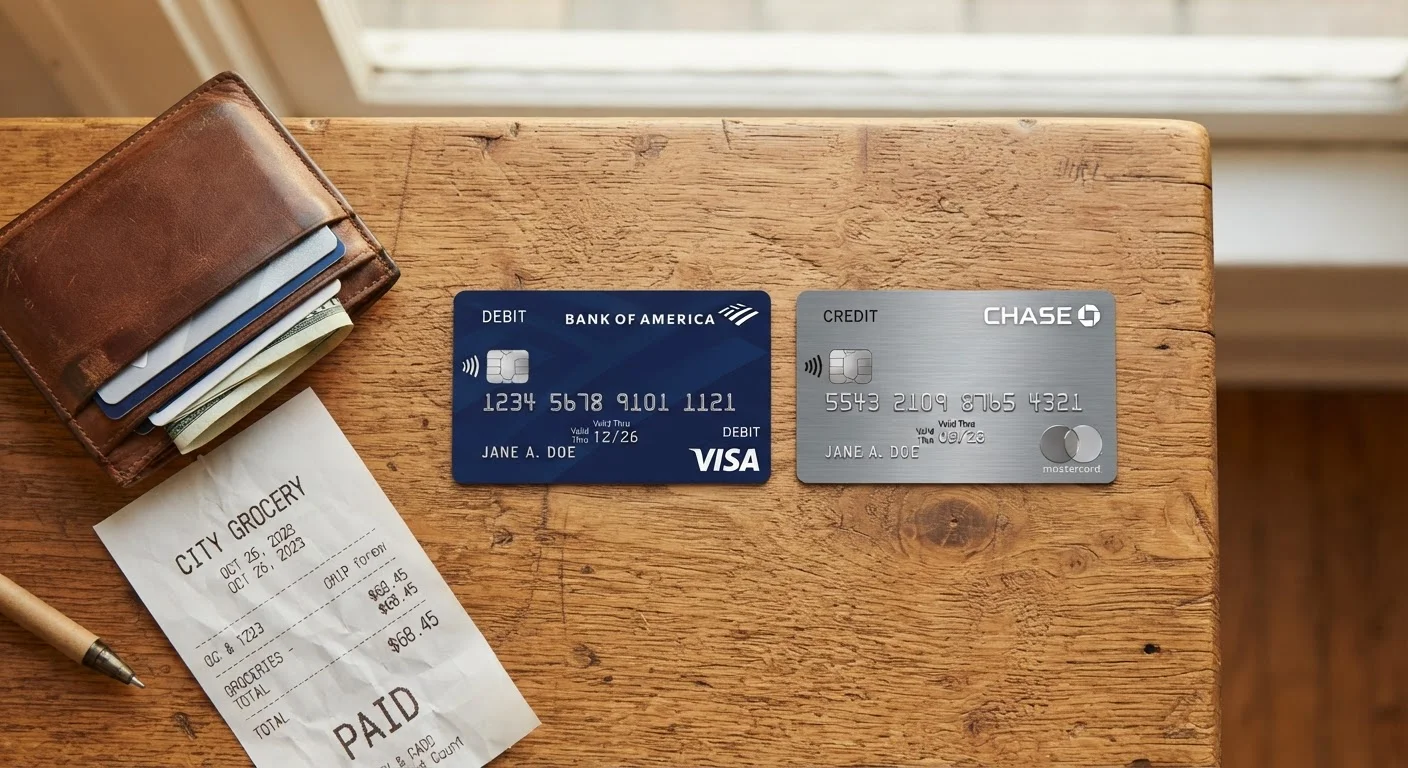
Photo credit: ResultsRover.com | Insights You Can Trust
In this article
The card you reach for at checkout affects fraud protection, spending habits, and potential rewards. Here's a clear side-by-side look.
Key Takeaways
- Credit cards offer significantly stronger federal fraud liability protections than debit cards under U.S. law.
- Debit cards spend money you already have; credit cards create a short-term loan that accrues interest if not paid in full.
- Carrying a credit card balance erases any rewards earned and adds to the debt you're trying to avoid.
- Both card types can work within a solid budget — the right choice depends on your spending discipline and financial goals.
- Disputing fraudulent charges is faster and less disruptive with a credit card because your bank account funds stay untouched.
How Each Card Actually Works
The mechanical difference is simple but consequential. When you swipe a debit card, money leaves your checking account within seconds — you're spending dollars you already own. When you swipe a credit card, your card issuer pays the merchant and you owe that amount to the issuer, typically due within 21–25 days interest-free if you pay in full.
That timing gap is where credit cards earn their edge for savvy users — and where they create risk for anyone who doesn't clear the balance. Carrying a balance from month to month triggers interest charges that quickly outpace any rewards earned. For a deeper look at how borrowing costs affect everyday purchases, see how financing compares to paying outright.
Debit cards sidestep that risk entirely by definition. What they can't do is manufacture rewards or extend credit-line protections — both of which matter when something goes wrong.
| Criterion | Debit Card | Credit Card |
|---|---|---|
| Funds source | Your checking account balance | Issuer's credit line (short-term loan) |
| Fraud liability cap | $50–$500+ depending on timing | $50 (often $0 by policy) |
| Impact on bank account during dispute | Funds removed immediately | Bank account untouched |
| Risk of interest charges | None | High if balance isn't paid in full |
| Rewards potential | Minimal to none | 1–5% cash back or points |
| Overspending guardrail | Capped by account balance | Credit limit allows overspending |
| Purchase protection / extended warranty | Rarely included | Common on many cards |
| Impact on credit score | None | Positive if managed well |
Fraud Protection: Where the Gap Is Widest
This is the clearest area where credit cards win, and it's not close. Under the Electronic Fund Transfer Act (EFTA), your liability on a lost or stolen debit card depends on how quickly you report it. Report within two business days and your maximum loss is $50. Wait longer and that cap rises to $500 — or becomes unlimited if you don't report within 60 days of your statement.
More importantly, a fraudulent debit charge drains real money from your checking account immediately. Rent, groceries, and automatic payments can bounce while you wait for the dispute to resolve — a process that can take 10 business days or more.
Credit cards are governed by the Fair Credit Billing Act (FCBA), which caps your liability at $50 on unauthorized charges — and most major issuers voluntarily offer $0 liability. Crucially, your bank account is never touched. The disputed amount sits as a pending charge, not a completed withdrawal, while the issuer investigates.
$50
Max credit card fraud liability under FCBA
The Fair Credit Billing Act limits consumer liability to $50 on unauthorized credit card charges; most major issuers reduce this to $0 voluntarily.
Up to 60 days
Window to report debit card fraud before unlimited liability
Under the Electronic Fund Transfer Act, failing to report unauthorized debit transactions within 60 days of your statement can result in unlimited loss.
20–24%
Typical credit card APR range in the U.S.
Federal Reserve data shows average credit card interest rates have remained elevated, making carried balances costly relative to most reward rates.
Many credit cards also layer on purchase protection and extended warranties. Credit card purchase protections vs. manufacturer warranties explains how those two layers interact on common purchases.
Spending Habits and Budget Impact
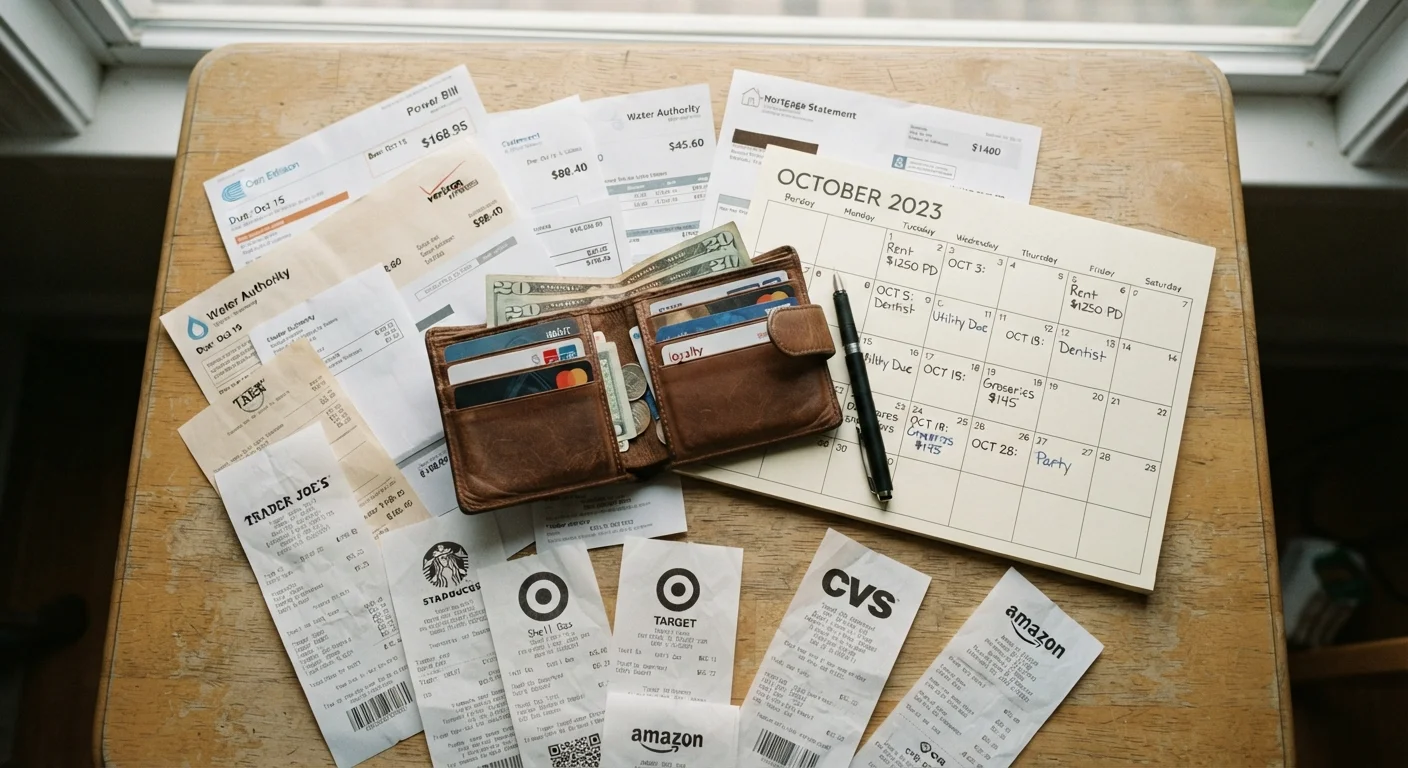
A debit card is a real-time budget enforcer. Every purchase reduces your visible balance, making it harder to ignore overspending. For households using the envelope-style system — allocating fixed amounts to spending categories — debit cards are a natural fit. See how that works digitally in our guide to envelope budgeting without cash.
Credit cards introduce a delay between spending and payment. That buffer is useful for float management but can mask how much you're actually spending in a month. If you're not actively tracking purchases, it's easy to hit your statement and feel surprised. Pairing a credit card with a consistent tracking method — whether an app, spreadsheet, or notebook — closes that gap. Spending tracker methods walks through the main options.
The money-leak most people overlook: credit card interest. Carrying even a modest balance month to month at 20–24% APR erases rewards and compounds the original purchase cost substantially. If full monthly payoff isn't realistic right now, a debit card is likely the lower-risk daily tool — while you work on the savings and debt fundamentals covered in the Saving & Debt hub.
Rewards and Everyday Perks
Debit cards rarely earn meaningful rewards. A few checking accounts offer small cash-back programs on debit purchases, but they're the exception and typically capped.
Credit cards, used without carrying a balance, can return 1–5% in cash back or points on everyday categories like groceries, gas, and dining. Over a year of normal household spending, that adds up to a meaningful figure — essentially a rebate on money you were going to spend anyway. Cash back vs. travel rewards breaks down which reward structure actually pays off for typical spending patterns.
The math only works when the balance is zero at the end of every cycle. The moment you pay interest, you're not earning rewards — you're subsidizing the issuer. Treat a rewards credit card as a debit card in disguise: spend only what you'd spend anyway, then pay it off completely.
This article is for general informational and educational purposes only and does not constitute personalized financial advice. Consult a qualified financial professional for guidance specific to your situation.

Author
Personal Finance Editorial Team
Personal Finance Editorial Team is the collective byline for our editorial team and contributor network. Articles published under this byline or an editorial pen name are researched, written, and reviewed according to our editorial standards for clarity, consistency, and independence before publication.
View all articles →