
Private Seller or Dealership: What Changes Beyond the Price Tag
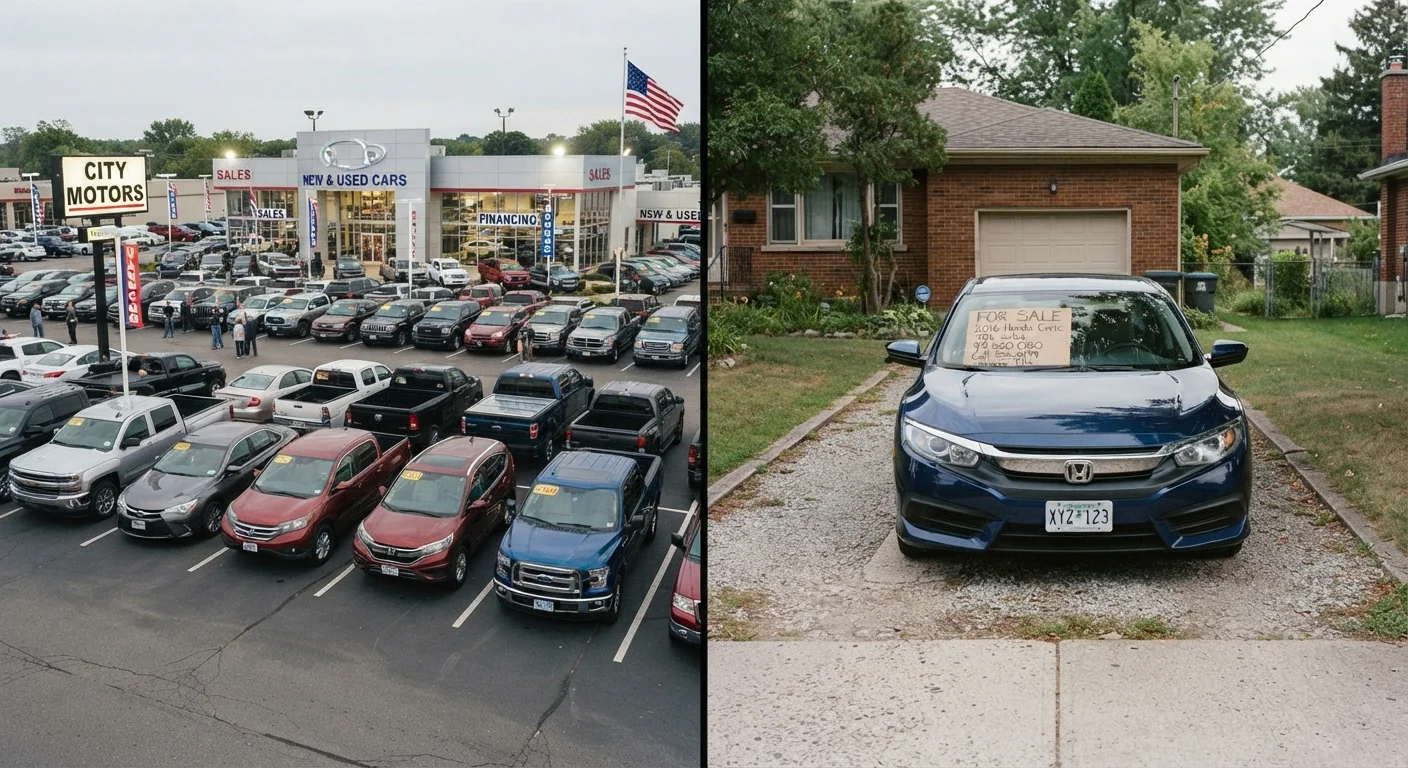
Photo credit: ResultsRover.com | Insights You Can Trust
In this article
Price isn't the only difference between buying from a private seller and a dealership. Learn what protections, risks, and processes actually differ.
Key Takeaways
- Private sales are typically 'as-is' transactions - no implied warranty applies in most states.
- Dealerships must comply with FTC consumer protection rules; private sellers face fewer legal obligations.
- Financing is generally only available through a dealership or arranged separately before a private purchase.
- Title transfer, odometer disclosure, and lien clearance are your responsibility in a private sale.
- A pre-purchase inspection by an independent mechanic is critical regardless of which channel you use.
Consumer Protections: Where the Gap Is Widest
The Federal Trade Commission's Used Car Rule requires dealerships to display a Buyers Guide on every used vehicle, disclosing whether a warranty applies and what it covers. That single document creates a paper trail and a legal standard private sellers simply aren't held to.
In a private sale, the vehicle is almost always sold 'as-is.' That means if the transmission fails two days after you drive it home, you typically have no legal claim against the seller - unless you can prove deliberate misrepresentation, which is difficult and expensive to pursue. Some states extend implied warranty protections to dealers but not private parties, widening that gap further.
Protecting yourself during a private-party car transaction requires extra steps: a vehicle history report, an independent pre-purchase inspection, and careful documentation of everything the seller tells you in writing.
| Criterion | Private Seller | Dealership |
|---|---|---|
| Consumer protections | As-is in most states | FTC Buyers Guide required |
| Warranty availability | Rarely available | CPO and dealer warranties common |
| Financing options | None - buyer arranges separately | On-site through multiple lenders |
| Title and lien handling | Buyer's responsibility | Dealer manages transfer |
| Price negotiability | Often more flexible | Multi-line negotiation required |
| Trade-in acceptance | Not available | Yes, with assessed offer |
| Paperwork complexity | Buyer handles most steps | Dealer processes most documents |
Financing, Title, and the Paperwork You Can't Skip
Dealerships function as one-stop shops for paperwork. They clear existing liens, handle title transfer, collect sales tax on your behalf, and submit registration documents - often within days. For buyers unfamiliar with the process, that structure has real value.
Private transactions put all of that on you. Before handing over payment, confirm the seller holds a clean title with no outstanding lien. If a lender's name appears on the title, the loan must be paid off before ownership can transfer legally. Paying a private seller before a lien is cleared is a risk that can leave you without a title for months.
On financing: dealers can source loans through their lending networks on the day of purchase. If you're buying privately, you'll need a pre-approved personal or auto loan from a bank or credit union before you shop. For a deeper look at how dealer loan arrangements actually work, see why dealer financing and outside financing aren't equal deals.
~40%
Used vehicles sold privately each year
Industry estimates suggest roughly four in ten used-car transactions in the U.S. occur between private parties rather than through dealerships.
$1,000-$3,000
Typical private-sale price difference vs. dealer retail
Consumer automotive research consistently finds private-party listings priced below comparable dealer retail, reflecting the absence of reconditioning and overhead costs.
Negotiation and Trade-Ins: Different Levers, Different Dynamics
Private sellers set their own price based on comparable listings and personal urgency, which can create genuine room to negotiate - particularly if the vehicle has been listed for a while. There's no manager approval layer, and the conversation is direct.
Dealerships introduce more variables. The out-the-door price bundles the vehicle, taxes, fees, and often optional add-ons like extended service contracts. Negotiating each element separately takes preparation. If you're trading in a vehicle at the same time, that figure enters the math as well - see how the trade-in process really works at a dealership to understand how dealers assess your car's value.
Private sellers generally cannot accept a trade-in. You'd need to sell your current vehicle separately - either privately or through a dealer - before completing the purchase. That adds time and coordination, but may net you more money on your current car than a dealer trade-in offer would.
Before contacting any seller, read a car listing like an informed buyer so you're not surprised by trim-level omissions or mileage disclaimers.
This article is for general informational purposes only and does not constitute legal or financial advice. Consult a licensed professional for guidance specific to your situation.

Author
Auto Essentials Editorial Team
Auto Essentials Editorial Team is the collective byline for our editorial team and contributor network. Articles published under this byline or an editorial pen name are researched, written, and reviewed according to our editorial standards for clarity, consistency, and independence before publication.
View all articles →