
The Case For and Against Extended Service Plans on Electronics
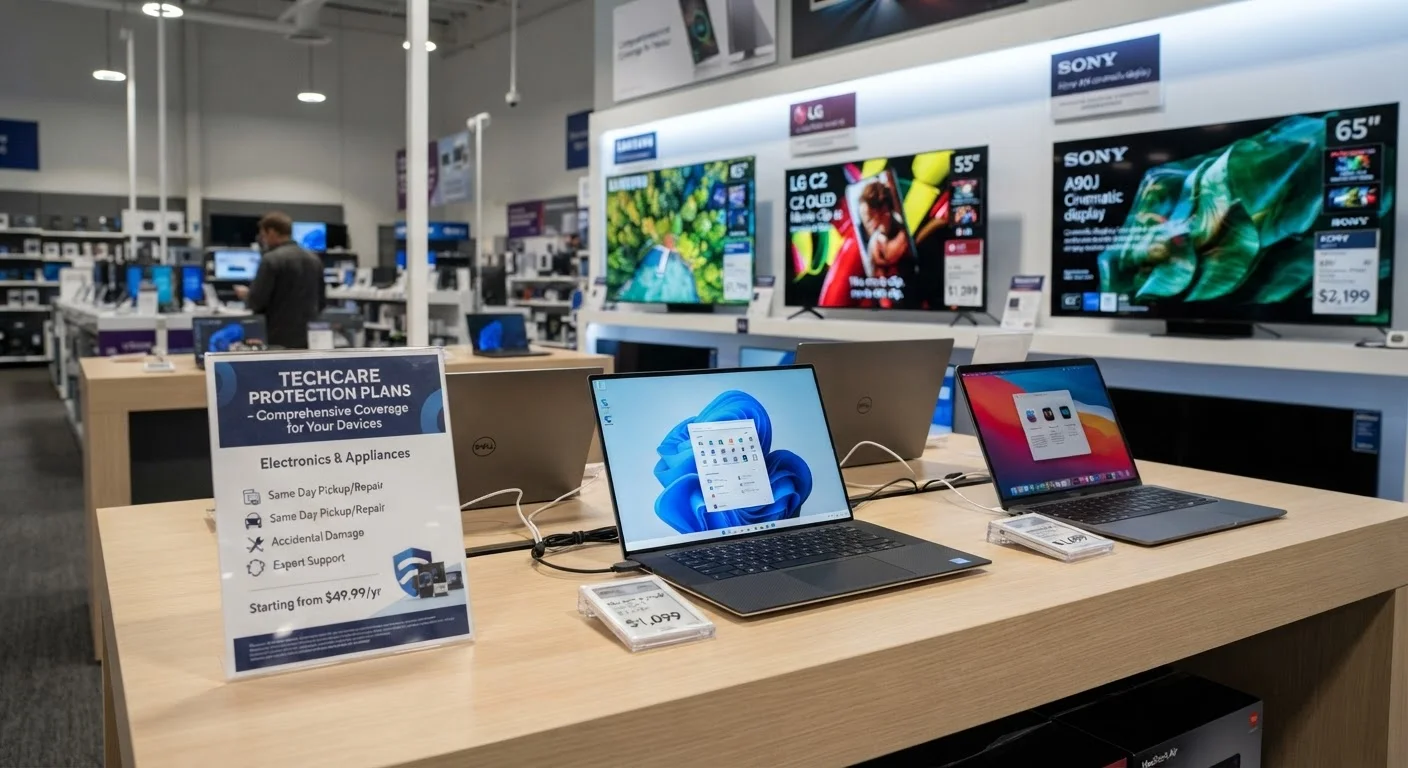
Photo credit: ResultsRover.com | Insights You Can Trust
In this article
Extended service plans offer peace of mind but come with trade-offs. A balanced look at when they add value and when they don't.
Key Takeaways
- Extended service plans cover repairs after the manufacturer warranty expires, but terms vary widely by retailer and product.
- Many electronics fail either early (covered by the manufacturer) or late (after the plan expires), reducing the window of likely use.
- Some credit cards already extend manufacturer warranties automatically — check before paying for redundant coverage.
- High-ticket, complex electronics like OLED TVs and laptops tend to benefit more from extended coverage than simpler devices.
- Always read the exclusions list: accidental damage, cosmetic wear, and battery degradation are frequently not covered.
Covers expensive repairs after manufacturer warranty ends
For complex electronics, out-of-warranty repair bills can rival or exceed the original purchase price. An ESP can cap those costs to a predictable upfront fee.
Predictable cost for long-term device owners
Consumers who keep devices for four or more years gain more exposure to the coverage window, improving the cost-benefit ratio compared to those who upgrade frequently.
Some plans include accidental damage coverage
Higher-tier plans from certain retailers cover drops and spills that manufacturer warranties explicitly exclude — useful for portable devices used outside the home.
Transferable plans can add resale value
A small number of plans are transferable to a new owner, which can make a used device more attractive and potentially command a higher resale price.
Plans often duplicate existing warranty coverage
Many plans begin on purchase date, running parallel to the manufacturer's warranty for the first year and providing no additional benefit during that overlap period.
Exclusions undermine real-world usefulness
Accidental damage, battery wear, cosmetic damage, and software issues — among the most common consumer problems — are excluded from many standard service plans.
Statistically, most devices won't need a claim
Consumer electronics failure rates during the typical extended warranty window (years two and three) are relatively low, meaning most purchasers pay for coverage they never use.
High plan cost relative to device value
For mid-range electronics, plan premiums can represent 15–25% of the purchase price — a figure that, spread over the plan term, rarely reflects the actuarial risk.
Third-party administrators may be difficult to work with
Plans sold by retailers are frequently administered by third-party companies. Claim processes, repair turnaround times, and customer service quality vary and are hard to evaluate at point of sale.
What an Extended Service Plan Actually Is
An extended service plan (ESP) — sometimes marketed as a protection plan or service contract — is a paid agreement that covers repair or replacement of a product after the manufacturer's warranty expires. Unlike a manufacturer warranty, which is included in the purchase price and backed by the brand, an ESP is a separate contract, usually sold by the retailer or a third-party administrator.
It's worth distinguishing this from a manufacturer warranty and a return policy before going further. For a clear breakdown of where each type of protection starts and stops, see what return policies, extended warranties, and manufacturer guarantees each cover.
Plans typically kick in after the original warranty ends and run for one to three additional years. Coverage, deductibles, and claim limits vary substantially — which is why reading the contract before purchasing matters more than trusting the sales pitch.
ESPs Are Not the Same as Insurance
Extended service plans are service contracts, not insurance products, and are regulated differently depending on the state. This distinction affects how disputes are handled and what consumer protections apply. If you're uncertain about your rights under a plan, your state attorney general's office or consumer protection bureau is a starting point for guidance.
The Case For: When Extended Plans Add Real Value
There are circumstances where an extended service plan does what it promises and justifies its cost.
Covers expensive repairs after manufacturer warranty ends
For complex electronics, out-of-warranty repair bills can rival or exceed the original purchase price. An ESP can cap those costs to a predictable upfront fee.
Predictable cost for long-term device owners
Consumers who keep devices for four or more years gain more exposure to the coverage window, improving the cost-benefit ratio compared to those who upgrade frequently.
Some plans include accidental damage coverage
Higher-tier plans from certain retailers cover drops and spills that manufacturer warranties explicitly exclude — useful for portable devices used outside the home.
Transferable plans can add resale value
A small number of plans are transferable to a new owner, which can make a used device more attractive and potentially command a higher resale price.
~55%
Consumers who never file an ESP claim
Industry estimates from consumer advocacy research consistently suggest a majority of extended service plan holders never submit a claim during the plan period.
1 year
Typical credit card warranty extension
Many major credit cards automatically extend a manufacturer's warranty by up to one additional year on eligible purchases, at no added cost to the cardholder.
The strongest case involves high-cost, complex devices — OLED televisions, gaming laptops, professional monitors — where a single out-of-warranty repair can run several hundred dollars. If the repair cost approaches or exceeds the plan price, the math tilts in the consumer's favor.
Plans also make more sense when the device will be used heavily over many years, increasing exposure to mechanical wear. A laptop used daily for work, for example, faces more cumulative stress than a tablet used occasionally.
The Case Against: Where Plans Fall Short
The arguments against extended service plans are grounded in data patterns and contractual fine print.
Plans often duplicate existing warranty coverage
Many plans begin on purchase date, running parallel to the manufacturer's warranty for the first year and providing no additional benefit during that overlap period.
Exclusions undermine real-world usefulness
Accidental damage, battery wear, cosmetic damage, and software issues — among the most common consumer problems — are excluded from many standard service plans.
Statistically, most devices won't need a claim
Consumer electronics failure rates during the typical extended warranty window (years two and three) are relatively low, meaning most purchasers pay for coverage they never use.
High plan cost relative to device value
For mid-range electronics, plan premiums can represent 15–25% of the purchase price — a figure that, spread over the plan term, rarely reflects the actuarial risk.
Third-party administrators may be difficult to work with
Plans sold by retailers are frequently administered by third-party companies. Claim processes, repair turnaround times, and customer service quality vary and are hard to evaluate at point of sale.
One structural problem is the "bathtub curve" of electronics failure: most failures happen either very early — typically covered by the manufacturer — or very late, after even the extended plan has expired. The middle window an ESP covers is often the period of lowest failure risk.
Beyond timing, it's worth checking what protections you already have. Many credit cards automatically extend manufacturer warranties by up to one year at no additional cost. Credit card purchase protections and manufacturer warranties can together form a meaningful safety net before you pay a retailer for more coverage.
Common exclusions also limit real-world utility. Accidental drops, liquid damage, cosmetic wear, and battery degradation — some of the most frequent consumer issues — are routinely excluded from standard plans. Always verify the exclusions list in writing before signing.
How to Decide Without Guessing
A straightforward framework helps cut through the noise at the point of sale — where pressure to decide quickly is by design.
- Price the plan as a percentage of the device cost. If the plan costs more than 15–20% of the purchase price, the economics rarely work in your favor on average.
- Check your existing protections first. Review your credit card benefits and the manufacturer warranty length. You may already have coverage you're paying to duplicate. Common misconceptions about warranty coverage are outlined in widespread warranty myths that cost shoppers money.
- Read the exclusions, not just the benefits. A plan that excludes accidental damage on a device you'll carry daily offers limited practical protection.
- Consider self-insuring for cheaper items. Setting aside the cost of a plan into a dedicated repair fund can be more flexible and equally effective for lower-priced electronics.
Building good habits around all your purchase protections — not just service plans — pays dividends over time. Protecting every major purchase before something goes wrong covers the broader set of steps worth taking after any significant electronics buy.
This article is for general informational purposes only and does not constitute financial or legal advice. Coverage terms, costs, and exclusions vary by retailer, plan administrator, and product. Review any service contract carefully and consult a qualified professional for advice specific to your situation.

Author
Smart Shopping Editorial Team
Smart Shopping Editorial Team is the collective byline for our editorial team and contributor network. Articles published under this byline or an editorial pen name are researched, written, and reviewed according to our editorial standards for clarity, consistency, and independence before publication.
View all articles →