
Implied Warranty vs. Express Warranty: A Side-by-Side Breakdown
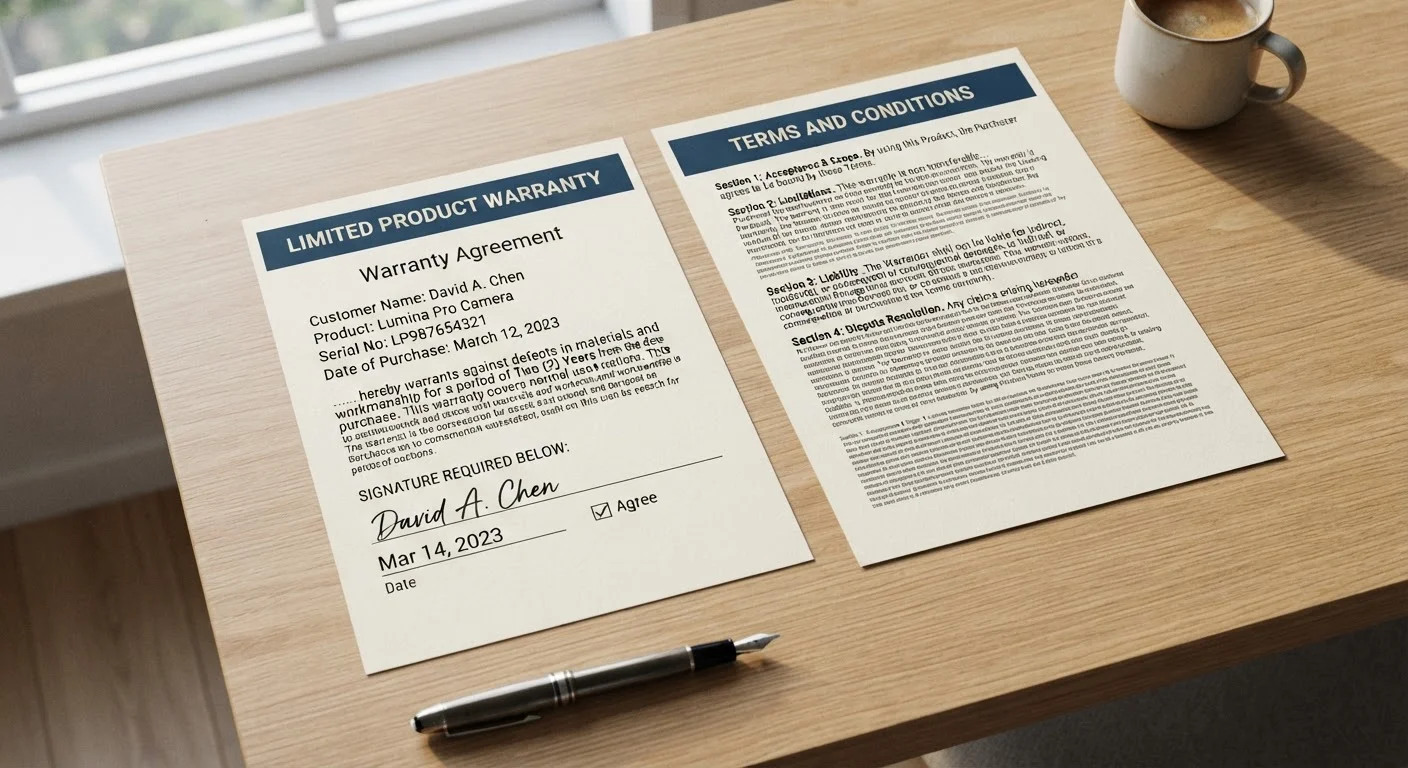
Photo credit: ResultsRover.com | Insights You Can Trust
In this article
Implied and express warranties both protect buyers, but they work very differently. Here's how each one applies to your purchases.
Key Takeaways
- Express warranties are explicit promises — written or verbal — about what a product will do or how long it will last.
- Implied warranties arise automatically under state law; sellers generally cannot disclaim them on consumer goods.
- The implied warranty of merchantability is the most common type, requiring goods to work for their ordinary purpose.
- Express warranty terms vary widely; always read the fine print before assuming what is covered.
- Both types can apply to the same purchase simultaneously, giving buyers layered protection.
What Each Warranty Actually Means
A warranty is a legally enforceable promise about a product's condition or performance. But not all warranties work the same way, and confusing them can leave money on the table when something goes wrong.
An express warranty is any explicit commitment a seller or manufacturer makes — in writing, in advertising, or even verbally at point of sale. If a product listing states "covered against defects for two years," that language creates an express warranty. The Federal Magnuson-Moss Warranty Act governs written express warranties on consumer products and sets minimum disclosure standards.
An implied warranty is not written anywhere. It exists automatically under the Uniform Commercial Code (UCC), which most U.S. states have adopted. The most common form — the implied warranty of merchantability — means a product must do what that type of product is expected to do. A blender must blend. A coat must withstand ordinary weather. No written promise is required; the law creates the protection the moment a sale occurs.
For a broader look at how these fit alongside other post-purchase protections, see our plain-language warranty introduction.
| Criterion | Express Warranty | Implied Warranty |
|---|---|---|
| How it's created | Explicit promise (written or verbal) | Automatically by law at point of sale |
| Requires documentation | Yes — terms should be in writing | No — exists regardless of paperwork |
| Governed by | Magnuson-Moss Warranty Act + contract terms | Uniform Commercial Code + state law |
| Duration | Stated in the warranty document | Set by state law (often up to 4 years) |
| Can be disclaimed | Seller can limit scope and remedies | Often restricted on consumer goods by state law |
| Coverage specificity | Defined defects, parts, and exclusions | General fitness for ordinary purpose |
| Who creates it | Seller or manufacturer | State law — no seller action needed |
Key Differences That Affect Your Rights
The practical differences between these two protections shape what you can realistically claim — and from whom.
Scope and specificity
Express warranties are precise. They define covered defects, exclusions, claim procedures, and duration. That specificity is both a benefit and a limitation: if your issue falls outside the written terms, the express warranty won't help. Implied warranties are broader in one sense — they apply by default — but they're also more general. They don't guarantee perfection, only that a product meets a basic standard of function.
Who bears the burden
With an express warranty, the seller or manufacturer has made a documented promise. With an implied warranty, the buyer typically needs to show the product failed to meet its ordinary purpose — which can require documentation of the defect and timeline.
Duration
Express warranty terms are stated explicitly. Implied warranty duration is set by state law and varies, but many states default to four years from the date of sale for goods under the UCC.
State Law Varies on Implied Warranty Disclaimers
Some states, including Massachusetts and California, have enacted stronger consumer protections that restrict a seller's ability to disclaim implied warranties on consumer goods — even in writing. If a retailer or private seller hands you an "as-is" form, your implied warranty rights may still be intact depending on where you live. Check your state attorney general's consumer protection office for details specific to your state.
Understanding these distinctions also matters when comparing credit card purchase protections and manufacturer warranties, which may layer on top of both types.
Common Misconceptions That Cost Shoppers
Several widespread misunderstandings can cause buyers to walk away from valid claims.
- "No written warranty means no protection." Wrong. Implied warranties still apply in most consumer sales regardless of whether a document exists.
- "As-is sales eliminate all rights." Not universally. Some states restrict or prohibit implied warranty disclaimers on consumer goods even in as-is transactions.
- "An express warranty replaces implied warranty rights." Not necessarily — both can exist simultaneously. An express warranty may limit remedies, but it doesn't automatically erase implied protections.
- "Verbal promises don't count." Spoken claims made by a seller can create an express warranty, though proving them without documentation is harder.
For a fuller list of misconceptions that leave buyers unprotected, warranty myths worth knowing covers the most common ones.
How to Use This Knowledge Before and After Purchase
Knowing the difference helps you make smarter decisions at every stage of a purchase.
Before you buy
Check whether an express warranty exists and read it. Note the duration, what's excluded, and what the claim process requires. If no express warranty is offered, understand that implied warranty protections may still apply but verify your state's specific rules.
After a problem arises
Start with the express warranty if one exists — it's the clearest path. If the product's failure falls outside express warranty terms, consider whether it constitutes a failure of the product's basic purpose (the implied warranty standard). Document the defect with photos and keep purchase records; both are useful whether you're invoking express or implied protections.
Also check your credit card benefits — some cards extend manufacturer warranties automatically. See how those interact with both warranty types in our look at return policies, extended warranties, and manufacturer guarantees.
50
States with UCC implied warranty provisions
All 50 U.S. states have adopted some version of the Uniform Commercial Code, establishing implied warranty protections as a nationwide baseline for commercial sales.
4 years
Default UCC statute of limitations for goods
Under UCC Article 2, the default limitations period for breach of contract on the sale of goods — including warranty claims — is four years, though states may vary this by statute.
This article provides general legal and consumer information only and is not legal advice. Consumer protection laws vary by state. Consult a qualified attorney or your state attorney general's consumer protection office for guidance specific to your situation.

Author
Smart Shopping Editorial Team
Smart Shopping Editorial Team is the collective byline for our editorial team and contributor network. Articles published under this byline or an editorial pen name are researched, written, and reviewed according to our editorial standards for clarity, consistency, and independence before publication.
View all articles →