
The Anatomy of a Good Deal: How to Tell Real Savings from Inflated Discounts
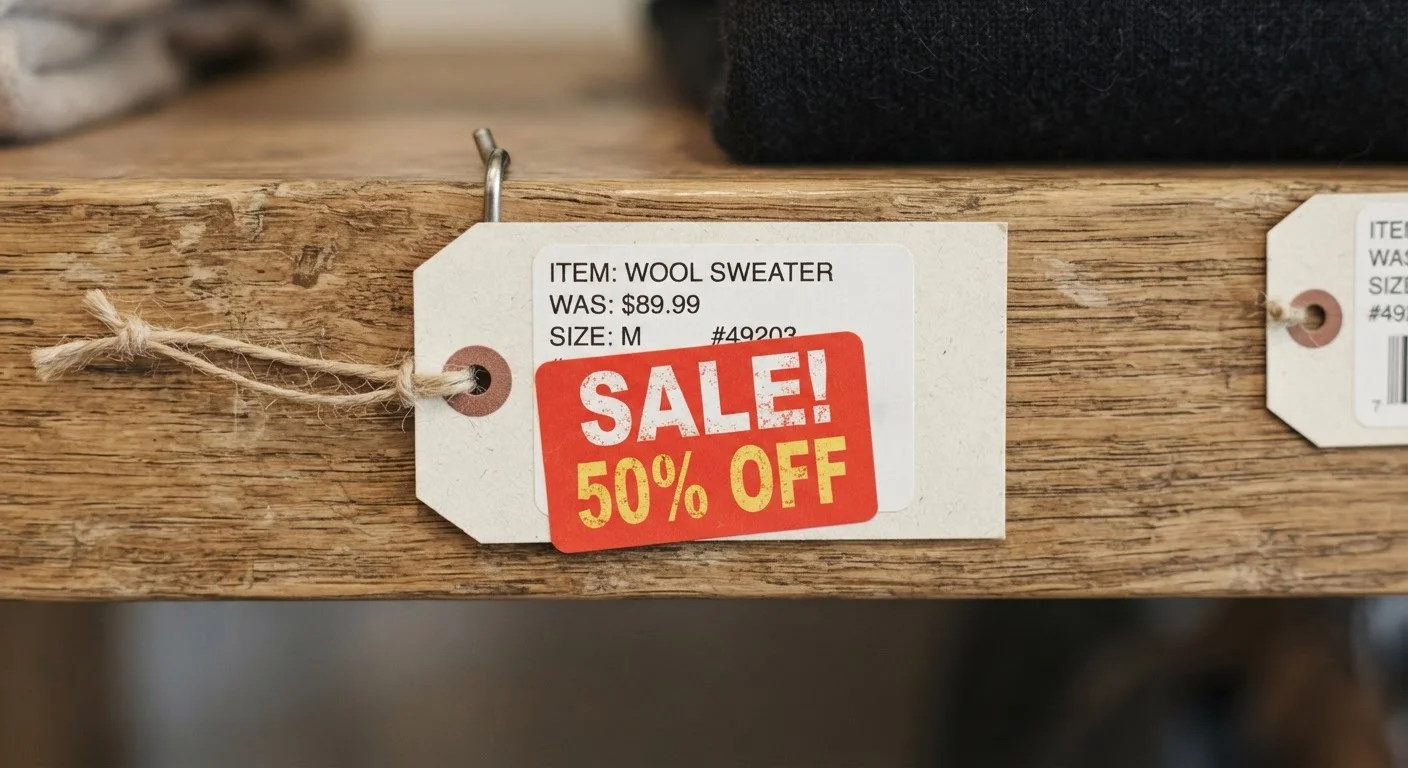
Photo credit: ResultsRover.com | Insights You Can Trust
In this article
Not every sale is a genuine bargain. Here's how to evaluate whether a discount reflects actual savings or just clever pricing.
Key Takeaways
- A big percentage off means nothing if the original price was artificially inflated.
- Tracking a product's price history over time is the most reliable way to verify a deal.
- Urgency tactics — countdown timers, 'limited stock' labels — are designed to short-circuit rational evaluation.
- Unit pricing reveals true value more reliably than headline discount percentages.
- Real deals align with known seasonal markdown cycles, not random 'sale events.'
Why 'On Sale' Is Not the Same as 'A Good Deal'
Retailers have two distinct levers: the price you pay, and the price they show you before you pay it. Manipulating the second one is far easier than cutting the first. That gap — between the displayed 'original' price and the actual transaction price — is where most discount illusions live.
A product marked down from $199 to $129 looks like a $70 saving. But if that item has sold for $129 consistently for the past eight months and only briefly carried the $199 tag, there is no saving at all. You are paying the normal price with a flattering story attached. This is the core mechanic of inflated discounts, and it is widespread enough that the Federal Trade Commission has published guidance cautioning consumers about misleading reference price claims.
Understanding this distinction is the foundation of evaluating any deal. For a deeper look at how price and actual value diverge, see The Real Difference Between Price and Value.
Reference Price Regulations Vary by State
Some U.S. states have specific rules about how long a 'regular' price must be in effect before a retailer can advertise a markdown against it. The FTC also publishes guidance on deceptive pricing practices. However, enforcement is inconsistent, which means consumers cannot rely on regulatory protections alone — verification remains a personal responsibility.
The Mechanics of Inflated Discounts
Several specific tactics drive most inflated-discount scenarios. Recognizing them by name makes them significantly easier to catch in the moment.
- High-low pricing: A product carries an elevated 'regular' price most of the time, punctuated by frequent 'sales' that bring it to its actual intended selling price. The sale is essentially the real price.
- Anchor pricing: A high reference price displayed alongside the sale price creates a psychological anchor. Shoppers judge the deal relative to that anchor rather than to market value.
- Bundling inflation: Extra items are added to a purchase to justify a higher original price, so the 'discount' on the bundle appears large even though the core item price is unchanged.
- Countdown urgency: Timers and 'limited stock' warnings compress the time available to verify whether the deal is real, exploiting the psychological discomfort of potential loss.
These tactics are often layered. A bundle priced against an inflated anchor with a 24-hour countdown is three tactics working simultaneously. For a full catalog of these patterns, shopping traps that catch careful buyers off guard covers them in detail.
87%
Shoppers influenced by sale signage
Research published in the Journal of Marketing found that a large majority of consumers make purchase decisions based on sale framing even when the discounted price matches typical market rates.
~1 in 3
Promoted 'sales' with inflated reference prices
Consumer advocacy analyses of major U.S. retail platforms have found that a significant share of promoted discounts are calculated against reference prices that were in effect for only a brief period.
How to Verify Whether a Discount Is Real
Verification does not require extensive research. A few targeted checks cover most purchase decisions.
Check the price history
Price-tracking tools and browser extensions log historical prices on major platforms. A 60–90 day view tells you whether the 'original' price was real or a brief spike. If the product spent most of that period at or near the 'sale' price, the discount is cosmetic.
Compare across sellers
The same SKU listed at multiple retailers establishes a genuine market price. When most sellers are at a similar price, one retailer's inflated reference price becomes obvious.
Use unit pricing
For consumables and multi-pack items, unit price — cost per ounce, per count, per sheet — strips away packaging manipulation and makes comparisons honest. Many states require unit pricing on shelf tags, so this data is usually already available in-store.
Match to seasonal cycles
Genuine markdowns tend to cluster around predictable periods: post-holiday clearance, model-year transitions, end-of-season apparel. If a sale doesn't align with any recognizable cycle, it may be manufactured urgency rather than a real inventory-driven discount. Seasonal sale cycles by product category maps these patterns out clearly.
Set a Price Alert Before You Need the Item
The most reliable deals come to shoppers who aren't in a rush. If you know you'll need something in the next few months, set a price alert at your target price before urgency sets in. You'll evaluate the eventual sale on data, not deadline pressure.
Building the Habit of Deal Evaluation
The goal isn't to second-guess every transaction — it's to build a fast, repeatable filter that becomes automatic. Before completing any purchase, three questions cover most situations:
- Is this price consistent with what this item has sold for over the past 90 days?
- Does this price hold up when compared across at least two other sellers?
- Is the urgency real (a genuine limited item, a time-sensitive need) or is it manufactured?
Answering these questions takes less than two minutes for most purchases. For higher-stakes transactions, a pre-purchase savings checklist adds a few more verification steps worth running through.
Over time, this habit reshapes how you interpret promotional messaging entirely. 'Sale' becomes a prompt to verify, not a reason to act. That shift — from reacting to evaluating — is what separates consistently smart buyers from consumers who spend more than necessary while feeling like they saved.
For readers who want to capture savings consistently without turning it into a part-time job, building a sustainable savings routine offers practical structure for doing exactly that.
Frequently Asked Questions

Author
Smart Shopping Editorial Team
Smart Shopping Editorial Team is the collective byline for our editorial team and contributor network. Articles published under this byline or an editorial pen name are researched, written, and reviewed according to our editorial standards for clarity, consistency, and independence before publication.
View all articles →