
Small Pets, Big Needs: Care Basics for Rabbits, Guinea Pigs, and Hamsters
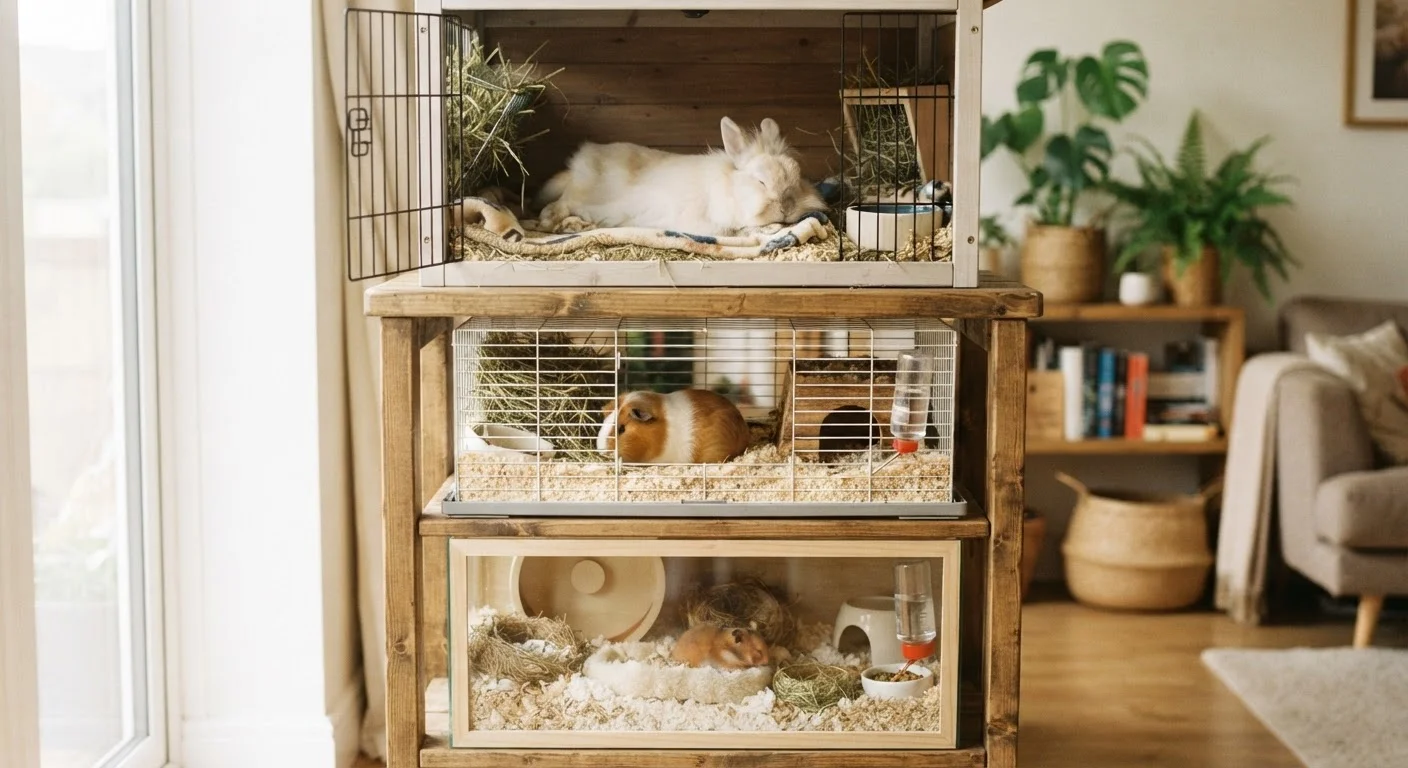
Photo credit: ResultsRover.com | Insights You Can Trust
In this article
Small doesn't mean low-maintenance. A practical look at the daily needs, housing, and feeding requirements of common small household pets.
Why 'Small Pet' Doesn't Mean 'Easy Pet'
Rabbits, guinea pigs, and hamsters are among the most popular small pets in American households — and among the most frequently misunderstood. Many families bring them home expecting minimal upkeep, only to discover that each species has specific housing, social, dietary, and health requirements that take real daily effort to meet well.
Understanding those needs upfront saves time, reduces avoidable vet visits, and results in healthier, longer-lived animals. See how to build a pet care routine for busy households for strategies that keep daily tasks manageable without cutting corners.
| Average Rabbit Lifespan | 8–12 years (domestic) (House Rabbit Society) |
| Average Guinea Pig Lifespan | 4–8 years (General veterinary consensus) |
| Average Hamster Lifespan | 2–3 years (General veterinary consensus) |
| Guinea Pig Social Needs | Generally should not live alone (RSPCA and exotic vet guidance) |
| Hamster Housing | Solitary — most species must be housed alone (General veterinary consensus) |
| Rabbit Diet Composition | ~80% grass hay by volume (House Rabbit Society) |
Housing: Space, Setup, and Daily Cleanliness
Each species has minimum space requirements that are frequently underestimated at the point of purchase.
- Rabbits need at minimum a 4×4-foot enclosure (many welfare organizations recommend larger), plus several hours of daily exercise outside the cage in a bunny-proofed area. Wire-bottom cages cause painful foot injuries — solid or mat-covered floors are essential.
- Guinea pigs are social animals and generally should not be housed alone. A pair needs at least 7.5 square feet of floor space. They cannot climb well, so horizontal space matters more than height.
- Hamsters are solitary and territorial — most species must be housed alone to prevent fighting. Despite their small size, hamsters benefit from far more space than standard pet-store cages provide; a minimum of 450 square inches of unbroken floor space is a widely cited welfare benchmark.
Daily cage checks — removing soiled bedding, refreshing water, and checking food levels — take only a few minutes but prevent ammonia buildup that stresses respiratory systems and masks early signs of illness. Full bedding changes should happen at least once a week for hamsters and guinea pigs; rabbit litter boxes need cleaning every one to two days.
GI Stasis
A dangerous slowdown or complete halt of the digestive system, most commonly seen in rabbits. Without prompt veterinary treatment, it can be fatal within hours.
Hay-Based Diet
A feeding approach where grass hay (such as timothy or orchard grass) forms the primary component of a herbivore's daily food intake, supporting digestion and dental health.
Cheek Pouches
Expandable pouches inside a hamster's cheeks used to transport and store food. Sticky or sugary foods can become lodged in pouches and cause infections.
Exotic Vet
A veterinarian with training and experience treating non-traditional pets such as rabbits, guinea pigs, hamsters, birds, and reptiles. Their expertise differs from that of standard dog-and-cat practitioners.
Vitamin C Deficiency (Scurvy)
A condition caused by insufficient vitamin C intake. Guinea pigs cannot produce their own vitamin C and must receive it through fresh food daily to avoid serious health consequences.
Feeding Each Species Correctly
Diet is where many small-pet owners make consequential mistakes. Treat packaging and pet-store advice don't always reflect current veterinary guidance.
Rabbits
Unlimited grass hay (timothy or orchard grass) must form roughly 80% of an adult rabbit's diet. It keeps the digestive tract moving and wears down continuously growing teeth. Fresh leafy greens — such as romaine lettuce, cilantro, and kale in rotation — supplement the diet daily. Pellets should be plain, hay-based, and limited; sugary mixes with seeds and dried fruit are marketed heavily but cause obesity and dental problems.
Guinea Pigs
Like rabbits, guinea pigs need unlimited hay. Critically, they cannot synthesize their own vitamin C — a deficiency can cause scurvy within weeks. Fresh bell pepper and leafy greens provided daily are practical, reliable sources. Pellets formulated specifically for guinea pigs (not rabbits or other rodents) should be plain and fortified with vitamin C.
Hamsters
Hamsters are omnivores and need a more varied diet than guinea pigs or rabbits. A quality seed-and-grain mix designed for hamsters forms the base, supplemented with small amounts of fresh vegetables and occasional protein (such as plain cooked egg or mealworms). Avoid sticky or sugary foods that can become impacted in cheek pouches. Fresh water should be available at all times, ideally in a sipper bottle checked daily for blockages.
For context on how widely pet nutrition guidance can vary — and which claims to treat skeptically — see common pet health myths vets hear every week.
Health Monitoring and When to Call a Vet
Small prey animals instinctively hide illness, so owners need to recognize subtle early signals. Daily handling or observation makes abnormalities easier to catch.
2–3 hrs
Daily out-of-cage time recommended for rabbits
Rabbit welfare organizations commonly cite a minimum of 3 hours of free exercise per day for healthy adult rabbits.
Weeks
Time for scurvy to develop in vitamin C-deficient guinea pigs
Veterinary sources note that clinical signs of vitamin C deficiency can appear in guinea pigs within just a few weeks of inadequate intake.
Watch for: changes in eating or drinking habits, soft or absent droppings, labored breathing, discharge from eyes or nose, fur loss, overgrown teeth, or unusual lethargy. In rabbits, complete cessation of eating or defecating for more than a few hours is a medical emergency — the digestive system can shut down rapidly, a condition called GI stasis.
All three species benefit from a veterinarian experienced with exotic or small mammals, as general-practice vets vary widely in small-pet expertise. Establishing a relationship with an exotic vet before an emergency arises is a practical step that saves critical time. For how care needs shift as small pets age, see how pet health needs shift with age.
This article provides general educational information about small pet care and is not a substitute for veterinary advice. Always consult a qualified veterinarian for guidance about your specific pet's health.

Author
Pets & Animals Editorial Team
Pets & Animals Editorial Team is the collective byline for our editorial team and contributor network. Articles published under this byline or an editorial pen name are researched, written, and reviewed according to our editorial standards for clarity, consistency, and independence before publication.
View all articles →