
Why Dogs Pull on the Leash — and What's Really Going On in Their Heads
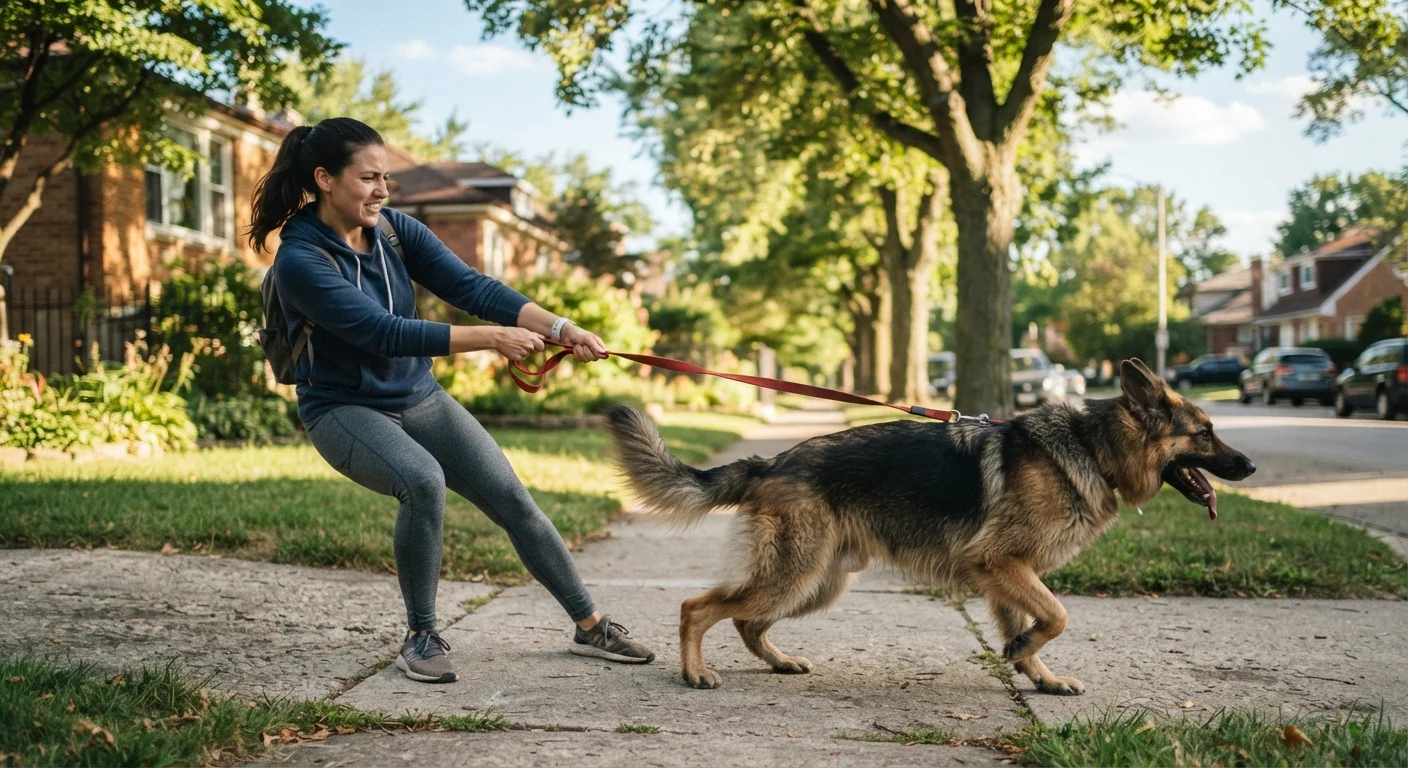
Photo credit: ResultsRover.com | Insights You Can Trust
In this article
Leash pulling isn't stubbornness. Understand the instincts and reinforcement patterns behind this common behavior before trying to change it.
Key Takeaways
- Dogs pull on leashes because forward movement is immediately rewarding — not because they're trying to dominate you.
- Every time a pulling dog reaches its destination, the pulling behavior is reinforced and strengthened.
- Most dogs have never been explicitly taught what 'walk nicely' actually means.
- Breed instincts, arousal levels, and environmental novelty all influence how strongly a dog pulls.
- Consistent, reward-based training is more effective long-term than equipment that suppresses pulling through discomfort.
The Real Reason Dogs Pull
Ask most dog owners why their dog pulls, and they'll say something like "he's just stubborn" or "she wants to be in charge." Neither explanation holds up. Dogs pull on leashes for a much simpler reason: it works.
When a dog lunges toward a fire hydrant and the owner follows, the dog just learned that pulling gets results. When a dog strains toward another dog across the street and eventually reaches it, that outcome is filed away as useful behavior. The leash, from the dog's perspective, is just resistance to push through — not a signal about how to behave.
This is reinforcement learning in action. Dogs repeat behaviors that produce good outcomes, and forward movement toward interesting things is one of the most reliable rewards in a dog's day. Understanding this is foundational. You're not dealing with a stubborn animal — you're dealing with a very effective learner whose education has some gaps.
Pulling Isn't the Same as Dominance
The idea that dogs pull to assert dominance over their owners reflects an outdated understanding of canine behavior. Modern behavioral science frames pulling as a learned, self-reinforcing behavior — not a power struggle. This distinction matters because it changes how you approach training: instead of establishing authority, you're adjusting outcomes.
What's Happening Inside Your Dog's Brain
Dogs experience the world nose-first. A single fire hydrant can contain information about a dozen other dogs — their sex, health status, stress levels, and more. When your dog hits the end of the leash straining toward that hydrant, they're not being rude. They're following a deeply embedded drive to gather information.
Arousal plays a major role too. The moment a dog spots something exciting — another dog, a squirrel, a familiar person — their sympathetic nervous system ramps up. Heart rate increases, focus narrows, and impulse control drops significantly. This is why a dog that walks perfectly in your backyard becomes a freight train the moment you reach the park.
Breed history also matters. Breeds developed for tracking, herding, or hunting have instincts that push them to move forward with purpose and speed. These dogs aren't poorly trained — they're doing exactly what generations of selective breeding shaped them to do. See our guide to reading animal body language to better understand the signals your dog is sending during these high-arousal moments.
~80%
Dog owners who report leash pulling as a problem
Leash manners consistently rank among the top behavioral concerns cited by dog owners in veterinary and training surveys.
3–5 min
Ideal length for leash training sessions
Short, frequent training sessions are more effective for dogs than long, infrequent ones — especially for high-arousal behaviors like pulling.
How Pulling Becomes a Habit
Most leash-pulling habits are unintentionally built by owners, not by dogs acting out. The pattern is predictable: puppy pulls, owner follows, puppy learns pulling = progress. This cycle repeats hundreds of times before most owners recognize it as a problem.
Inconsistency accelerates the issue. If pulling works 60% of the time — because some days the owner is tired, distracted, or in a hurry — the behavior becomes even more persistent. In behavioral terms, intermittent reinforcement produces the most resistant habits. It's the same mechanism that makes a slot machine compelling: unpredictable rewards drive persistent behavior.
This is also why punishment-based corrections often don't resolve pulling long-term. A leash jerk might suppress the behavior momentarily, but it doesn't teach the dog what to do instead, and it can introduce anxiety that makes walks less pleasant for everyone. Dogs that are anxious on leash are actually more likely to develop reactive behavior — a separate but related problem. New dog owners often encounter this cycle early on without realizing they're reinforcing it.
Practice Before You Need It
Don't wait until you're on a busy street to work on loose-leash walking. Start in your home hallway or backyard — low distraction environments where your dog can actually succeed. Build the habit where it's easy before taking it somewhere hard.
What Actually Changes the Behavior
Teaching loose-leash walking means replacing one set of outcomes with another. The dog needs to learn, through consistent repetition, that a slack leash produces forward movement — and a tight leash stops it. Three approaches that behavioral science supports:
- Stop-and-wait: The moment leash tension occurs, stop walking completely. Resume only when the leash goes slack. The dog eventually figures out that pulling makes forward progress stop.
- Direction changes: When the dog pulls ahead, calmly turn and walk the opposite direction. This interrupts the dog's trajectory and reorients their attention back to you.
- Reward the position: Frequently reinforce your dog for being beside you with a loose leash — especially before they have a chance to pull. This tells the dog where the good stuff is.
None of these methods produce overnight results, but all of them work with the dog's learning system rather than against it. Incorporating leash practice into a consistent daily routine makes the biggest difference — short, structured walks are more effective than occasional long ones where pulling is tolerated.
“Dogs don't pull on leashes because they're dominant or disobedient. They pull because pulling has been enormously successful for them. Change what works, and you change the behavior.”
— Dr. Ian Dunbar, Veterinarian and pioneer of reward-based dog training
Frequently Asked Questions

Author
Pets & Animals Editorial Team
Pets & Animals Editorial Team is the collective byline for our editorial team and contributor network. Articles published under this byline or an editorial pen name are researched, written, and reviewed according to our editorial standards for clarity, consistency, and independence before publication.
View all articles →