
Litter Box Avoidance: The Real Reasons Cats Stop Using It
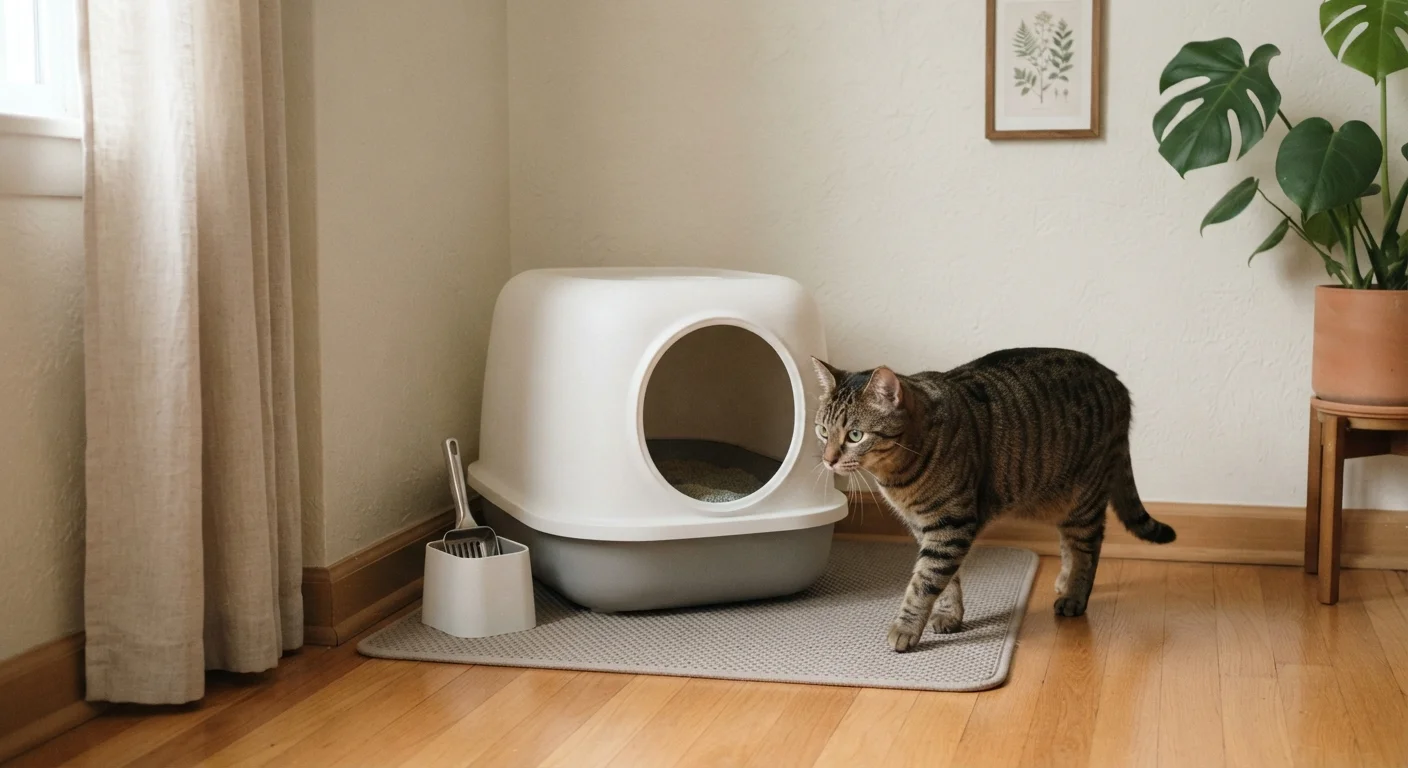
Photo credit: ResultsRover.com | Insights You Can Trust
In this article
When a cat stops using the litter box, the cause is rarely spite. Explore the medical, environmental, and behavioral reasons behind this common issue.
Key Takeaways
- Litter box avoidance is rarely behavioral spite — medical causes should be ruled out first.
- Box cleanliness, location, size, and litter type all significantly influence a cat's willingness to use it.
- Multi-cat households require more boxes than most owners provide, following the n+1 rule.
- A sudden change in litter box habits warrants a prompt veterinary evaluation.
Why Cats Stop Using the Litter Box
Few things frustrate cat owners more than finding waste outside the litter box. The instinct is often to label the behavior as defiant or spiteful — but cats don't operate that way. When a cat avoids the box, something specific is driving that decision, and identifying it is the first step toward a real solution.
Litter box problems are among the most common reasons cats are surrendered to shelters, which makes understanding the root causes genuinely important. The good news: most cases are correctable once you know where to look. The following mistakes are where most owners go wrong — and how to course-correct.
Assuming the behavior is spiteful and skipping a veterinary evaluation.
Why it happens: Owners often interpret inappropriate elimination as a reaction to a change in routine or a new pet, framing it as emotional retaliation rather than a potential health signal.
Not scooping frequently enough, allowing waste to accumulate.
Why it happens: Busy schedules lead owners to scoop every few days, not realizing how quickly odor and moisture build up from a cat's perspective.
Using a box that is too small for the cat's body size.
Why it happens: Most owners purchase standard-sized boxes without measuring, and packaging rarely reflects what works for larger or older cats.
Placing the box in a loud, high-traffic, or exposed location.
Why it happens: Owners often tuck the box near the laundry area or in a busy hallway for their own convenience, not considering the cat's need for a quiet, private space.
Not providing enough boxes in multi-cat households.
Why it happens: Owners assume one or two boxes are sufficient for any number of cats, not realizing territorial dynamics can effectively block access for lower-ranking cats.
Switching litter type abruptly or using heavily scented products.
Why it happens: Owners switch litters for cost savings or try scented varieties thinking they'll control odor better — but cats often reject unfamiliar textures or strong artificial fragrances.
When the Problem Is Medical, Not Behavioral
One of the most critical — and frequently overlooked — steps when a cat begins eliminating outside the box is a veterinary visit. Urinary tract infections, feline idiopathic cystitis, kidney disease, diabetes, and arthritis can all cause a cat to associate the litter box with pain, or make it physically difficult to get in and out in time.
Straining or No Urine: Seek Emergency Care
A cat that is straining in the litter box but producing little or no urine may have a urinary blockage — a medical emergency that can become fatal within 24–48 hours, especially in male cats. Do not wait to see if the situation improves. Contact a veterinarian or emergency animal clinic immediately if you observe these signs.
A cat that strains in the box, cries while urinating, produces little or no urine, or shows blood in the urine needs emergency veterinary attention — these can signal a life-threatening urinary blockage, particularly in male cats. Don't wait to see if it resolves on its own.
For routine avoidance with no clear emergency signs, schedule a vet exam before assuming the issue is behavioral. Routine vet visits catch problems that owners simply cannot see at home, and litter box changes are exactly the kind of subtle symptom that benefits from a professional evaluation.
This article is for general informational purposes only and is not a substitute for professional veterinary advice. Always consult a licensed veterinarian if your cat is displaying health-related symptoms.
Setting Up an Environment Cats Actually Want to Use
Once medical causes are ruled out, the focus shifts to the setup itself. Cats are particular about their elimination environment — a box that seems perfectly fine to you may be deeply unappealing to them. Scoop at least once daily, and do a full litter change and box scrub regularly. A box that smells acceptable to a human nose can still be offputting to a cat whose sense of smell is roughly 14 times more sensitive.
Avoid Strongly Scented Litters and Cleaners
Heavily scented litters and harsh chemical cleaners — including those containing ammonia or citrus — can make the box area aversive to cats. Cats associate strong chemical smells with danger, not cleanliness. Use unscented litter and mild, pet-safe soap when washing the box itself.
Box size matters too. A general guideline is that the box should be at least 1.5 times the length of your cat. Many commercially available boxes are too small, especially for larger breeds or older cats with mobility issues. Low-sided entry points help seniors or cats with joint pain access the box comfortably.
Location plays a bigger role than most owners expect. Boxes placed near loud appliances, in high-traffic areas, or in spots that feel exposed can deter use. Cats prefer quiet, low-traffic locations where they won't be startled. For multi-story homes, at least one box per floor is a sound baseline. For multi-cat homes, the standard recommendation is one box per cat, plus one extra — the n+1 rule — to reduce competition and territorial stress. You can also read more about how indoor environments shape cat wellbeing in our look at indoor versus outdoor cat tradeoffs.

Author
Pets & Animals Editorial Team
Pets & Animals Editorial Team is the collective byline for our editorial team and contributor network. Articles published under this byline or an editorial pen name are researched, written, and reviewed according to our editorial standards for clarity, consistency, and independence before publication.
View all articles →